

As a beekeeper, you know how bad chalkbrood can be. It can wipe out a whole beehive. In fact, it’s said to kill off entire colonies if not treated.
I’ve seen how key it is to keep your apiary healthy. In this article, I’ll give you tips on managing chalkbrood. This way, your bees will stay healthy, and your beekeeping will flourish.
Key Takeaways
- Understand the causes and symptoms of chalkbrood
- Implement effective beekeeping disease management practices
- Maintain a healthy apiary through regular inspections
- Use integrated pest management techniques
- Keep your beekeeping equipment clean and well-maintained
Understanding Chalkbrood Disease in Bees
As a beekeeper, knowing about chalkbrood disease is key to keeping bees healthy. This disease affects bee brood and can cause big losses if not handled right.
Chalkbrood is caused by the fungus Ascosphaera apis, which attacks bee larvae. It thrives in certain conditions, so it’s important to understand its causes and effects.
What Is Chalkbrood?
Chalkbrood is a fungal disease that hits honey bees’ brood. It turns infected larvae into hard, chalk-like structures. These mummified larvae are found in hive cells, often in different stages of decay.
Causes of Chalkbrood Infection
The main cause of chalkbrood is the fungus Ascosphaera apis. It spreads through contact with infected bees or contaminated hive gear. Poor ventilation, high humidity, and cooler temperatures make the disease worse.
| Cause | Description | Impact |
|---|---|---|
| Fungal Spores | Infection through Ascosphaera apis spores | Primary cause of chalkbrood disease |
| Poor Ventilation | Inadequate airflow within the hive | Contributes to high humidity, exacerbating the disease |
| Cooler Temperatures | Lower temperatures within the hive | Creates an environment conducive to fungal growth |
Knowing these causes is vital for stopping chalkbrood and managing it well.
Symptoms of Chalkbrood in Honey Bees
Knowing the signs of Chalkbrood is key to keeping bee colonies healthy. As a beekeeper, spotting these signs early can greatly help your bees. This is important for their health and work.
Identifying Affected Brood
The main sign of Chalkbrood is chalk-like stuff in brood cells. These are dead larvae. Regularly checking your hives is vital to catch this early. Look for cells that seem different, like they’re sunken or look off.
When you look closer, you might see larvae or pupae turned into hard, white mummies. This is clear proof of Chalkbrood. The disease hits different stages of brood, but it’s most obvious in the capped ones.
| Symptom | Description |
|---|---|
| Chalk-like Structures | Hard, white mummies of larvae or pupae |
| Capped Cell Appearance | Sunken or discolored cappings |
| Brood Development Stage | Affects various stages, most evident in capped brood |
Behavioral Changes in Bees
Chalkbrood also changes how bees act. Bees might seem more agitated or restless. They try to get rid of the sick brood. Sometimes, they just seem less active or tired.
To fight Chalkbrood, using bee disease prevention is key. Keep your hive clean, well-ventilated, and watch for disease signs. Using chalkbrood control methods like requeening or picking resistant bees can help too.
By staying alert and acting fast, beekeepers can lessen Chalkbrood’s effects. Keeping a close eye and acting quickly is essential. This helps stop the disease and keeps the bees healthy.
Environmental Factors Contributing to Chalkbrood
Environmental factors are key in chalkbrood’s spread among honey bees. Beekeepers must grasp these to manage their apiaries well. This knowledge helps in fighting off diseases.
Temperature and Humidity Effects
The fungus that causes chalkbrood thrives in cool, damp places. Hives with bad air flow often have these conditions. Beekeepers should keep hives dry and warm to stop the fungus.
Here are some tips:
- Keep the hive at 92°F to 95°F (33°C to 35°C) for bee health.
- Use good insulation to control the hive’s temperature.
- Watch humidity to avoid too much moisture.
For more on managing chalkbrood, check out https://beeaware.org.au/archive-pest/chalkbrood/.
Hive Ventilation Needs
Good air flow in the hive is key to avoiding moisture. This helps prevent chalkbrood. Ventilation:
- Lowers humidity in the hive.
- Helps control the hive’s temperature.
- Removes old air and CO2.
To improve air flow, beekeepers can add ventilation holes. They can also design their hives for better air circulation.
Understanding and managing environmental factors helps beekeepers protect their bees. Good practices, regular checks, and quick action are essential.
Best Practices for Disease Prevention
As a beekeeper, I know that stopping chalkbrood needs good hive care and the right bee types. Good prevention helps my bees stay healthy and makes my apiary better.
Maintaining Healthy Hive Conditions
Keeping my hive clean is key to stopping chalkbrood. I make sure the hive is well-ventilated and clean. This keeps diseases away.
- Ensure adequate ventilation to reduce humidity.
- Regularly inspect hives for signs of disease.
- Maintain a clean apiary by removing debris and dead bees.
Choosing Resistant Bee Strains
Choosing bee strains that fight off chalkbrood is also important. This lowers the chance of infection in my bees.
| Bee Strain | Chalkbrood Resistance | Notes |
|---|---|---|
| Strain A | High | Known for strong resistance and productivity. |
| Strain B | Moderate | Shows some resistance but may require additional management. |
| Strain C | Low | More susceptible to chalkbrood; not recommended for high-risk areas. |
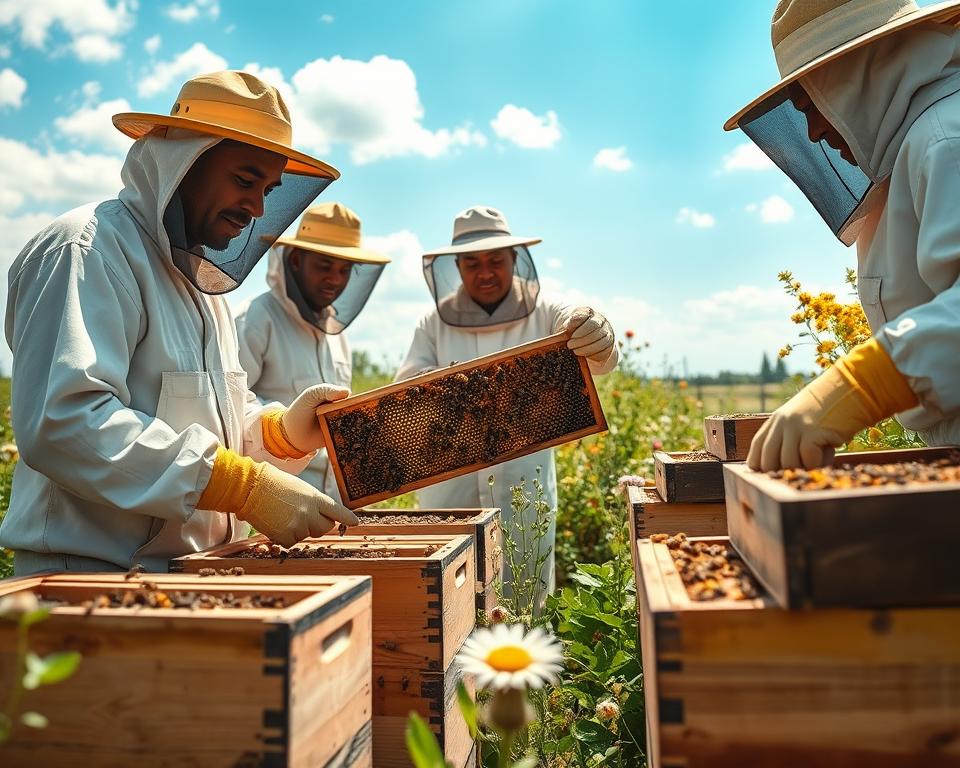
By using good hive care and picking resistant bees, I lower chalkbrood risks. This keeps my bees safe and boosts my apiary’s health and output.
Integrated Pest Management (IPM)
As a beekeeper, I’ve learned that IPM is key for managing diseases. It’s a whole approach that uses physical, cultural, biological, and chemical controls. This way, we protect the bees and the environment.
Role of IPM in Disease Control
IPM is vital for controlling chalkbrood disease. It helps by reducing factors that spread the disease. This includes keeping hives healthy, ensuring good air flow, and watching for disease signs early.
“IPM is not just about treating diseases; it’s about creating an environment where bees can thrive.” This method not only fights chalkbrood but also boosts the bee colony’s health and strength.
Effective IPM Strategies
Effective IPM strategies for beekeeping include:
- Regular monitoring of the hive for signs of disease or pests.
- Maintaining clean and well-ventilated hives.
- Using resistant bee strains.
- Implementing integrated control methods, such as biological and chemical controls, judiciously.
By using these strategies, beekeepers can lower chalkbrood disease and improve their colonies’ health.
“The key to successful beekeeping is not just managing diseases, but creating a healthy environment for the bees to flourish.”
IPM needs a deep understanding of the apiary ecosystem and a dedication to ongoing monitoring and management. By mixing different control methods, beekeepers can manage chalkbrood disease well and keep their colonies healthy and thriving.
Monitoring and Diagnosis Techniques
Chalkbrood disease can be controlled with careful monitoring and accurate diagnosis. As a beekeeper, it’s vital to know how to manage the disease. This keeps your bee colonies healthy.
Regular Hive Inspections
Regularly checking your hive is key to managing chalkbrood. By doing so, you can spot early signs like mummified brood or discolored larvae. This lets you act fast to stop the disease from spreading.
When inspecting, look for these signs:
- Presence of mummified brood
- Discoloration or abnormal appearance of larvae
- Changes in bee behavior, such as increased agitation or lethargy
John Smith, an experienced beekeeper, says, “Regular inspections are key to catching chalkbrood early. It’s a disease that can quickly spread if not addressed.”
“The key to managing chalkbrood is vigilance. Regular inspections allow beekeepers to stay on top of the disease and take action before it becomes a major issue.”
Lab Testing for Chalkbrood
While hive inspections are important, lab tests can confirm chalkbrood disease. By sending samples to a lab, you can check for the Ascomycota fungus that causes it.
| Testing Method | Advantages | Disadvantages |
|---|---|---|
| Microscopic Examination | High accuracy, allows for direct observation of fungal spores | Requires specialized equipment and expertise |
| PCR (Polymerase Chain Reaction) | High sensitivity, can detect small amounts of fungal DNA | Can be expensive, requires specialized equipment |
Lab tests confirm the diagnosis and show how severe the infection is. This helps you choose the best treatment for your bees.
In conclusion, combining regular hive checks with lab tests is a strong strategy for managing chalkbrood disease. By using these methods, beekeepers can keep their colonies safe and healthy.
Treatment Options for Affected Colonies
When chalkbrood disease hits, beekeepers must act fast. They aim to stop it from spreading and help the bees get better. There are different ways to treat it, and beekeepers choose what works best for them.
Natural Remedies and Their Effectiveness
Many beekeepers choose natural remedies to fight chalkbrood. They think these methods are safer for the bees and the planet. Natural treatments include better ventilation, less crowded hives, and essential oils or herbs.
For example, some use thymol or other natural antifungals. Keeping the hive clean is also important. This means removing sick brood and making sure the hive is dry.
Regular monitoring helps catch the disease early. This is when natural remedies work best.
Chemical Treatments: Pros and Cons
Chemical treatments are another way to manage chalkbrood. They can work well but have some downsides. Chemicals can stay in the hive and harm the bees or contaminate honey.
Fungicides are often used. They can fight chalkbrood but must be used carefully. This is to prevent the fungus from becoming resistant. Always follow the instructions and protect yourself and the bees.
Choosing between natural remedies and chemicals depends on the beekeeper. It also depends on how bad the outbreak is and the apiary’s conditions. A mix of good management and smart treatment choices is usually the best way to prevent and manage bee diseases.
Aftermath: Recovery Strategies for Colonies
After treating chalkbrood disease, it’s important to help affected hives recover. Good apiary health strategies are key for your bees to thrive. They help your bee colonies survive and grow.
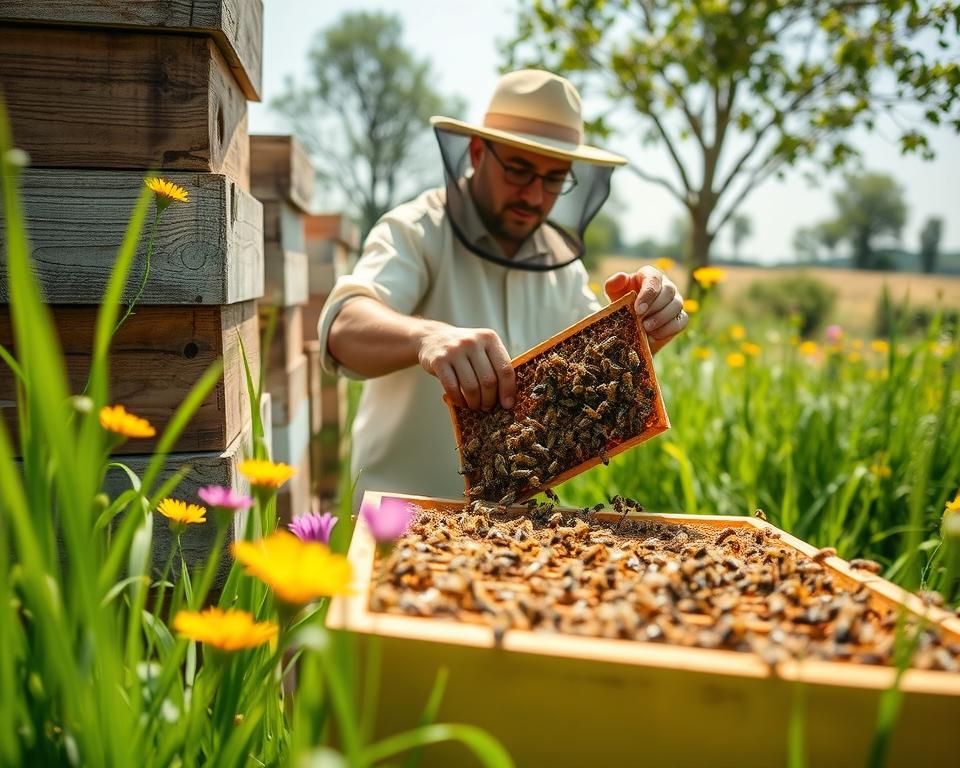
Supporting Affected Hives
To help hives, beekeepers need to improve conditions and feed them well. They should regularly check the hive’s health. This helps prevent disease from coming back.
As a wise beekeeper says, “A healthy hive is the heart of a successful apiary.” It’s important to use beekeeping disease management methods during this time.
“The key to successful beekeeping lies in the ability to adapt to the challenges posed by diseases like chalkbrood.” – Experienced Beekeeper
Rebuilding Bee Populations
To grow bee numbers, beekeepers must do several things. They need to add healthy bees, improve food, and lower stress. Using apiary health strategies helps create a balanced hive environment. This aids in the recovery of your bees.
- Ensure adequate food supply
- Monitor for signs of disease
- Maintain a clean and well-ventilated hive
By taking these steps and using good beekeeping disease management practices, beekeepers can make their colonies stronger.
Resources for Beekeepers
As a beekeeper, it’s key to have the right resources. This helps with managing your apiary and keeping diseases like chalkbrood at bay. I’ve found that local beekeeping groups and online platforms are great for getting advice and learning new things.
Local Beekeeping Associations
Joining local beekeeping groups is a smart move. It lets you meet other beekeepers, share tips, and learn about the latest in disease management. These groups often host training sessions and workshops to boost your skills.
Online Support and Information
Online forums and social media groups are full of beekeeping tips. I can ask questions, share my own experiences, and learn from others. This way, I stay current with the best ways to fight chalkbrood disease.