

As a beekeeper, managing Varroa mites is key for your bees’ health. These pests can weaken your bees, making them more likely to get sick. They also cut down on honey production. In fact, Varroa mites are considered one of the biggest threats to bee colonies worldwide.
To fight this, many beekeepers are using holistic Varroa control options. These natural and organic solutions are a good alternative to chemical treatments. By using these methods, you can help keep your bees healthy and thriving.
Key Takeaways
- Holistic options are becoming increasingly popular for Varroa control.
- Natural and organic solutions can be effective alternatives to chemical treatments.
- Integrating holistic methods into beekeeping practices can improve bee health.
- Beekeepers can reduce their reliance on chemical treatments.
- A healthier bee colony can lead to increased honey production.
Understanding Varroa Mites and Their Impact on Bees
To manage Varroa mites effectively, it’s essential to understand their impact on bees. Varroa mites are a significant pest that affects bee colonies worldwide. They cause harm to the bees and potentially lead to colony collapse if left unchecked.
What Are Varroa Mites?
Varroa mites are external parasites that feed on the hemolymph of bees. This is like blood in insects. Adult females are about 1.5 mm long and 1.1 mm wide. They are visible to the naked eye and can be seen on the bodies of bees, mainly on the underside of the abdomen.
The presence of Varroa mites on bees weakens them. It also has a broader impact on the entire colony. By feeding on bee hemolymph, Varroa mites deprive bees of essential nutrients. This makes them more susceptible to diseases and reduces their lifespan.
The Life Cycle of Varroa Mites
The life cycle of Varroa mites is closely tied to that of their bee hosts. Female Varroa mites enter bee brood cells just before the cells are capped. Once inside, they feed on the developing bee larvae and reproduce. The male Varroa mites mate with the females within the brood cell, and then the males die. The mated female mites emerge from the brood cell with the newly emerged bees, ready to start the cycle again.
| Stage | Description | Duration |
|---|---|---|
| Egg | Female Varroa mites lay eggs in bee brood cells. | Several hours |
| Protonymph | The first stage of Varroa mite development after hatching. | 1-2 days |
| Deutonymph | The second stage of Varroa mite development. | 2-3 days |
| Adult | Mature Varroa mites emerge from brood cells with newly emerged bees. | Varies |
Why Are They Harmful to Bee Colonies?
Varroa mites are harmful to bee colonies for several reasons. Firstly, they weaken the bees’ immune systems. This makes them more susceptible to diseases and parasites. Secondly, Varroa mites can transmit viruses directly to bees, further compromising their health. The combination of these factors can lead to a decline in bee populations and, in severe cases, colony collapse.
Effective management of Varroa mites is key for maintaining healthy bee colonies. Understanding their life cycle and impact is the first step. This knowledge helps in developing natural Varroa mite control strategies. It also guides the use of non-chemical Varroa remedies to mitigate the damage caused by these pests.
The Importance of Alternative Treatments
Chemical treatments for Varroa mites are becoming a big worry for bee health and the planet. Beekeepers are looking into natural and organic ways to fight these pests. It’s important to know the dangers of chemical treatments and the good of natural methods.
The Risks of Chemical Treatments
Chemicals might kill Varroa mites quickly, but they can harm bees and the environment over time. They can also make honey and beeswax unsafe for people. Plus, using too many chemicals can make mites resistant, making treatments less effective.
Key risks associated with chemical treatments include:
- Contamination of hive products
- Development of pesticide resistance
- Harm to beneficial insects and the environment
Benefits of Going Natural
Natural treatments like organic acids and essential oils are safer and better for the planet. They can fight Varroa mites without the dangers of chemicals. Using natural methods helps keep bees and the environment healthy.
The benefits of natural treatments include:
- Reduced environmental impact
- Safer for human consumption of hive products
- Less likely to develop resistance among Varroa mites
How Alternative Treatments Can Be Effective
Using natural treatments right can be very effective. For example, mixing organic acids and essential oils can control mites while keeping bees healthy. It’s all about using the right mix of natural methods.
| Treatment Method | Effectiveness | Environmental Impact |
|---|---|---|
| Organic Acids | High | Low |
| Essential Oils | Moderate to High | Low |
| Chemical Pesticides | High (short-term) | High |
Knowing the dangers of chemicals and the benefits of natural methods helps beekeepers make better choices. This keeps bees healthy and supports sustainable beekeeping.
Essential Oils as a Natural Treatment
Beekeepers are looking for natural ways to fight Varroa mites. Essential oils are being studied for this purpose. They could be a good part of a pest management plan.
Which Essential Oils Work Best?
Some essential oils are being tested against Varroa mites. Thyme oil and lemongrass oil show promise. Thyme oil, in particular, might help control Varroa mites.
The success of these oils depends on how much is used and how it’s applied. What works for one beekeeper might not work for another. So, some trial and error is needed.
Application Methods for Essential Oils
There are a few ways to use essential oils against Varroa mites. These include:
- Direct application to the bees using a spray or drip system.
- Incorporating essential oils into the hive structure, such as within the hive’s ventilation system.
- Using essential oils in a vaporization method to distribute the oil throughout the hive.
Each method has its own benefits and challenges. For example, direct application is hard work but targets the problem well.
Safety Considerations When Using Oils
Even though essential oils are natural, they can be risky. They might cause allergic reactions or be toxic. Always use caution when working with essential oils.
| Essential Oil | Efficacy Against Varroa Mites | Safety Considerations |
|---|---|---|
| Thyme Oil | High | Potential skin irritation; use gloves |
| Lemongrass Oil | Moderate | May cause eye irritation; avoid direct contact |
| Eucalyptus Oil | Variable | Can be toxic to bees in high concentrations; use with caution |
By learning about the different essential oils, how to use them, and safety tips, beekeepers can make smart choices. They can use these natural treatments in their fight against Varroa mites.
Integrated Pest Management Techniques
Integrated Pest Management (IPM) is a way to manage pests like Varroa mites. It uses many methods together. As a beekeeper, using IPM can make your bees healthier. It also helps avoid too much use of chemicals and keeps the ecosystem balanced.
Defining Integrated Pest Management
Integrated Pest Management is a big plan to fight pests. For Varroa mites, it mixes physical, cultural, biological, and chemical ways. Each method is chosen based on what your bees need.
Key Components of IPM for Varroa Control:
- Monitoring Varroa mite populations regularly
- Using cultural controls such as drone brood removal
- Implementing biological controls like introducing predator mites
- Applying chemical controls judiciously when necessary
IPM Components for Varroa Control
Good IPM for Varroa mites has several important parts. Monitoring is key. It lets beekeepers know how bad the problem is and what to do next.
| Component | Description | Benefits |
|---|---|---|
| Monitoring | Regularly checking Varroa mite levels | Helps in early detection and decision-making |
| Cultural Controls | Techniques like drone brood removal | Reduces Varroa mite populations without chemicals |
| Biological Controls | Introducing predator mites | Natural and sustainable control method |
Benefits of an IPM Approach
Using IPM for Varroa mites has many good points. It means using less chemicals, keeping bees healthier, and making beekeeping better for the planet. Mixing different ways to control pests leads to better and longer-lasting results.
Benefits of IPM:
- Reduced reliance on chemical treatments
- Improved health and resilience of bee colonies
- Enhanced sustainability of beekeeping practices
Organic Acids for Mite Control
For beekeepers looking for non-chemical ways, organic acids are a good choice for Varroa mite control. These natural compounds help manage mites well. They do this without the dangers of chemical treatments.
Types of Organic Acids
There are several organic acids used in beekeeping for Varroa mite control. Formic acid is often used because it can get into sealed brood cells where mites hide. Oxalic acid is also effective, best used when there’s no brood.
The right organic acid depends on the season, brood presence, and the colony’s needs.
Proper Usage of Organic Acids
Using organic acids correctly is key for their success and safety. It’s important to use the right amount and time the treatment right. This way, you hit the mites hard but keep the bees safe.
- Always follow the manufacturer’s instructions for the specific organic acid product being used.
- Consider the presence of brood and adjust treatment timing appropriately.
- Monitor bee colony health and adjust treatment strategies as needed.
Effectiveness and Safety of Organic Acids
Organic acids work well when used right. They’re safer than chemicals, lowering the chance of mite resistance and honey contamination.
Safety considerations include wearing protective gear and ensuring good air flow. This prevents inhaling fumes. Also, be careful not to harm the queen bee.
Using organic acids in Varroa mite control helps keep bees healthy. It also supports sustainable beekeeping.
The Role of Predator Mites
Predator mites are a key part of finding bee-friendly Varroa treatments. They are a biological control that helps manage Varroa mite populations well.
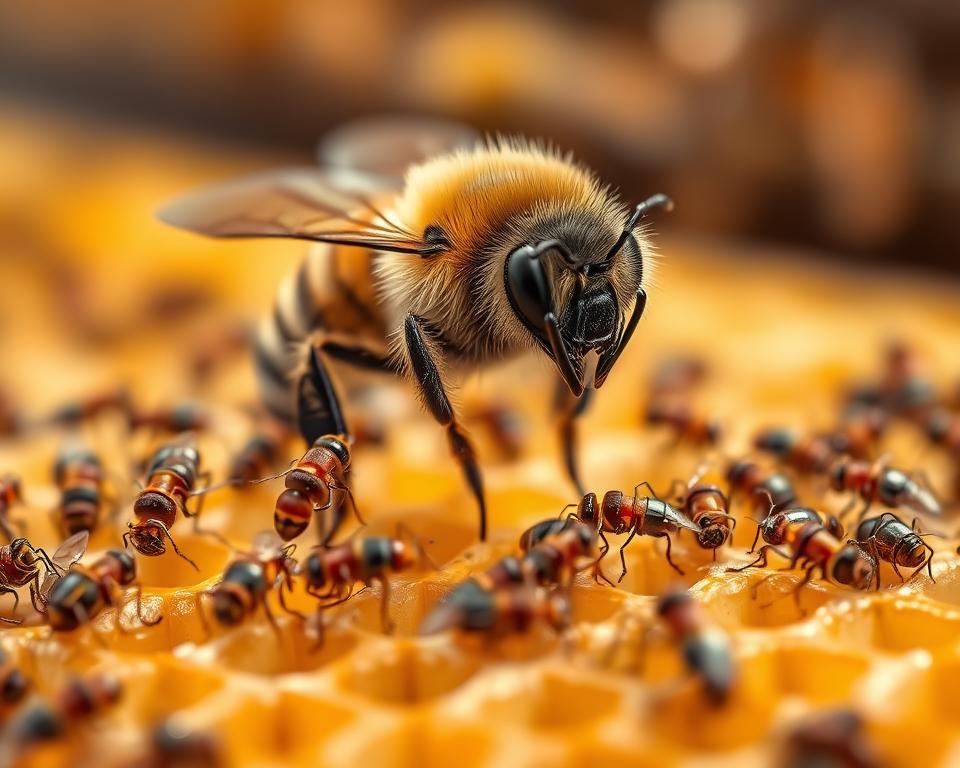
Predatory mites eat Varroa mites, keeping their numbers down. This is part of a bigger plan to keep bee colonies healthy.
Types of Predator Mites
There are many types of predator mites that eat Varroa mites. Stratiolaelaps scimitus is one that’s been studied a lot. It’s known to be a effective predator that can cut down Varroa mite numbers a lot.
How to Introduce Predator Mites to Colonies
Introducing predator mites to bee colonies needs careful planning. First, make sure the colony is strong and healthy. Then, put the mites on the bees or in the hive. It’s important to follow the right steps to make sure the mites work well.
Monitoring Success with Predator Mites
To see if predator mites are working, beekeepers need to check Varroa mite levels often. They can use sugar dusting or alcohol wash methods to do this. By watching the Varroa mite numbers, beekeepers can see if the mites are helping and make changes if needed.
Using predator mites in Varroa control is a step towards a more natural way to manage pests. Along with other methods, it helps keep bee colonies healthy.
Cultural Management Practices
Cultural management practices are key to keeping bee colonies healthy. They help reduce Varroa mite impact. This approach makes the apiary ecosystem more balanced.
Maintaining Healthy Bee Colonies
Keeping bee colonies healthy is essential for Varroa mite management. Bees need adequate nutrition, clean water, and good living conditions. A well-fed colony can better fight off Varroa mites.
- Provide a diverse range of forage to enhance bee nutrition.
- Ensure access to clean water sources.
- Maintain clean and well-ventilated hives.
Queen Rearing Techniques
Queen rearing is vital for strong, healthy colonies. Beekeepers select queens with desirable traits like hygiene and Varroa mite resistance. This helps breed queens that produce resilient offspring.
Some key considerations include:
- Selecting breeder queens from colonies that show natural resistance to Varroa mites.
- Implementing grafting techniques to produce high-quality queens.
- Monitoring the performance of new queens and adjusting breeding programs.
Other Environmental Considerations
Environmental factors also affect Varroa mite management. Managing the apiary environment reduces bee stress and Varroa mite spread.
Key strategies include:
- Strategically placing hives for sun and airflow.
- Avoiding overcrowding for better colony health.
- Monitoring local pesticide use and promoting bee-friendly practices.
Monitoring Varroa Populations
To manage Varroa mites well, beekeepers need to check their numbers often. This is key because it helps them see how bad the problem is. Then, they can pick the best way to treat it. Keeping an eye on Varroa mites helps beekeepers protect their bees and keep the colonies healthy.
Tools for Monitoring Mite Levels
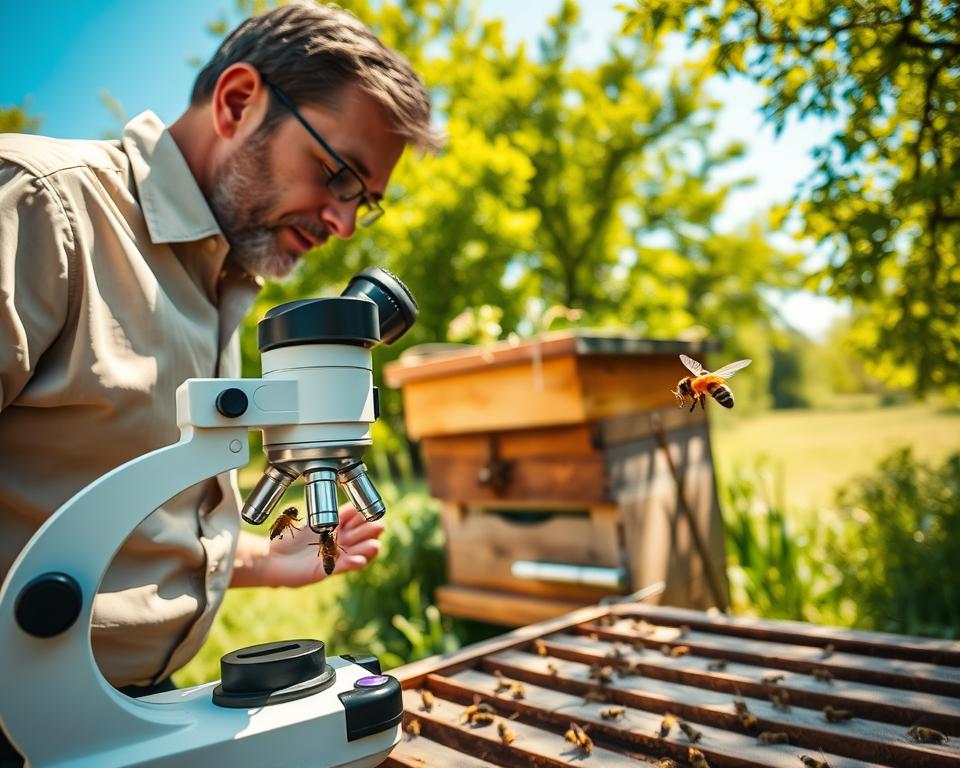
There are many tools for checking Varroa mite levels. Each has its own benefits. Here are some common ones:
- Sugar Dusting: This method uses powdered sugar to make mites fall off, making them easier to count.
- Alcohol Wash: Bees are washed in alcohol to kill mites, then counted to figure out how bad the infestation is.
- Sticky Boards: These boards have a sticky side that catches mites falling from the colony, showing how active they are.
How to Interpret Monitoring Results
Understanding what the monitoring results mean is very important. A high mite count means you need to act fast. But a low count means your current plan is working. When looking at the results, consider these things:
- Economic Thresholds: Know when Varroa mites start to hurt your bottom line.
- Colony Health: Look at how strong and healthy your colony is. This affects how Varroa mites impact it.
- Seasonal Variations: Remember that Varroa mite numbers can change with the seasons.
Adjusting Treatments Based on Data
After checking Varroa mite levels and understanding the results, beekeepers can change their treatment plans. They might switch treatments, do them more often, or use a mix of methods. The goal is to be flexible and adapt to what’s happening in the colony.
By using data to guide their Varroa mite management, beekeepers can use Alternative Varroa Mite Treatments and non-chemical Varroa remedies more effectively. This helps keep their bees healthy and productive.
Success Stories from Beekeepers
Beekeepers are seeing a big drop in mite infestations by using bee-friendly Varroa treatments. This change to natural methods helps both the bees and the environment.
Case Studies Using Alternative Treatments
Many beekeepers have studied the success of new treatments. For example, one beekeeper saw a big drop in Varroa mites after using essential oils.
Another beekeeper used organic acids and saw a big boost in bee health. These stories show that new treatments can fight Varroa mites well.
Testimonials on Effectiveness
Beekeeper stories share real success with new treatments. They talk about better bee health and fewer mites.
“Switching to natural treatments was one of the best decisions I made for my bee colonies. The results have been outstanding.”
Lessons Learned from Real Experiences
Experiences of beekeepers using new treatments teach us a lot. A key lesson is the need for consistent monitoring and adjusting treatments as needed.
- Regularly inspect your bee colonies to catch any problems early.
- Be ready to change your treatment plans based on what you find.
- Try mixing different new treatments for better results.
By learning from others, you can improve how you manage Varroa mites. This helps keep your bees healthy.
Combining Treatments for Better Results
Controlling Varroa mites requires a holistic approach. This means using different treatments together. This way, beekeepers can keep their bees healthier and more effective.
Multi-faceted Approaches to Control
One treatment might not be enough to fight Varroa mites. It’s better to use many methods together. This could include essential oils, organic acids, and integrated pest management (IPM) techniques.
For example, mixing essential oils like thyme and eucalyptus with organic acids like formic acid works well. This combo attacks Varroa mites at all life stages, making it more effective.
Balancing Natural and Chemical Options
It’s important to mix natural and chemical treatments. Chemicals can work fast but might harm bees if not used carefully. Natural options like essential oils and mites are safer but might need more use.
Start with natural treatments and watch how they work. If needed, add chemicals later. This way, you protect your bees while controlling Varroa mites.
Adjusting Strategies Based on Results
It’s key to check how your treatments are doing. Look at mite levels and bee health often. Use this info to change your plans for better results.
- Keep detailed records of the treatments used and their outcomes.
- Be prepared to switch or combine treatments as needed.
- Stay informed about the latest research and developments in Varroa mite management.
Being flexible and open to change helps create a lasting Varroa mite management plan. This plan keeps your bee colonies healthy for a long time.
Future of Varroa Mite Management
Managing Varroa mites is a field that keeps growing, with new ways to fight them. Beekeepers need to keep up with the latest Alternative Varroa Mite Treatments. This helps us deal with these pests better.
Innovations in Beekeeping
New treatments like mite-resistant bees and biocontrols are showing great promise. It’s important to keep researching these methods. We need to make sure they’re safe for our bees.
Community-Driven Solutions
The beekeeping community is key in finding ways to manage Varroa mites. By sharing what we know, we can come up with better ways to control mites naturally. I think working together will help us find new, lasting solutions.