


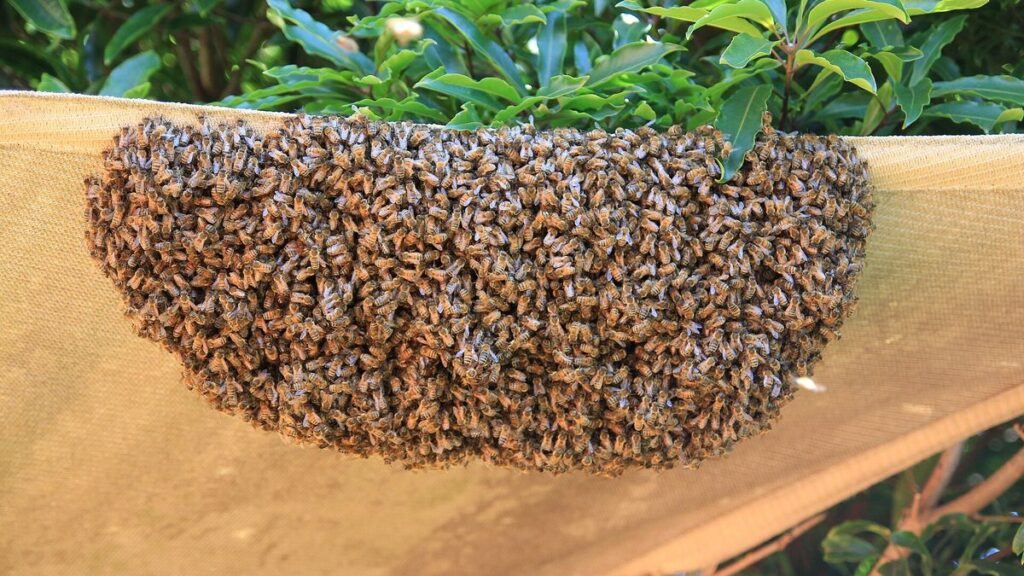
Every spring, healthy colonies reproduce by swarming. Thousands of bees leave with the old queen, hang in a cluster for a few hours or days and then move into a new home chosen by their scouts. A swarm trap, also called a bait hive, is simply a box designed to be that new home. Set up well, it can give you free bees, help you recover swarms from your own apiary and reduce the chance of colonies settling in a neighbor’s wall or chimney.
In this guide you will learn what scout bees look for, how to choose or build a trap, which baits work, where and when to hang it, how often to check it and how to transfer a captured swarm into a standard hive without losing it.
What scout bees look for in a new home
When a colony prepares to swarm, a few hundred older foragers become scouts. They search the landscape for cavities, inspect them from the inside and then “vote” by dancing for the sites they like. The swarm only moves when enough scouts agree on one place. Research on wild honey bee colonies, especially the work of Thomas Seeley at Cornell, has shown that scouts are surprisingly consistent in what they prefer.
The main features are:
- A cavity of the right size: big enough to store honey for winter but not so large that the colony struggles to heat it. A space close to the volume of a single deep Langstroth box is a good target.
- A small entrance: a modest opening is easier to defend and to keep warm. Scouts favor small round or slot-shaped entrances over wide ones.
- Entrance near the bottom: so warm air stays trapped above the cluster.
- Height above the ground: cavities a few meters up are chosen more often than those at ground level.
- A dry, dark, solid interior: no light leaks, no rain coming in and walls that do not wobble.
- The smell of bees: old comb and the scent of a previous colony make a box much more attractive.
A good trap simply recreates those conditions in a box you can reach and carry.
Choosing or building a swarm trap
You can buy ready-made traps made of wood, compressed fiber or plastic, or build your own. Whatever you choose, keep the design close to what scouts like and to the equipment you already use.
Use your standard frame size
The most practical option is a trap that holds the same frames as your hives. A single deep box with a solid bottom, a lid and a reduced entrance works very well. When bees move in, you can lift the frames straight into a permanent hive without cutting comb.
Features worth having
- A lid that seals: a tight top keeps out rain and light. Screw it down or strap it during transport.
- An entrance you can close: a sliding disk, a cork or a piece of screen makes it easy to close the trap at night before you move it.
- A way to hang or mount it: a cleat, a strap or a mounting board lets you fix the trap to a tree trunk or post safely.
- Drainage and ventilation that do not let light in: a few small screened holes low in the box help with condensation.
- Weather protection: paint or a natural wood treatment on the outside extends the life of the box. Leave the interior unpainted.
What to avoid
Avoid boxes that are too small, such as a single shallow super, because scouts tend to reject them. Avoid very light materials that heat up in the sun, and do not use a trap with a large open entrance. Thin cardboard can work for a season but breaks down quickly in the rain.
Baiting the trap: comb, lemongrass and pheromone lures
Bait is what makes scouts notice your box. Three types are commonly used, and they work best together.
- Old drawn comb: one dark frame of old brood comb is the strongest attractant because it smells like a former bee home. Make sure it comes from a healthy colony with no signs of disease. Never use comb from a colony that died of a disease such as American foulbrood, because you would spread the infection.
- Lemongrass oil: lemongrass essential oil contains compounds similar to the Nasonov pheromone bees use to mark a location. A few drops on a cotton swab or a piece of paper inside the box are enough. More is not better; a strong smell can repel bees.
- Commercial swarm lures: small vials or pouches that release a mix of pheromone-like compounds slowly over weeks. They are convenient if you have many traps.
Fill the rest of the box with frames of foundation or empty frames with a starter strip. Leaving a gap without frames invites bees to build wild comb attached to the lid, which is hard to transfer later. Also be aware that old comb can attract wax moths in warm weather, so check it during the season.
Where and when to place your trap
Timing
Put traps out a little before the local swarm season begins, which in temperate regions is usually from mid-spring to early summer, with a smaller wave in late summer in some areas. Ask experienced beekeepers in your local association when swarms usually appear in your region, since the season varies a lot with climate and altitude.
Location
- Height: mount the trap a few meters off the ground if you can do it safely. A trap at chest height still catches swarms, but higher placements tend to be more successful.
- Visibility: choose a spot scouts can find easily, such as a tree at the edge of a field, a hedge line or a building corner. A trap hidden deep in a dense forest is harder to notice.
- Shade: afternoon shade keeps the interior from overheating.
- Distance from your apiary: traps placed a short distance from your own hives, rather than right next to them, are often chosen by your own swarms. Traps elsewhere can attract wild or feral swarms.
- Permission: always get the landowner’s permission before placing a trap on property that is not yours, and follow any local rules about keeping bees.
Safety matters more than height. Never balance on an unstable ladder with a heavy box; use a pulley, a strap and a helper, or simply accept a lower position.
Checking the trap and recognizing activity
Look at your traps about once a week during the swarm season. You do not need to open the box: watch the entrance for a few minutes.
- Scout activity: a handful of bees walking in and out, inspecting the entrance and flying in irregular patterns. This means the box is being considered.
- Moved-in swarm: steady traffic, bees bringing in pollen and a calm, purposeful rhythm at the entrance. Pollen is the clearest sign that a colony has started raising brood.
- No activity: move the trap, refresh the bait or replace the comb after a few weeks without visitors.
If a swarm has moved in, plan to transfer it within one to two weeks. Leaving it longer lets the bees build comb in odd places, and a trap is not designed to hold a colony for a whole season.
Moving a captured swarm into a permanent hive
Move the trap in the evening, when the foragers have come home. Close the entrance, strap the box and carry it gently to the apiary. Bees moved only a short distance may return to the old location, so either move them far enough away, keep them closed in a cool shaded place for a short time with ventilation, or place a branch in front of the entrance so they reorient when they come out.
The next day, or after the bees have settled, transfer them:
- Light your smoker and suit up, even though newly settled swarms are usually calm.
- Set up the new hive body on its stand in the final position.
- Lift the frames from the trap one at a time and place them in the same order in the hive.
- Shake or brush the remaining bees from the trap into the new box.
- Add frames of foundation to fill the box and close it with an inner cover and lid.
- Reduce the entrance to help the young colony defend itself.
If the swarm arrived early and the weather turns poor, feed it sugar syrup until it has drawn enough comb. A swarm from an unknown source can carry mites and diseases, so monitor varroa levels in the following weeks and keep the new colony at some distance from your other hives at first if possible.
Common mistakes with swarm traps
- Putting traps out too late: by the time you see swarms in your area, the best weeks may be over.
- Using too much lemongrass oil: a strong scent can repel instead of attract.
- Leaving the box empty: a frameless trap leads to cross comb on the lid.
- Using comb of unknown health: it can spread disease to the swarm and to your apiary.
- Never checking the traps: a colony left too long in a trap is harder to move and may abscond.
- Ignoring safety: falls from ladders cause more injuries than bee stings.
Summary
A swarm trap is a simple piece of equipment that copies what scout bees look for: a dry, dark cavity about the size of a deep hive box, with a small entrance near the bottom, placed a few meters above the ground. Bait it with one frame of healthy old comb and a small amount of lemongrass oil or a commercial lure, fill the rest with frames, and put it out a little before your local swarm season. Check the entrance weekly, move the colony in the evening once bees are bringing in pollen, and transfer the frames into a permanent hive within a week or two. Done this way, a few well-placed traps can add healthy colonies to your apiary each year and keep swarms from settling where they are not welcome.
Photo: MelbourneSwarm, by Sichy007, license CC BY-SA 3.0, via Wikimedia Commons. Cropped.