


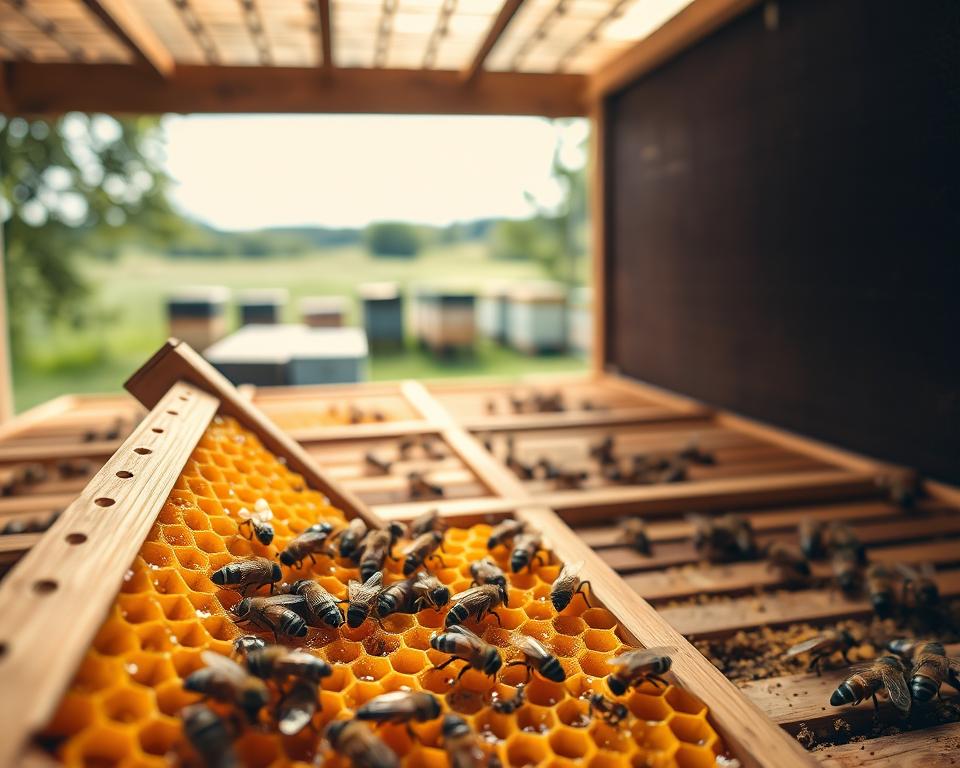
Did you know a single honeybee colony can make up to 100 pounds of honey each year? As a beekeeper, it’s key to know about the frames in your beehive. These frames are where bees keep honey and pollen, and where they raise their babies.
Checking the frames often is important for the colony’s health. This way, you can spot problems like pests or diseases early. As a beekeeper, having the right beekeeper tools is vital for looking at and taking care of the frames.
Key Takeaways
- Regular frame inspection is key for colony health.
- Frames are used for honey storage, pollen storage, and brood rearing.
- Spotting issues early is important for a healthy colony.
- Having the right beekeeper tools is essential for frame inspection.
- Understanding frames is vital for effective hive management.
Importance of Frames in Beekeeping
Frames are key in a beehive, supporting the bees’ natural ways. For a beekeeper, knowing how frames work is vital. It helps keep the colony healthy and productive.
What are Frames?
Frames in beekeeping are where bees build their comb, store honey, and raise their young. They are usually made of wood or plastic. This makes them easy to take out for checking and honey getting.
Types of Frames Used
There are many types of frames in beekeeping, each with its own benefits. Langstroth frames are very common because they work well with many hives. Top-bar frames let bees build comb in one direction, which is more natural. The type of frame depends on what the beekeeper likes and what the colony needs.
Role of Frames in Hive Structure
Frames are essential for the hive’s structure. They let bees build their comb and organize their work. With the right frames, managing the hive is easier. This makes checking the colony, getting honey, and fighting pests and diseases simpler.
Anatomy of a Frame
Beekeeping frames are more than simple structures; they are the heart of a thriving hive. Knowing the parts and types of frames is key for good beekeeping.
Key Components of a Frame
A beekeeping frame has several important parts, like the frame itself, foundation, and sometimes extra features. The frame gives the structure, and the foundation helps the bees build comb.
The material of the frame, whether wooden or plastic, matters for its strength and the bees’ liking. Some like wooden frames for their natural look. Others choose plastic for its easy cleaning and lasting quality.
Comparing Wooden and Plastic Frames
Choosing between wooden and plastic frames depends on several things, like durability, cost, and the bees’ liking. Here’s a quick comparison:
| Feature | Wooden Frames | Plastic Frames |
|---|---|---|
| Durability | Moderate | High |
| Cost | Variable | Generally Higher |
| Bee Preference | Generally Accepted | Accepted with Foundation |
Importance of Frame Size
The size of the frame is very important in beekeeping. Frames come in different sizes, and picking the right one is key for the colony’s health and productivity. The frame size helps the bees build comb and store honey, which affects honey production and the colony’s well-being.
During frame inspection, beekeepers check how the frame size affects the colony. Using the right beekeeper tools is important for a detailed inspection and keeping the frames in good shape.
How to Inspect Frames Properly
To keep your bees thriving, it’s key to check the frames in your beehive often. Frame inspection is a key part of beekeeping. It lets you watch your colony’s health, spot problems early, and fix them to keep your bees safe.
Tools Needed for Frame Inspection
Before you begin, make sure you have the right tools. A smoker is vital for calming the bees. It makes them think their hive is on fire, so they eat honey and get less aggressive. You’ll also need a hive tool to open the hive and remove wax or propolis.
A bee brush is useful for gently moving bees off the frames without hurting them. And, wearing a beekeeper’s veil and gloves will keep you safe from stings.

Steps for a Thorough Inspection
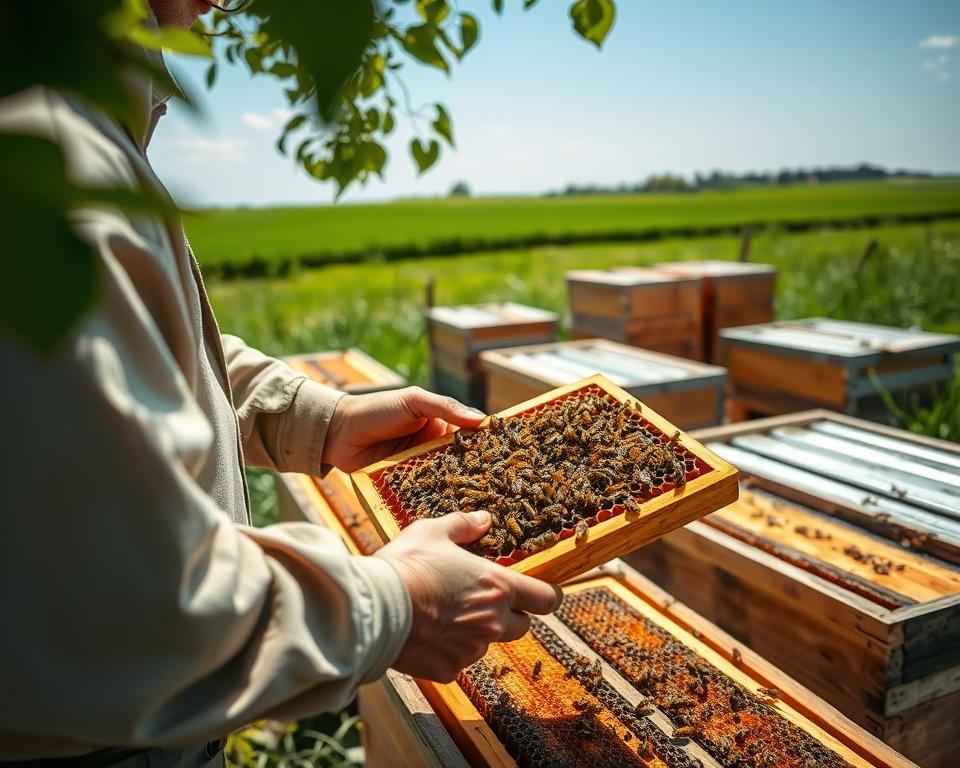
Inspecting your frames involves several steps. Start by smoking the bees to calm them. Then, remove the first frame and brush off any bees. Look for signs of disease, pests, or other problems.
Check if the queen is present, the brood amount, and the honey and pollen stores. Do this for each frame, noting any observations.
Also, check the frames themselves for damage, wear, or pests like wax moths or small hive beetles. After inspecting, put the frames back in the same order to keep the hive calm.
Regular and detailed frame inspections are a beekeeping best practice. They greatly affect your bee colony’s health and productivity. By following these steps and using the right tools, you can keep your bees healthy and your hive thriving.
Recognizing Bee Behavior on Frames
Watching how bees act on frames can tell a lot about the hive’s health. Beekeepers can spot problems early by seeing how bees interact with the frames.
Signs of a Healthy Hive
A healthy hive has active bees, a strong queen, and a neat brood pattern. Look for these signs:
- A steady and strong brood pattern shows a healthy queen.
- Bees should be busy coming and going from the hive.
- The hive should be clean with little disease or pests.
For more details on reading frames, check out this guide.
Identifying Pests and Diseases
Bees face many pests and diseases that harm their health. Some common problems are:
- Varroa mites can weaken bees and spread diseases.
- American Foulbrood is a deadly bacterial disease.
- Small Hive Beetles damage combs and cause bees to leave.
As beekeepers say, “Regular checks are vital for a healthy hive.” By watching closely, beekeepers can act fast to protect their bees.
Managing Honey Super Frames
To get the most honey, beekeepers need to know how to handle honey super frames right. These frames are where bees store extra honey. Managing them well means getting the honey without hurting the hive or the bees.
When to Add Honey Supers
Adding honey supers at the right time is key. You should add them when the hive is strong and the brood boxes are full. This usually happens during the busiest nectar flow times.
Signs that it’s time to add a honey super include:
- A strong nectar flow
- Bees filling the brood boxes
- Presence of a robust bee population
How to Harvest Honey from Frames
Harvesting honey from frames needs to be done carefully. This avoids damaging the comb or hurting the bees. The steps usually involve taking out the frames, brushing off the bees, and then getting the honey out.
Steps for harvesting honey:
- Remove frames from the honey super
- Brush off bees from the frames
- Extract honey using a centrifuge or extractor
- Filter the honey to remove wax and debris
| Best Practices | Benefits |
|---|---|
| Regular inspection of frames | Early detection of pests and diseases |
| Proper timing for adding honey supers | Maximizes honey production |
| Careful harvesting techniques | Preserves the quality of the honey and the health of the bees |
By sticking to these beekeeping tips, beekeepers can get a lot of high-quality honey. They also keep their bees healthy and productive.
Frame Placement and Arrangement
Proper frame placement is key for hive management. The way frames are arranged in your beehive affects bee productivity and health. Here, I’ll share tips on frame placement and how to optimize space for your bees.
Best Practices for Frame Placement
When placing frames, think about bees’ natural behavior. Bees move upwards and outwards from the hive center. So, frames should be set up to help this movement.
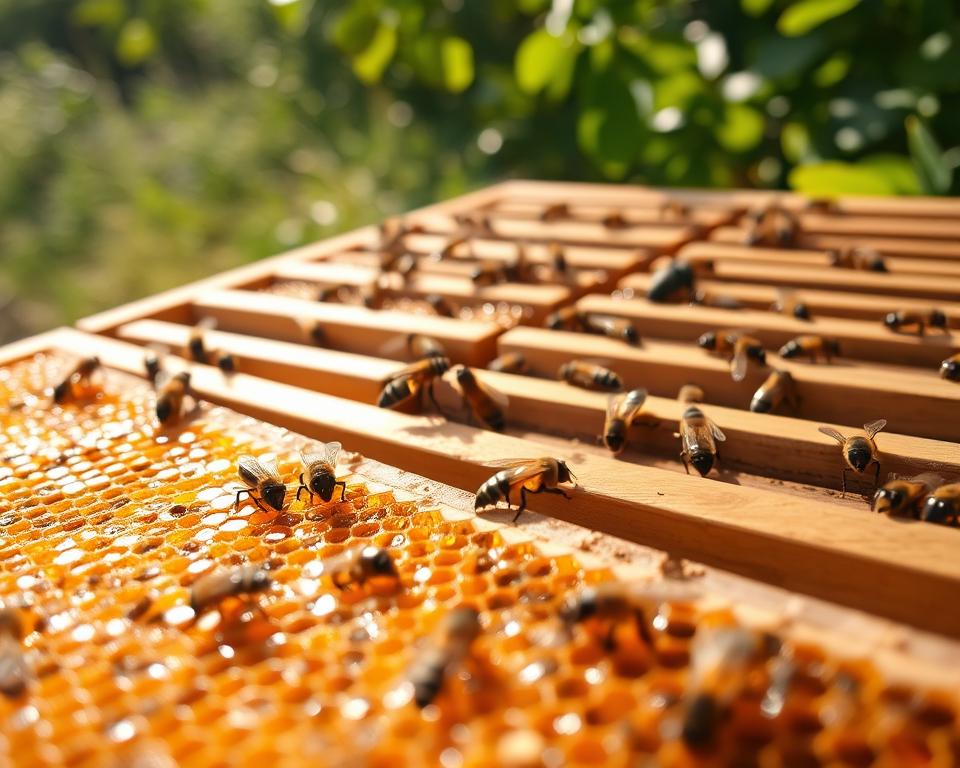
- Make sure frames are aligned right to stop bees from building comb between them, making checks hard.
- Leave enough space between frames for easy checks and to avoid comb damage.
- Set frames parallel to the hive entrance to help bees move into the supers.
Optimizing Space for Bee Activity
It’s important to optimize space in the hive for beekeeping techniques that support healthy bee activity. Good spacing lets bees store honey and pollen and the queen to lay eggs.
Some key points to consider are:
- Add supers as needed to give bees room for honey storage.
- Ensure the brood nest isn’t too tight, allowing for healthy brood growth.
- Regularly check the hive to adjust frame spacing as needed.
By following these best practices and optimizing frame placement, beekeepers can greatly improve their bee colonies’ health and productivity.
Understanding Brood Patterns
The way bees lay their brood shows how healthy the colony is and how well the queen is doing. Knowing these patterns is key for a beekeeper to keep the colony thriving.
Brood patterns tell a lot about the hive’s health. A solid pattern means the queen and colony are doing well. But, irregular patterns or gaps can mean disease, pests, or a failing queen.
Types of Brood Patterns
There are different brood patterns beekeepers need to know:
- Solid Brood Pattern: Shows a healthy queen and colony.
- Patchy Brood Pattern: May mean disease or pests in the brood.
- Irregular Brood Pattern: Can point to a failing queen or colony problems.
Knowing these patterns helps beekeepers take the right steps. For example, if there’s a patchy pattern, checking for pests or disease and acting is important.
Implications of Brood Patterns for Beekeeping
Understanding brood patterns is very important for beekeeping. By watching these patterns, beekeepers can:
| Brood Pattern | Implication | Action |
|---|---|---|
| Solid | Healthy colony | Maintain current practices |
| Patchy | Disease or pests | Inspect and treat |
| Irregular | Failing queen | Consider requeening |
John W. Foster, a well-known beekeeper, said, “The brood pattern is a map to the health of your colony; read it carefully.” This shows how vital it is to watch brood patterns for bee colony maintenance and beekeeping best practices.
By understanding and reading brood patterns, beekeepers can make smart choices to keep their colonies healthy and productive. This knowledge is essential for good beekeeping and helps the apiary succeed.
Common Mistakes with Frames
Beekeepers often face problems with frames that can be prevented with the right knowledge. Proper frame management is vital for a healthy hive and a good honey harvest.
Managing frames requires careful attention and understanding of bee behavior. Two common mistakes are overcrowding frames and using incompatible frame types. Let’s look at these issues closer.
Overcrowding Frames
Overcrowding can stress a bee colony, lowering productivity and increasing disease risks. Beekeepers must ensure enough space for bees to move and store honey.
- Regularly check the hive to see how many bees and how much honey there are.
- Add supers when needed to give more space.
- Split the colony if it’s too big for the hive.
Effective space management helps create a healthy bee environment, leading to better hive management.
Using Incompatible Frame Types
Frames that don’t match the hive or other frames can cause big problems. Bees struggle to build comb, and inspections become harder. It’s key to pick frames that work well together.
- Choose frames from the same maker for best compatibility.
- Think about the foundation type, as bees might prefer some over others.
- Consider the frame materials, as some are more durable or easier to clean.
By picking the right frames and using the right beekeeper tools, beekeepers can make their work easier and improve their bees’ environment.
In summary, avoiding common frame mistakes is essential for successful beekeeping. Understanding the importance of frame management and avoiding overcrowding and incompatibility helps beekeepers keep their hives healthy and productive.
Maintaining and Cleaning Frames
To keep your bees healthy and thriving, it’s essential to maintain and clean their frames regularly. Regular maintenance not only ensures the health of your bees but also improves honey production and overall hive health.
Recommended Cleaning Methods
Cleaning frames can be done using various methods, but it’s vital to choose a method that is safe for the bees. One effective method is using a mixture of soap and water. This method is gentle on the frames and effectively removes dirt and debris.
Another method involves using a flame gun to sterilize the frames. This method is useful for removing wax and propolis. But, it requires caution to avoid damaging the frames.
“The cleanliness of the hive is directly related to the health of the bees. Regular cleaning and maintenance are key.” –
How Often to Replace Frames
The frequency of replacing frames depends on several factors. These include the type of frame, the health of the bees, and the overall condition of the hive. Generally, it’s recommended to replace frames every 3 to 5 years.
- Inspect frames regularly for signs of wear and tear.
- Replace frames that are damaged or contaminated.
- Consider upgrading to newer frame designs for improved bee health.
By maintaining and cleaning your frames regularly, you can ensure a healthy environment for your bees. This leads to better honey production and a thriving hive.
Innovations in Beekeeping Frames
New advancements in beekeeping frames are making hive management better. They are also improving the tools beekeepers use. As the beekeeping world grows, so does the need for new frame materials and designs.
New Materials and Designs
New beekeeping frames come in different materials and designs. Plastic frames are popular because they last long and are easy to care for. They don’t get damaged by pests or diseases like wooden frames do.
Composite materials are another big step forward. They mix durability with being eco-friendly. These materials can handle tough weather, keeping frames strong and working well for a long time.
Benefits of Modern Frame Technologies
Modern frame technologies bring many benefits to beekeepers. One key advantage is better hive management. These frames make it easier to check on the bees and get honey. This saves time and effort.
| Feature | Traditional Frames | Modern Frames |
|---|---|---|
| Material | Wood | Plastic, Composite |
| Durability | Prone to pests and decay | Resistant to pests and diseases |
| Maintenance | Frequent inspections and replacements | Easy to clean and maintain |
By using these new innovations, beekeepers can make their work better. This helps keep their bees healthy and improves the honey they make.
Educational Resources for Beekeepers
The world of beekeeping is vast and always changing. This makes educational resources very important. As beekeepers, we always look for new knowledge to better our practices and keep our bees healthy.
I’ve put together a list of top educational resources. These include books, guides, and online courses. They cover everything from basic beekeeping to advanced techniques.
Recommended Books and Guides
Books and guides are key for any beekeeper. They provide detailed info on beekeeping, bee biology, and managing hives. Some top picks include:
- The Beekeeper’s Handbook by Diana Sammataro and Alphonse Avitabile
- Honey Bee Biology and Beekeeping by Dewey M. Caron and Lawrence J. Connor
- Local beekeeping guides that offer advice for your area
For more on frame reading and hive inspection, check out Dadant’s Frame Reading 101. It’s full of helpful tips.
Online Resources and Courses
Online resources and courses are also popular. They’re flexible and cover a wide range of topics. Some great online resources include:
| Resource | Description |
|---|---|
| Beekeeping Online Courses | Courses on beekeeping basics, bee health, and honey production |
| Bee Culture | A magazine with articles, tips, and news for beekeepers |
| American Beekeeping Federation | An organization with resources, conferences, and networking |
By using these educational resources, beekeepers can grow their knowledge. They can improve their techniques and help their bee colonies thrive.
Connecting with Local Beekeeping Communities
Being part of a beekeeping community is key to improving your beekeeping skills. It’s not just about knowing how to maintain a bee colony. It’s also about learning from others who face similar challenges.
Joining Beekeeping Associations
Joining local beekeeping associations is a great way to connect and learn. Groups like the American Beekeeping Federation offer workshops and conferences. These events help beekeepers get better at reading and understanding frames.
Benefits of Networking with Beekeepers
Networking with beekeepers is a great way to share ideas and advice. By connecting with local beekeepers, you can learn new techniques. You can also get help with common problems.