


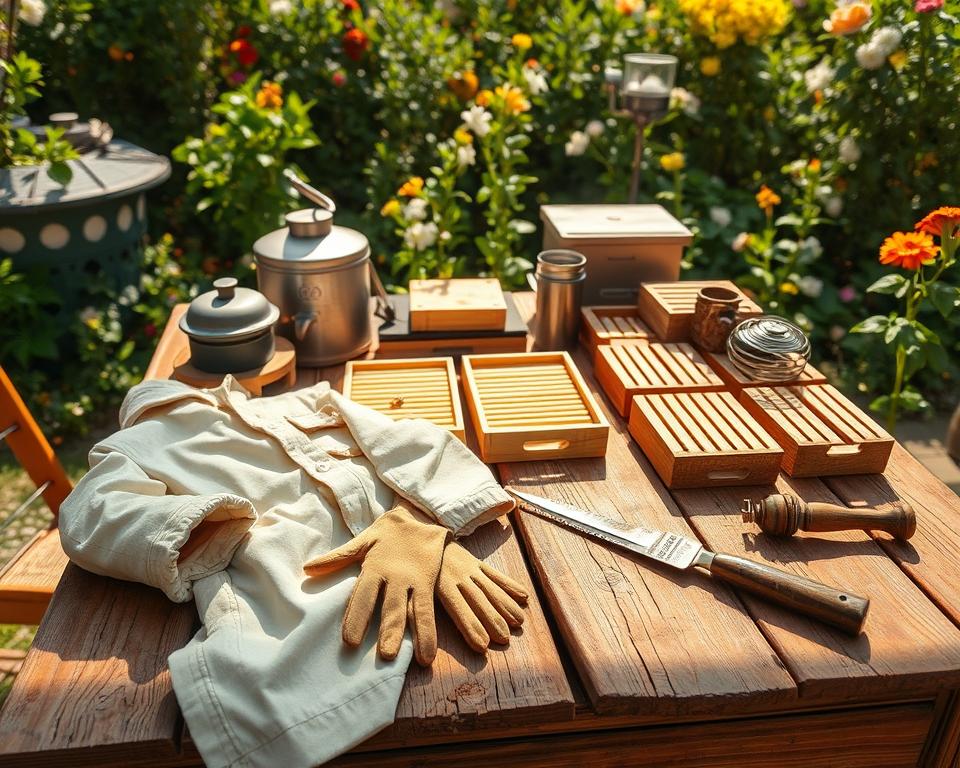
Did you know the global beekeeping market is growing fast? This growth is due to more people wanting honey and other bee products. Starting your beekeeping journey can be tough, but finding apiary gear is a big part of it.
Buying pre-owned beekeeping equipment is a smart way to save money. In this guide, I’ll show you how to buy used equipment. We’ll look at the benefits and what to think about when you make a purchase.
With the right information, you can find great used beekeeping equipment. This will help you start a successful apiary.
Key Takeaways
- Benefits of buying pre-owned apiary gear for beginners
- Where to look for high-quality used beekeeping equipment
- Key considerations when purchasing pre-owned apiary gear
- Tips for inspecting and maintaining used beekeeping equipment
- How to ensure a successful start to your apiary journey
Why Consider Used Beekeeping Equipment?
Beekeeping can be expensive, but buying used equipment helps save money. It’s important to think about the pros and cons of new versus used gear.
Used beekeeping equipment is cheaper. For example, a new beehive costs $100 to $300. But, you can find a used one for much less.
Cost Savings Compared to New Equipment
Used beekeeping equipment can save you a lot of money. Here’s a look at the prices of new versus used items:
| Item | New Price | Used Price |
|---|---|---|
| Beehive | $150-$300 | $80-$200 |
| Protective Suit | $50-$100 | $30-$70 |
| Smoker | $20-$50 | $10-$30 |
As the table shows, used equipment can save you up to 50%.
Environmental Benefits of Reusing Equipment
Using used beekeeping equipment is good for the planet. It reduces the need for new resources and cuts down on waste. This fits with the growing trend of sustainable beekeeping.
Finding Hidden Gems in Pre-Owned Gear
Used beekeeping equipment can include rare items that are hard to find. This is great for beekeepers looking for specific gear. You might find unique or vintage items that make your beekeeping better.
In summary, used beekeeping equipment is a wise choice for beginners. It saves money, is good for the environment, and might have rare items. When starting your beekeeping journey, looking at used equipment can help you set up without spending too much.
Where to Look for Used Beekeeping Equipment
Looking for used beekeeping gear? It’s important to know where to find it. Whether you’re new or experienced, finding good deals on quality equipment is key.
There are many places to look for used beekeeping equipment. Here are some top spots to start:
Online Marketplaces for Beekeeping Supplies
Start with online marketplaces for beekeeping supplies. Sites like Willbees let beekeepers buy and sell used gear. You’ll find everything from hives to protective suits.
Benefits of Online Marketplaces:
- Wide selection of used equipment
- Shop from home
- Compare prices easily
Local Beekeeping Associations and Clubs
Local beekeeping groups are also great resources. Members often sell their used equipment. Networking can help you find great deals.
Tips for Networking:
- Go to local beekeeping meetings
- Join online forums for local clubs
- Share your needs and budget
Estate Sales and Auctions
Estate sales and auctions can have used beekeeping gear. But, be careful. Make sure to check the equipment and understand the sale terms.
Key Considerations:
| Aspect | Description | Importance |
|---|---|---|
| Condition of Equipment | Check for damage | High |
| Sale Terms | Know the return and refund policies | High |
| Price Comparison | Research fair prices | Medium |

Assessing the Condition of Used Equipment
Checking the condition of used beekeeping equipment is key to a smart buy. It’s not just about finding a good price. You also want to make sure it works well.
Signs of Wear and Tear in Beekeeping Gear
Looking for wear and tear in used beekeeping gear is important. Watch for damaged or rusty parts that could harm the equipment. Also, check for mold or mildew, which means it might have been stored wrong.
Worn-out hive stands, cracked supers, or frames with broken wires are common signs. Inspect everything closely. These problems can hurt your beekeeping work.
Questions to Ask the Seller
When buying used beekeeping gear, ask the seller about its past. Find out the age of the equipment and how it was used. Ask if it was properly stored and maintained and if there were pest or disease issues.
Also, ask if it was used with certain bee breeds. Have there been any changes or repairs? Knowing this helps you decide if it’s a good buy.
Understanding Equipment Lifespan
Knowing how long used beekeeping equipment lasts is important. Different items last different amounts of time. For instance, beehives can last many years with care, but protective clothing may need to be replaced often.
When looking at equipment lifespan, check its condition and any wear. Learning the average lifespan of what you’re interested in helps. This way, you can find great deals and avoid bad choices.
Essential Items to Look for While Buying
When you buy used beekeeping equipment, you need to be careful. It’s important to know what’s key for your beekeeping setup. Start by focusing on the essential items that will be the base of your apiary.
Beehives and Hive Components
The beehive is the heart of your beekeeping. When buying used, check the hive for damage or wear. Look for:
- Hive boxes that are sturdy and free from significant damage
- Frames that are intact and have been properly maintained
- A foundation that is not warped or damaged
A good hive is key for your bees’ health. Look for a top-rated secondhand beekeeping gear seller to get quality equipment.
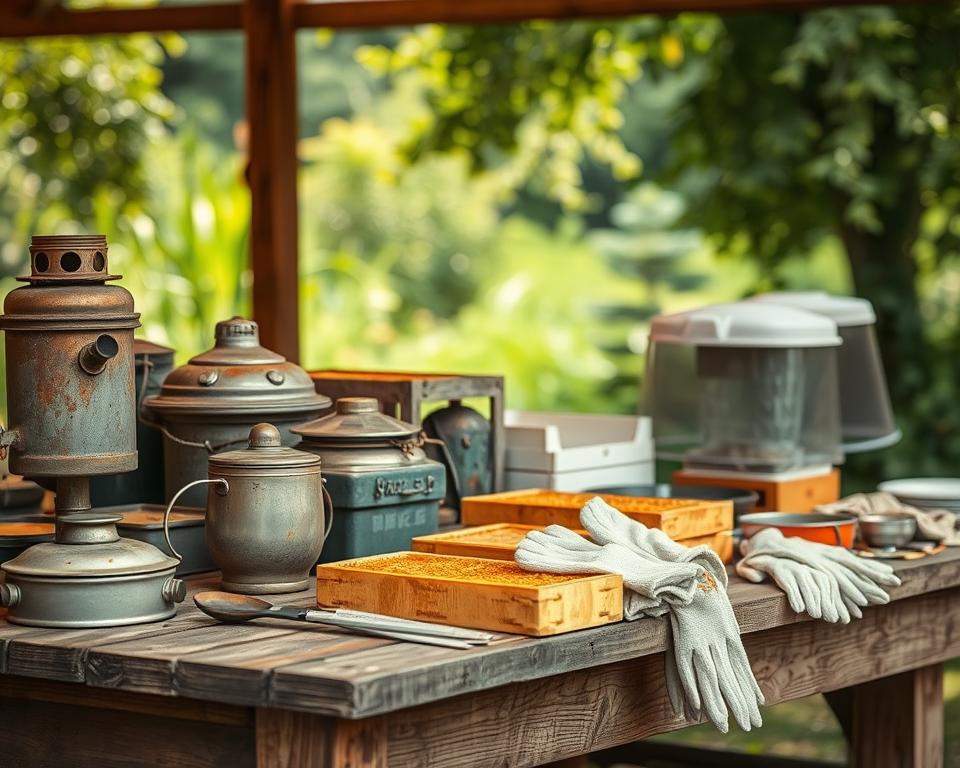
Protective Gear and Clothing
When working with bees, safety comes first. Your protective gear should include:
- A beekeeping suit that covers you fully, including a veil to protect your face
- Gloves that are durable and provide good dexterity
Check the gear for wear or damage. Make sure it protects you well and is comfy to wear.
Tools for Managing Your Bees
Several tools are key for managing your bees. These include:
| Tool | Purpose | What to Look for When Buying Used |
|---|---|---|
| Smoker | Calms bees by producing smoke | Check for rust, ensure it works properly |
| Hive tool | Used to open hive boxes and scrape propolis | Look for signs of wear, ensure it’s sturdy |
| Frame grip | Helps in handling frames | Inspect for damage, ensure it grips frames well |
When buying these tools, check their condition and if they meet your needs. Buying from a reputable seller of used beekeeping supplies for sale can help you find the right tools at a good price.
Negotiating the Price on Used Equipment
Negotiating the price of used beekeeping equipment is an art. It requires knowing the equipment’s condition, the market value, and being ready to make a strong offer. As a buyer, understanding what you’re willing to pay and what you need in the equipment is key.
Tips for Bargaining Effectively
To bargain well, research is essential. Look up similar used beekeeping equipment prices online to find a fair price. When checking the equipment, note any damage or wear. This can help in your negotiation.
- Be respectful and polite during the negotiation process.
- Make a reasonable offer based on your research.
- Be prepared to walk away if the price isn’t right.
A seasoned beekeeper advises, “Negotiation is not just about getting the lowest price. It’s about finding a fair agreement for both sides. Be open to compromise and don’t hesitate to ask questions.”
“The key to successful negotiation is understanding the other party’s needs and being flexible. In beekeeping, this means being willing to work together to find a fair price for the equipment.”
Knowing the Fair Market Value
Knowing the fair market value of used beekeeping equipment is vital. Research online, talk to other beekeepers, and check local listings to find the average price for the equipment you want.
| Equipment | Average Price (New) | Average Price (Used) |
|---|---|---|
| Beehive | $100 | $60-$80 |
| Protective Suit | $50 | $30-$40 |
| Smoker | $20 | $10-$15 |
Making Offers Based on Condition
When making an offer, consider the equipment’s condition. For excellent condition, offer close to the market value. For damaged or worn-out equipment, you can negotiate a lower price.
For example, if a used beehive is missing frames, offer 20-30% less than the market value. This depends on the damage’s extent.
Being informed, prepared, and respectful helps you get the best deal on affordable second-hand beekeeping equipment. Enjoy your beekeeping journey.
Safety and Sanitation Considerations
When buying second-hand beekeeping gear, safety and cleanliness are top priorities. It’s important to think about disease and pest risks. Keeping your equipment clean and sanitized helps keep your bees healthy.
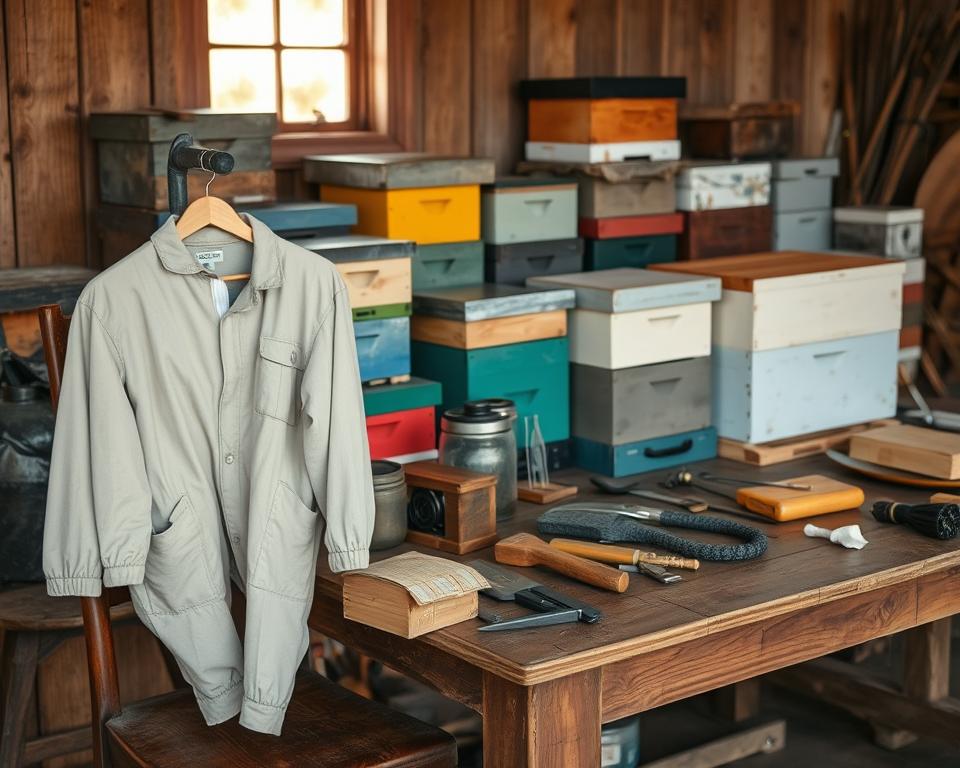
Cleaning Used Beekeeping Equipment
Start by cleaning your used beekeeping gear. Scrape off any visible debris or propolis before sanitizing. Use soap and water to scrub it well.
- Remove any old honey or wax to prevent attracting pests.
- Use a wire brush to clean hard-to-reach areas.
- Rinse the equipment thoroughly with clean water.
Ensuring Equipment is Disease-Free
After cleaning, check if the equipment is disease-free. Inspect the equipment carefully for any signs of disease or pest infestation. Look for unusual odors, discoloration, or signs of mites and other pests.
- Check for any signs of American Foulbrood (AFB) or other bacterial diseases.
- Inspect for Varroa mites and other parasites.
- Ensure that the equipment has been properly stored to prevent re-infestation.
Recommended Sanitation Practices
To keep your beekeeping equipment in good shape, regular cleaning is essential. Use a sanitizing solution like bleach or vinegar. Dry the equipment well after cleaning to avoid moisture buildup.
Some recommended practices include:
- Regularly inspect your equipment for signs of wear or disease.
- Store equipment in a dry, secure location.
- Consider using a pressure washer for thorough cleaning, but ensure the equipment is dried properly afterward.
By following these steps, you can make sure your used beekeeping equipment is safe and ready for use. This protects your bees and your apiary.
Connecting with Other Beekeepers
Connecting with fellow beekeepers has changed my beekeeping journey. Being part of a community has boosted my knowledge. It also opened doors to buy used apiarist tools online and share equipment tips.
Joining Local Beekeeping Forums
Joining local beekeeping forums is a great way to meet other beekeepers. These online spaces let us share our experiences and ask questions. They’re also where we find out about shopping for preloved beekeeping supplies.
By joining these forums, you learn the best beekeeping practices. You also find out about upcoming events and workshops.
Attending Beekeeping Workshops
Attending beekeeping workshops is another great way to meet others. These workshops give you hands-on experience. They also offer chances to meet people selling or looking for used equipment.
Networking for Future Equipment Deals
Building relationships in the beekeeping community helps you find deals on used equipment. Whether online or in person, networking can lead to good prices on the right gear.
Engaging with other beekeepers has shown me it’s more than just trading goods. It’s about sharing knowledge and supporting each other in beekeeping.
Testimonials from Beekeepers Who Bought Used
Beekeepers who bought used equipment share their stories. They offer advice for those thinking about it. Their experiences are full of valuable insights.
Success Stories of First-Time Beekeepers
Many first-timers have started with used equipment. Sarah, for example, bought a used beehive and gear from a local association. She found it in great shape and has harvested honey.
John also bought used equipment, including an extractor, online. He saved money and built a strong bee colony.
Lessons Learned from Used Equipment Purchases
Buying used equipment taught beekeepers a lot. One key lesson is to inspect the equipment well before buying. Emily says to look for signs of wear, like rust or damaged frames.
It’s also important to ask the right questions. Michael suggests asking about the equipment’s history. This includes how it was used and stored.
| Lesson Learned | Description | Benefit |
|---|---|---|
| Inspect Equipment Thoroughly | Check for signs of wear and tear | Avoid costly repairs or replacements |
| Ask About Equipment History | Understand how the equipment was used and stored | Make informed purchasing decisions |
| Consider the Seller’s Reputation | Purchase from reputable sellers or associations | Ensure a smooth transaction and reliable equipment |
Building a Community Through Shared Experiences
The beekeeping community thrives on shared experiences and knowledge. Beekeepers who bought used equipment can guide others. Online forums and local associations are great places to connect and learn.
As the beekeeping community grows, sharing experiences is key. By learning from those who bought used equipment, we can support each other better.
Transitioning to New Equipment After Buying Used
As your apiary grows, you might need new equipment. This is a normal part of beekeeping. Knowing when and how to upgrade is key.
When to Upgrade to New Gear
Upgrading is needed when your apiary gets bigger or your used gear wears out. Watch your equipment’s condition closely. Look for signs it’s time for a new one.
- Increased wear and tear that compromises the functionality of the equipment.
- Expansion of your apiary, requiring additional or more advanced equipment.
- Changes in beekeeping practices or regulations that necessitate newer equipment.
If you start with affordable second-hand beekeeping equipment and your apiary grows, you might need better gear.
Budgeting for Future Purchases
It’s important to save for future beekeeping equipment. Set aside some of your budget for upgrades or new items. Here are some budgeting tips:
- Regularly inspect your equipment to anticipate when upgrades might be necessary.
- Research the market for used beekeeping supplies for sale to understand the costs involved.
- Prioritize your needs based on the current state of your apiary and the condition of your equipment.
Maintaining Your Equipment Over Time
Keeping your beekeeping equipment in good shape is vital. Regular cleaning, storage, and checks are essential. This way, you can use your equipment longer and keep your bees healthy.
In conclusion, moving to new equipment is a big part of beekeeping. By knowing when to upgrade, saving for new items, and taking care of your equipment, you can keep your apiary thriving.
Resources for Beekeeping Equipment
Whether you’re new to beekeeping or have been doing it for years, good equipment and resources are key. Beekeeping is getting more popular, so finding reliable info and suppliers is more important than ever.
Guides for Beginners on Equipment Needs
For beginners, figuring out what equipment you need can be tough. Essential items include beehives, protective clothing, and tools for managing bees. Guides for beginners can help by listing the must-haves and giving tips on picking the right gear.
Learning from experienced beekeepers and joining local beekeeping groups is also helpful. These groups often have workshops and mentorship programs that cover equipment and more.
Recommended Suppliers for New and Used Gear
There are many places to find beekeeping equipment. For buying pre-owned apiary gear, online marketplaces and local beekeeping clubs are great. Websites focused on beekeeping often have sections for buying and selling used equipment.
For new gear, Mann Lake and Dadant & Sons are top choices in the beekeeping world. They sell a wide range of products, from beehives to protective clothing, and can help you choose the right gear.
Helpful Books and Websites for Further Learning
There are also many books and websites with useful info for beekeepers. Books like “The Beekeeper’s Handbook” by Diana Sammataro and Alphonse Avitabile are great for learning about beekeeping.
Websites like Beekeeper’s Guild and Honey Bee Health Coalition have lots of info on best practices, disease management, and community events. These resources are great for both new and experienced beekeepers looking to learn more.
By using these resources, beekeepers can make sure they have the right equipment and knowledge. Whether you need guides, suppliers, or more reading, the beekeeping community offers lots of support and information.
Conclusion: Making Informed Choices
Buying used beekeeping equipment is a smart way to start or grow your apiary without spending too much. By following the tips in this article, you can choose the best equipment for your needs.
Key Considerations
When looking for used beekeeping supplies, check the equipment’s condition and ask important questions. Knowing the fair market value is also key. This way, you’ll get quality equipment at a good price.
Exploring Used Equipment
We suggest you dive into the world of used beekeeping equipment. With the right gear and knowledge, you can manage your bees well. This will let you enjoy the many benefits of beekeeping.
By keeping these tips in mind, you’re ready to succeed in beekeeping. Whether you’re new or expanding, used equipment can help you reach your goals.