


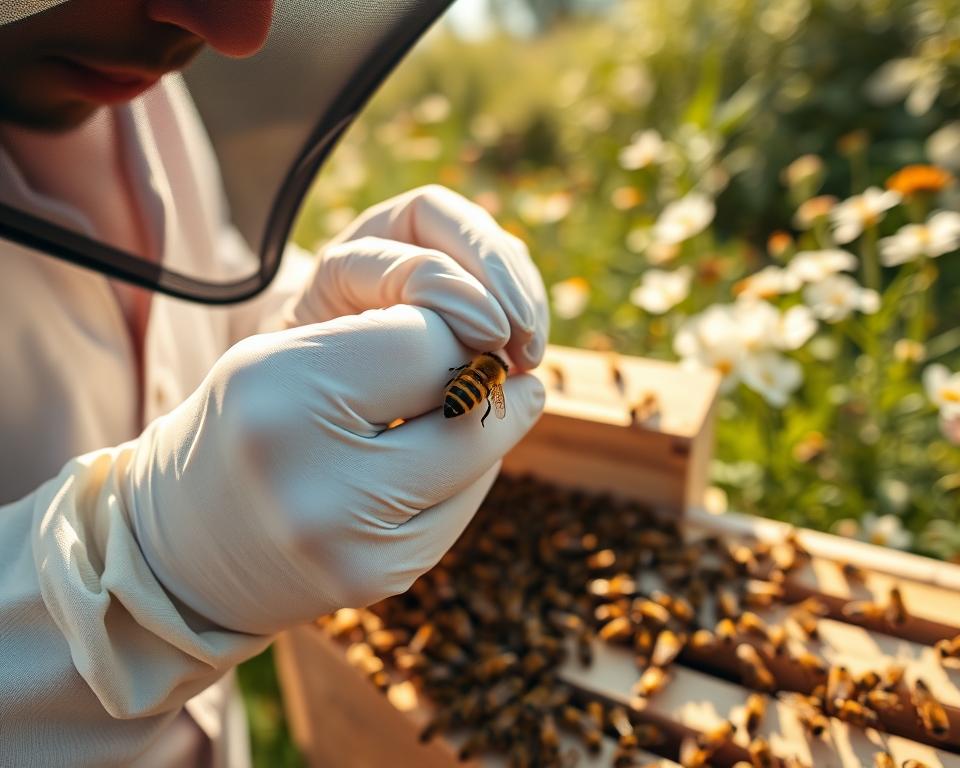
Did you know a single queen bee can lay up to 2,000 eggs daily? For new beekeepers, knowing how to mark the queen bee is key. It helps manage your hive well.
I’ll show you how to find and mark the queen. This makes caring for your beehive easier. Marking the queen lets you track her age, health, and how much honey she makes.
By the end of this guide, you’ll know how to spot and mark the queen. This ensures your hive stays healthy and strong.
Key Takeaways
- Understand the importance of marking the queen bee for effective hive management.
- Learn how to identify the queen bee in your hive.
- Discover the benefits of marking the queen bee, including tracking her age and health.
- Gain confidence in managing your beehive with a marked queen bee.
- Improve your beekeeping skills with this simple yet effective technique.
Understanding the Role of the Queen Bee
The queen bee is the heart of a healthy hive. She is the largest bee and lays eggs to keep the colony going. This is key to the hive’s survival.
“The queen is the nucleus around which the colony revolves,” beekeepers often say. Her presence and pheromones deeply affect the worker bees and drones.
Importance of the Queen in the Hive
The queen’s role is huge. Without her, the hive would not survive. She is the only fertile female and controls the hive’s mood with her pheromones.
Key roles of the queen include:
- Laying eggs to ensure the colony’s population
- Producing pheromones that influence colony behavior
- Regulating the social hierarchy of the hive
How Queens Influence Colony Behavior
The queen’s pheromones are key in guiding the hive. They can signal when it’s time to swarm or stay calm during inspections.
As Dr. Eva Crane said, “The queen’s pheromones are a key factor in maintaining social order within the hive.” Knowing this helps beekeepers manage their hives better.
By understanding the queen’s impact, beekeepers can make smarter choices for their bees.
Identifying the Queen Bee
To mark the queen bee, you first need to find her among thousands of worker bees. Knowing her physical characteristics and behaviors is key.
Physical Characteristics of a Queen
The queen bee stands out due to her size and body shape. She is larger and has a more elongated body. Her longer abdomen is a clear sign she’s the queen.
Distinguishing the Queen from Worker Bees
Finding the queen in a crowded hive is tough. But, look for her larger size and distinctive shape. Her behavior is also different; she moves slowly and with purpose.
- Look for the bee with the longest abdomen.
- Observe the behavior; the queen moves more deliberately.
- Check for the presence of a marking if the queen has been previously marked.
Seasonal Changes in Queen Appearance
The queen’s look changes with the seasons. Nutrition and colony health play a role. Her color and size can change with age and time of year.
“The queen’s appearance can be affected by her age and the season, making it essential for beekeepers to be vigilant and knowledgeable about these changes.”
Knowing these changes helps beekeepers identify their queen. It also lets them check the colony’s health.
Tools Needed for Marking the Queen
Before you start marking the queen bee, make sure you have the right tools. This process needs precision and the correct equipment to avoid harming the bee.
Essential Beekeeping Tools
As a beekeeper, you probably already have some key tools. These include:
- A hive tool for opening the hive and scraping off excess wax or propolis.
- A smoker to calm the bees by producing a smoke that confuses them into thinking their hive is on fire, prompting them to gorge on honey and become less aggressive.
- A veil or beekeeping suit to protect yourself from stings.
These tools are essential for any beekeeping task, including marking the queen.
Recommended Marking Supplies
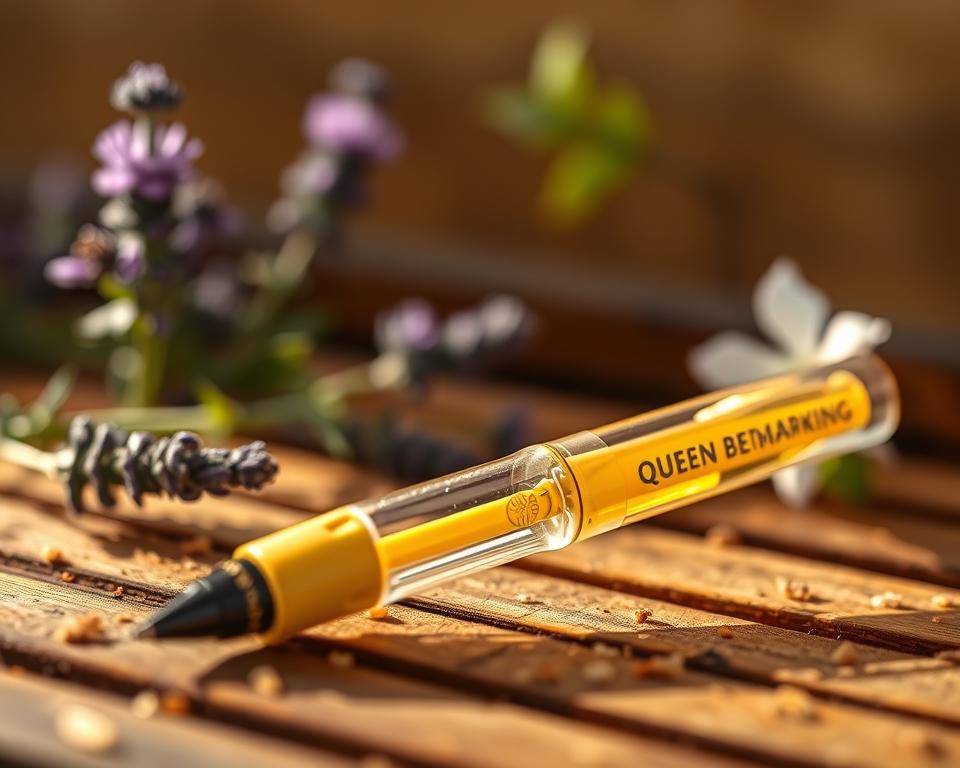
For marking the queen, you’ll need a queen bee marking pen. This pen is made for marking bees and is safe for them. I suggest using a high-quality marking pen that is durable and has a fine tip for precise marking.
Choosing the right color for marking is also key, as it helps identify the queen’s age and other important information. The International Colour Code for queen marking is a standard many beekeepers follow.

When picking a queen bee marking pen, look for one made for beekeeping and known for its quality. Thorne and Mann Lake are popular brands among beekeepers. These brands offer reliable products that are widely used in the beekeeping community.
With the right tools and supplies, you can have a successful queen marking experience.
When to Find the Queen Bee
Beekeepers should know the best times to check their hives for the queen bee. Knowing when the queen is most active helps find her. This increases the chances of spotting her.
Best Times for Hive Inspections
The best times to inspect hives are when it’s warm and bees are buzzing. This is usually late morning to early afternoon. The sun is out, and the air is mild.
- Inspect during warm weather: Bees are more active and the queen is more likely to be laying eggs.
- Avoid early morning and late evening: The bees are less active during these times, making it harder to locate the queen.
- Consider the hive’s condition: If the hive is under stress or there’s a nectar flow, the queen’s activity may increase.
Recognizing the Signs of a Laying Queen
To find the queen, look for signs of her presence. A laying queen will have eggs and brood in different stages in the hive.
Signs of a laying queen include:
| Sign | Description |
|---|---|
| Eggs | Present in the cells, usually at the center of the brood nest. |
| Brood | Various stages of development, from larvae to capped cells. |
| Queen Cups or Cells | May be present if the colony is preparing to swarm or supersede the queen. |
By knowing the best times to inspect and recognizing queen signs, beekeepers can find the queen. This is key for managing the hive and keeping the colony healthy.
Techniques for Locating the Queen
Finding the queen bee is the first step in queen marking. It requires careful attention and the right methods. As a beekeeper, knowing how to find the queen is key to managing your hive well.
Visual Searching Strategies
Looking for the queen is a common method. Beekeepers search the combs for her, often near the brood or where she lays eggs. It’s important to move slowly and gently to avoid disturbing the bees. They should look for the queen’s larger size and different color, depending on the marking.
To improve visual searching, beekeepers can follow these steps:
- Gently remove the hive boxes and inspect the frames one by one.
- Look for the queen on the combs, specially near the brood.
- Use a magnifying glass if needed, to get a closer look.
Using Smoke to Calm the Bees
Smoke is another great way to find the queen. It calms the bees, making it safer for the beekeeper to search. The smoke confuses the bees by masking the alarm pheromones they release when they sense danger.
A beekeeper says, “Smoking the hive is like giving the bees a false signal that their hive is on fire; they gorge on honey, thinking they’ll need it to survive, and become less aggressive.”
“The use of smoke is a critical component in beekeeping, allowing for a more relaxed inspection process.” – Experienced Beekeeper
The table below shows the benefits of using smoke when finding the queen:
| Benefit | Description |
|---|---|
| Reduced Aggression | Smoke calms the bees, reducing their aggression. |
| Easier Inspection | With calmer bees, inspecting the hive becomes easier. |
| Improved Safety | Less chance of getting stung during the inspection. |
By using both visual searching and smoke, beekeepers can greatly increase their chances of finding the queen bee.
Marking the Queen Bee
Marking the queen bee is key in beekeeping. It helps manage the hive better. A small mark lets beekeepers spot her easily, checking the hive’s health and work.
Choosing the Right Queen Marking Method
Many methods exist for marking a queen bee. But, using a queen bee marking pen is top choice. These pens are safe for bees and last long.
When picking a queen marking pen, think about these points:
- The paint must last a long time.
- The pen tip should be fine for small dots.
- The paint should stand out on the queen’s color.
Step-by-Step Instructions for Marking
Marking the queen bee needs care and precision. Here’s how to do it:
- Hold the queen gently between your thumb and index finger, without hurting her.
- With the queen bee marking pen, put a small dot of paint on her thorax.
- Put the queen back in the hive safely and without harm.
The color used should match the honeybee queen marking code. This code shows the queen’s age.
| Year | Color |
|---|---|
| 2023 | Blue |
| 2024 | White |
| 2025 | Red |
By following these steps and using the right beekeeping queen bee marking tools, you mark your queen safely and well.
Considerations for Marking
To mark the queen bee, beekeepers must think about safety and the bees’ well-being. Marking the queen is key in managing the hive. It helps beekeepers spot the queen bee and check her health.
Safety Precautions for Beekeepers
When working with bees, safety comes first. Beekeepers should wear a beekeeping suit, gloves, and a veil. Using smoke helps calm the bees before marking the queen.
Here are some key safety precautions to keep in mind:
- Wear protective clothing to cover all skin.
- Use a smoker to calm the bees before opening the hive.
- Avoid perfumes or colognes that might attract bees.
- Keep the hive area clean and free of debris.
Best Practices for a Stress-Free Experience
Following best practices makes marking the queen easier for everyone. Choose the right time to inspect the hive. Be gentle when handling frames.
| Best Practice | Benefit |
|---|---|
| Inspect the hive during calm weather | Reduces bee agitation |
| Use a gentle touch when handling frames | Minimizes disturbance to the bees |
| Keep inspections brief | Less stress on the bees and the beekeeper |
By following these guidelines, beekeepers can identify the honeybee queen and locate the queen bee in the hive more effectively. This ensures a stress-free experience for all.
Understanding Queen Marking Colors
Knowing the color code for queen bee marking is key to successful beekeeping. This system helps beekeepers track the queen’s age and birth year. It makes managing the hive easier and helps in making smart decisions about queen replacements.
The Color Code for Queen Bees
The color code for marking queen bees is based on the year of birth. Here’s how it works:
- Blue for queens born in years ending in 0 or 5
- White or Gray for queens born in years ending in 1 or 6
- Yellow for queens born in years ending in 2 or 7
- Red for queens born in years ending in 3 or 8
- Green for queens born in years ending in 4 or 9
This color code is internationally recognized. It’s used by beekeepers all over the world to easily identify a queen’s age.
Yearly Marking Color Changes
The color for marking the queen changes every year. For example, if a queen was marked with yellow in 2022, a new queen in 2023 would be marked with red. This system makes it easier for beekeepers to keep track of the queen’s age without needing to check the hive too often.
By using the queen marking color code, beekeepers can improve their hive management efficiency. This ensures the health and productivity of their bees.
Knowing the queen’s age helps beekeepers plan when to replace her. Queens usually need to be replaced every 2-3 years. This proactive approach helps prevent hive decline and keeps honey production going.
Post Marking Care for the Queen
After marking your queen bee, it’s important to watch her closely. This helps keep your hive healthy and productive. You’ll need to adjust how you manage your hive based on what you see.
Monitoring the Marked Queen’s Behavior
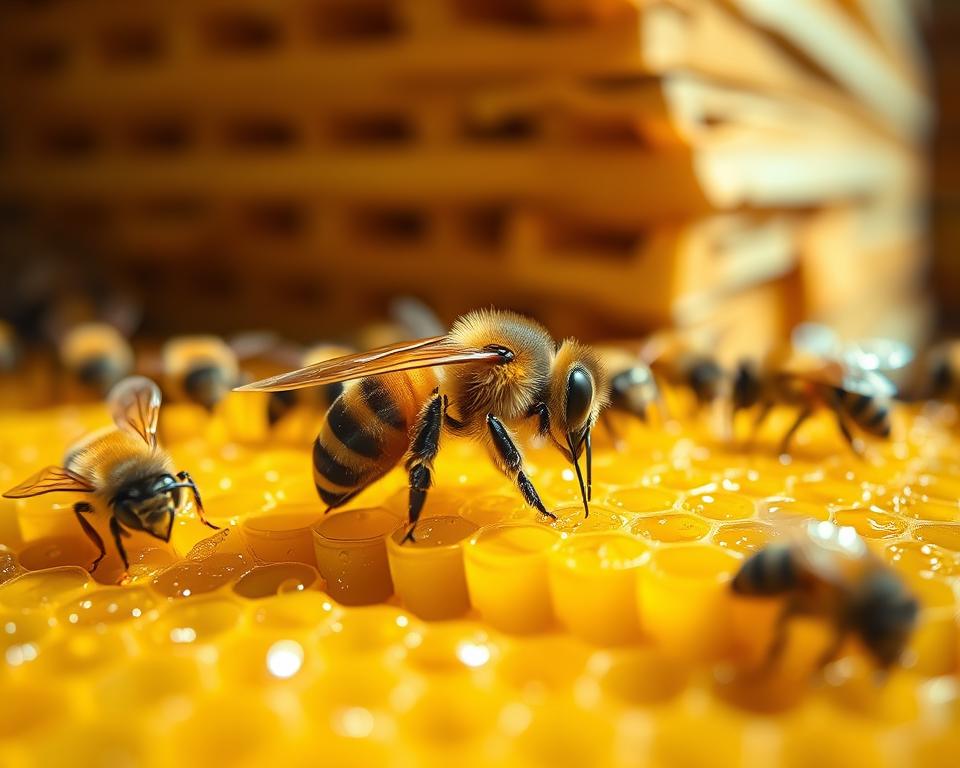
Watching how the marked queen acts is key to knowing your hive’s health. Look for signs of a healthy queen, like a steady laying pattern and brood at different stages. A well-marked queen makes it easier to check on her during inspections.
For more tips on marking a queen, check out Betterbee’s Queen Marking Guide.
Key behaviors to monitor include:
- Laying pattern consistency
- Brood production and health
- Queen interaction with worker bees
Adjusting Hive Management After Marking
After marking your queen, you might need to change how you manage your hive. This could mean checking the hive more often, dealing with pests, or changing the hive’s layout. A marked queen makes these tasks easier by being easier to find.
Consider the following adjustments:
| Adjustment | Purpose |
|---|---|
| Modifying inspection frequency | To closely monitor the queen’s laying pattern and overall hive health |
| Managing pests and diseases | To prevent issues that could affect the queen’s performance and the colony’s health |
| Adjusting hive structure | To accommodate colony growth and ensure the hive remains healthy and productive |
By watching your marked queen and making the right changes, you can keep your hive thriving.
Troubleshooting Queen Marking Challenges
Troubleshooting is key for beekeepers, mainly when marking the queen bee. Even with the right tools and techniques, problems can pop up. But being ready can make a big difference.
Common Mistakes to Avoid
When marking the queen bee, it’s vital to avoid common mistakes. These mistakes can lead to unsuccessful marking or harm to the queen. Some common errors include:
- Using the wrong type of queen bee marking pen that may not be suitable for the queen’s size or the beekeeper’s skill level.
- Not properly securing the queen during the marking process, leading to injury or escape.
- Marking the queen too aggressively, which can cause stress or damage to her.
Knowing these common mistakes helps beekeepers avoid them. This way, they can ensure a successful marking experience.
Dealing with an Uncooperative Queen
Sometimes, the queen bee may not cooperate during the marking process. This makes it hard for beekeepers to mark her. To handle an uncooperative queen, try these strategies:
- Use gentle handling techniques to minimize stress and discomfort for the queen.
- Ensure the hive is calm by using smoke before attempting to mark the queen.
- If the queen is very aggressive or uncooperative, it might be best to wait until she’s calmer.
By using these strategies, beekeepers can mark the queen successfully, even when she’s not cooperating.
The Benefits of Marking the Queen
Marking the queen bee is a key part of beekeeping. It helps beekeepers manage their hives better. This simple method boosts the health and productivity of the hive.
Increased Hive Management Efficiency
Marking the queen makes it easier to find her during inspections. This saves time and reduces the chance of missing her. It’s very helpful in big hives or when the queen is young and moves fast.
With a marked queen, beekeepers can watch her health and work better. They can see how well she’s doing and make smart decisions. This includes knowing when to split the hive or replace the queen.
Improved Record-Keeping for Beekeepers
Marking the queen also helps with keeping records. Beekeepers use a color code for marking. This makes it easy to track the queen’s age and other important details.
Keeping good records helps beekeepers see how the queen is doing over time. They can spot trends and make better decisions. This leads to healthier hives, more honey, and a better beekeeping experience.
In short, marking the queen bee is a great technique for beekeepers. It makes managing the hive and keeping records better. This leads to a more successful beekeeping journey.
Conclusion: Marking the Queen as an Essential Skill
Learning to mark the queen bee is key for beekeepers. It helps you manage your hive well and enjoy beekeeping. Finding the queen in the hive is a big step. With practice, you’ll get better at it.
Marking the queen bee is about knowing her role and how to mark her. It’s a simple yet powerful tool for beekeepers. As you get better, marking the queen will become a big part of your routine.
Practicing the Skill
I suggest beginner beekeepers practice marking the queen bee. Get to know the techniques and tools. With time, you’ll get good at it and feel confident managing your hive.
By making marking the queen a part of your routine, you’ll keep a closer eye on your hive’s health and productivity.