

As I dive into beekeeping and farming, I’m shocked by how fast bee colonies are vanishing. A recent study showed that nearly 40% of bee colonies in the United States were lost in just one year. This highlights the urgent need to protect bee health.
Monoculture, where only one crop is grown over a big area, is common worldwide. It may seem good for the economy in the short term. But, it harms biodiversity and bee numbers in the long run. It’s vital to grasp how farming affects bees to lessen these problems.
Key Takeaways
- Monoculture farming practices are linked to declining bee populations.
- The loss of bee colonies has significant economic and ecological implications.
- Diverse farming practices can help support bee health.
- Understanding the impact of monoculture on bees is key for sustainable farming.
- Mitigating monoculture’s effects needs a broad approach.
Understanding Monoculture Farming
Let’s dive into how monoculture affects bees. First, we need to know what monoculture farming is. It’s when one crop covers a big area of land. This method is common today because it’s cheap and efficient.
Definition of Monoculture
Monoculture means growing just one type of crop in a place. It’s different from growing many crops together, called polyculture. Monoculture farming makes it easier to manage and pick crops. Farmers can use the right amount of fertilizers and pesticides for that crop.
Common Monoculture Crops in the U.S.
In the U.S., corn, soybeans, and wheat are big monoculture crops. They cover a lot of land and help the country’s food supply. But, growing just these crops means less variety in crops and native plants.
Corn and soybeans are not just for food. They’re also used for biofuels and animal feed. This widespread use affects bees and other pollinators’ homes.
The Importance of Bees in Ecosystems
Bees are key to our planet’s health, helping with biodiversity and food growth. They play a big role in both the environment and our economy.
Bees are vital for pollination and food production. They help plants make seeds, which is essential for growing fruits, veggies, and nuts. These foods are what we eat every day.
Pollination and Food Production
Bees pollinate over 75% of the world’s crops, like coffee, chocolate, and apples. Without them, many crops would not grow well. This affects our food and the economy.
Bees pollinate more than just food crops. They also help flowers and other plants stay healthy. This keeps our ecosystems balanced.
- Coffee: A big part of the world’s coffee is pollinated by bees.
- Fruits and Vegetables: Many types, like apples and blueberries, need bees to grow.
- Nuts: Almonds, for example, rely almost entirely on honeybees for pollination.
Economic Contributions of Bees
In the United States, bees help grow over $20 billion worth of food each year. This is thanks to their pollination work, which is key for many crops.
Bees’ impact goes beyond food. They also help ecosystems stay healthy, which supports industries like forestry and tourism. Healthy ecosystems attract tourists and boost local economies.
In summary, bees are very important. They help pollinate plants, grow food, and support our economy. Without them, our planet would be very different.
How Monoculture Affects Bee Diversity
Bee diversity is at risk due to monoculture farming. This issue affects not just bees but the health of our ecosystems. When one crop covers a large area, it limits the types of plants available. This directly harms bee populations.
Reduction of Habitat Variety
Monoculture farming reduces the variety of habitats. This makes it hard for bees to get the nutrients they need. By growing only one crop, farmers limit the types of plants available. This is key for keeping bees healthy.
This problem doesn’t just affect bees. It also impacts other beneficial insects and wildlife. It creates a chain reaction in the ecosystem.
Limited Food Sources for Bees
Monoculture farming limits the food sources for bees. Bees need different nectar and pollen from various plants to stay healthy. But monoculture farming restricts their access to these essential resources.
To help bees, we need to support bee-friendly farming practices in monoculture areas. This can include growing different crops or creating habitats for pollinators near farms.
Impact of Pesticides in Monoculture Systems
In monoculture farming, pesticides help crops grow but harm bees. These chemicals are everywhere, and bees are at risk.
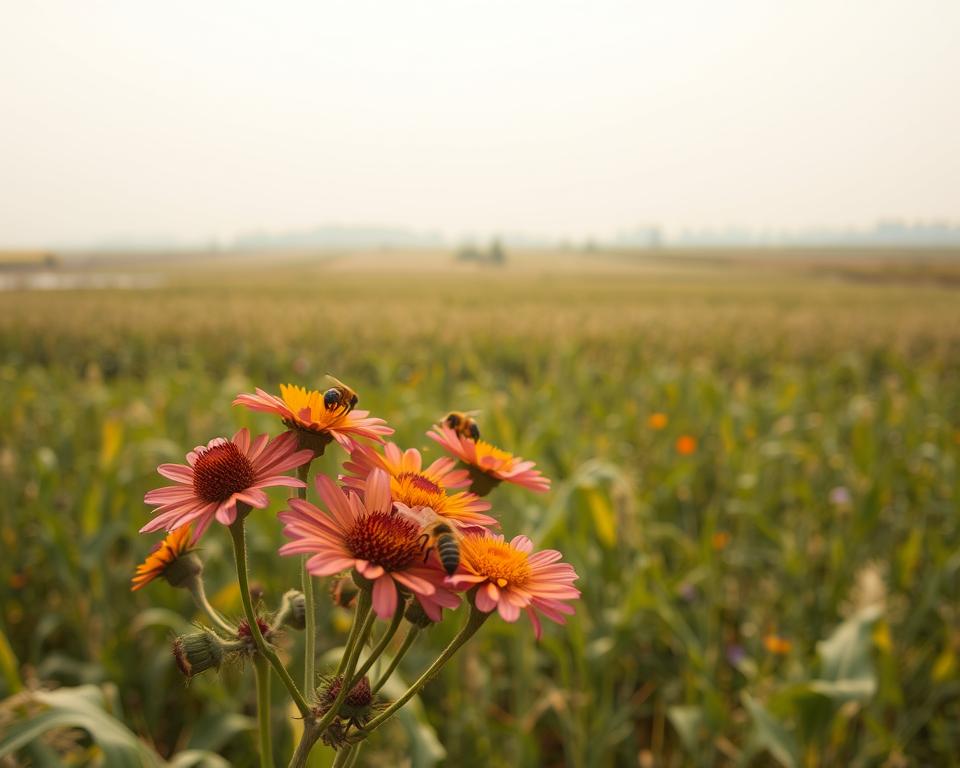
Neonicotinoids are common pesticides in monoculture. They get into plants and into the food bees eat. Studies show they mess with bees’ ability to navigate, reproduce, and stay healthy (PMC7371362).
Types of Pesticides Used
Monoculture farming uses many pesticides. Here are a few:
- Insecticides, like neonicotinoids and organophosphates, kill many insects.
- Herbicides control weeds that take water and nutrients from crops.
- Fungicides stop fungal diseases in crops.
Using these together can make them even more harmful to bees.
Effects on Bee Health and Behavior
Pesticides hurt bees in many ways. Bees exposed to these chemicals may:
- Have trouble navigating and talking to each other.
- Reproduce less and grow their colonies slower.
- Get sick easier and have more parasites.
It’s important to understand these effects. We need to find ways to protect bees and make farming better.
The Role of Nutritional Quality in Bee Health
Nutrition is key to bee health, affecting their immunity and overall well-being. A varied diet is vital for bee colony health.
Nutrition and Its Influence on Immunity
Bees need different nutrients to keep their immune systems strong. A diet rich in diverse pollen and nectar helps them fight off diseases and pesticides. A well-nourished bee colony can better handle environmental challenges.
“The nutritional quality of the diet affects the bees’ ability to resist disease and maintain colony health.” –
A study shows that bees with a varied diet live longer and stay healthier. This is compared to those with a limited diet.
Monoculture’s Effects on Nutritional Diversity
Monoculture farming reduces nutritional diversity for bees. Growing one crop over a large area limits forage variety. This can lead to nutritional deficiencies and higher disease risk.
| Nutritional Component | Diverse Diet | Monoculture Diet |
|---|---|---|
| Protein Sources | Varied pollen from multiple floral sources | Limited to a single type of pollen |
| Nectar Quality | Diverse nectar from various flowers | Nectar mainly from one crop species |
Encouraging crop diversity and preserving ecological corridors can help. By supporting various flora, we improve the nutritional quality for bees. This supports their health and immunity.
Consequences of Reduced Bee Populations
The decline of bee populations has big effects on farming. Bees are key to pollinating crops. Without enough bees, farming suffers greatly.
Bees are vital for many crops. For example, almond crops in California need honeybees to pollinate. When bee numbers drop, these crops yield less, hurting farmers’ profits.
Effects on Crop Yields
Crop yields depend on pollinators. A USDA study showed that crops like apples and avocados need bees to grow. With fewer bees, these crops don’t produce as much, affecting food availability.
Economic Impact on Agriculture
Lower bee numbers hurt farmers’ wallets. With less to harvest, farmers lose money. Renting bees for pollination has also gotten pricier, making things tougher for farmers.
An agricultural economic report says pollination services are worth about $20 billion a year in the U.S. To help, we need to use sustainable farming methods. This means using fewer harmful pesticides, planting bee-friendly areas, and rotating crops to boost diversity.
By understanding bee population decline, we can improve farming. We can make farming better for bees and for growing food.
Strategies for Supporting Bee Health
By adopting strategies that enhance biodiversity, we can significantly support bee health in monoculture systems. Monoculture farming can harm bee populations due to lack of crop diversity and heavy pesticide use. Farmers and agricultural practitioners can implement several key strategies to counteract these effects.
Incorporating Crop Rotation
Crop rotation is a simple yet effective method to enhance biodiversity and support bee health. By rotating crops, farmers can provide bees with a varied source of nutrition throughout the growing season. This approach not only benefits bees but also improves soil health and reduces the need for pesticides.
For example, rotating between corn, soybeans, and alfalfa can provide a diverse range of forage for bees. Alfalfa, in particular, is a valuable crop for bees as it is rich in nectar and pollen. Incorporating such crops into rotation can help sustain bee populations during periods when other forage is scarce.
Creating Pollinator-Friendly Habitats
Another key strategy is creating pollinator-friendly habitats within and around monoculture farms. This involves planting a variety of flowers that are rich in nectar and pollen, which can provide bees with the nutrients they need. By doing so, farmers can create corridors of forage that support bees throughout their life cycle.
Pollinator-friendly habitats can be established along field borders, in buffer strips, or even within the fields themselves. For instance, planting wildflowers such as coneflowers, black-eyed Susans, and cosmos can attract a wide range of bee species. These habitats not only support bees but also contribute to the overall biodiversity of the farm ecosystem.
In conclusion, by incorporating crop rotation and creating pollinator-friendly habitats, we can significantly enhance bee health in monoculture systems. These strategies, among others, offer promising solutions for mitigating the impacts of monoculture farming on bee populations and promoting sustainable agricultural practices.
Case Studies on Monoculture and Bees
Diverse farming practices are key to supporting bee populations. Monoculture farming, which focuses on one crop, can harm bees. It reduces biodiversity and habitat variety.
Findings from Agricultural Research
Studies show monoculture farming limits bees’ food sources. This affects their nutrition and health. For example, corn and soybean monocultures in the U.S. lack the nutrients bees need.
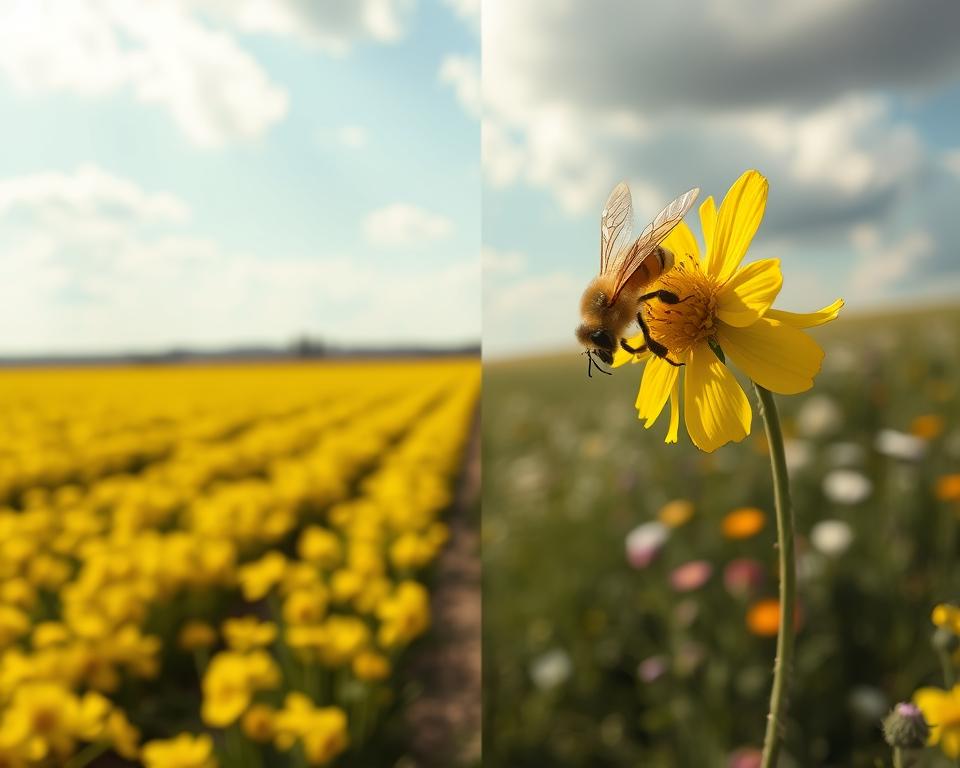
Research also highlights the need for diverse crops and pollinator-friendly habitats. This helps counteract monoculture’s negative effects. Planting wildflowers and other bee-friendly plants near monoculture fields can provide essential nutrients.
Examples of Successful Interventions
Several case studies show how to support bee health in monoculture systems. One approach is using cover crops in farming rotations. This provides bees with more food and improves soil health.
| Intervention | Description | Impact on Bee Health |
|---|---|---|
| Crop Rotation | Alternating between different crops to improve soil fertility and structure. | Positive impact due to increased biodiversity and forage variety. |
| Pollinator-Friendly Habitats | Creating habitats with diverse plants that provide nectar and pollen. | Significant improvement in bee health and population numbers. |
| Reduced Pesticide Use | Minimizing the use of pesticides harmful to bees. | Reduced bee mortality and improved colony health. |
These examples show how targeted interventions can improve bee health in monoculture farming. By adopting diverse and sustainable practices, farmers can support bee populations and ecosystem health.
Policy Approaches to Protect Bee Populations
Protecting bees needs a strong policy plan. This plan must tackle the main causes of their decline, like monoculture farming and pesticides. Monoculture harms bees a lot, so we must support farming that’s good for the environment.
Bees are key for pollinating crops and keeping ecosystems healthy. We must act fast to protect them. By supporting biodiversity and moving away from monoculture, we can help these important pollinators.
Existing Legislation on Pesticides
There are laws to control pesticide use, which hurts bees. For example, the Environmental Protection Agency (EPA) in the U.S. limits some pesticides. But, we need even stricter rules to really help bees.
Some places are leading the way. The European Union banned some neonicotinoids because they harm bees. These laws show a strong commitment to bee health and can inspire others.
Recommended Policies for Sustainable Practices
To really protect bees, we need policies that support farming that’s good for the planet. Here are some ideas:
- Encourage farmers to rotate crops and grow different types of plants to avoid monoculture.
- Give farmers rewards for making their land bee-friendly.
- Help fund research on bee health and how pesticides affect them.
- Run big campaigns to teach people why bees are so important.
With these policies, we can make farming better for bees and the environment. It’s a team effort that needs everyone: policymakers, farmers, and the public. Together, we can keep our ecosystems healthy for the future.
The Future of Bees in Agricultural Systems
The future of bees in farms is a big worry. Monoculture has hurt bee health a lot. We need a change to save these important pollinators.
Shifting Farming Practices
Farming is moving towards better ways, like regenerative agriculture. This can lessen the harm of monoculture on bees. Farmers using these methods help make the environment better for bees.
Raising Awareness and Community Engagement
Getting people involved and aware is key to saving bees. Teaching everyone about bee health and monoculture’s harm can spark action. Together, we can boost biodiversity and create bee-friendly spaces.
Working together, we can make a better future for bees in farms. A future where bee health and monoculture don’t clash.