


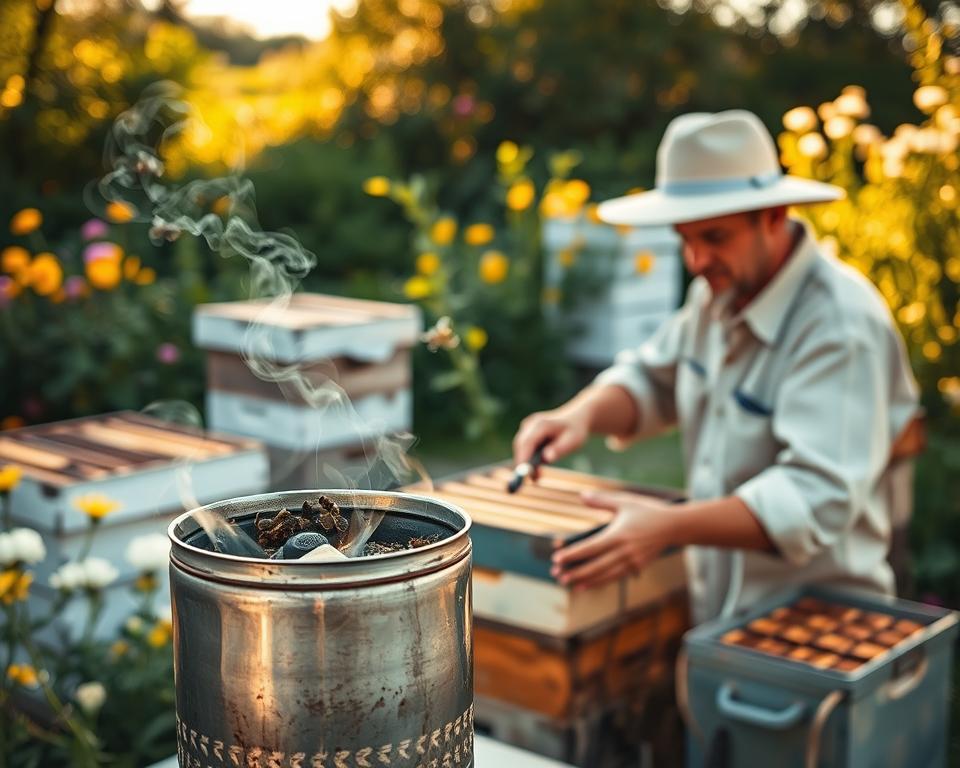
Did you know a well-managed beehive can produce up to 60 pounds of honey per year? But managing bees is more than just a hive. It needs a deep understanding of bee behavior and the right tools, like a beekeeping smoker. Using a smoker is key for calming your bees, making hive inspections easier.
My first time with a beekeeping smoker was a game-changer. It produces smoke that confuses bees, making them think their hive is on fire. This lets me work with them safely and effectively. In this article, I’ll show you how to light and use a smoker for beekeeping. We’ll cover why smokers are important and the best ways to use them.
Key Takeaways
- Understand the importance of smokers in beekeeping
- Learn how to choose the right smoker for your needs
- Discover the step-by-step process of lighting a smoker
- Master the techniques for using a smoker effectively
- Enhance your beekeeping experience with confidence
Understanding the Importance of a Smoker in Beekeeping
Using a smoker is vital in beekeeping. It helps manage bee behavior and ensures a safe inspection. A smoker is more than a tool; it’s essential for safe and humane beekeeping.
What Does a Smoker Do?
A smoker produces smoke that tricks bees into thinking their hive is on fire. This makes them eat honey and become less aggressive. As Betterbee explains, this behavior makes them less defensive. This allows beekeepers to inspect the hive safely.
“Smoke calms bees by masking alarm pheromones,” says a beekeeping expert. These chemical signals alert other bees to threats. This calming effect is key for safe inspections.
Benefits of Using a Smoker
Using a smoker in beekeeping has many benefits. It greatly reduces the risk of stings during inspections. It also helps manage bee behavior, making work easier.
Some key advantages of using a smoker include:
- Reduced aggression in bees
- Safer inspections for beekeepers
- Efficient hive management
By mastering beekeeping smoker techniques and following smoker safety guidelines, beekeepers can improve their experience. This ensures their safety and the well-being of the bees.
Choosing the Right Smoker for Your Needs
Choosing the right smoker for beekeeping can be tough with so many options. It’s important to know the different types and their features. This helps you pick the best one for you.
Types of Smokers Available
There are many smokers for beekeepers to choose from. Each has its own good points and downsides. Here are the main types:
- Manual Smokers: These are the old-school kind that you have to work to get smoke.
- Electric Smokers: These are newer and use electricity to make smoke easily.
- Fuel-Powered Smokers: These use fuel to make smoke and are known for being reliable.
Each smoker has its own benefits. For example, manual smokers are cheaper and hands-on. Electric smokers are easy to use and convenient.
| Type of Smoker | Key Features | Pros | Cons |
|---|---|---|---|
| Manual | Manual operation, traditional design | Affordable, hands-on experience | Requires constant monitoring |
| Electric | Electric operation, modern design | Convenient, easy to use | Dependent on electricity, higher cost |
| Fuel-Powered | Fuel-powered, reliable smoke production | Reliable, consistent smoke | Requires fuel, potentially hazardous if not handled properly |
Key Features to Look For
When picking a smoker, look for certain features. These ensure it meets your needs. Key features include:
- Durability: A durable smoker lasts longer with regular use.
- Ease of Use: Choose a smoker that’s easy to use and maintain.
- Smoke Production: Good smoke production is key for beekeeping.
Smoker maintenance practices are also vital. A well-kept smoker works better and lasts longer. Remember to clean and store it properly.

Knowing about different smokers and their features helps you choose wisely. Whether you prefer manual, electric, or fuel-powered, make sure it fits your beekeeping needs.
Gathering the Right Fuel for Your Smoker
The fuel you choose for your smoker is key to its performance. It affects how well your smoker works and your beekeeping. The right fuel helps you make the right amount of smoke. This makes beekeeping easier and more efficient.
Recommended Fuel Types
There are many fuel options for your smoker, each with benefits. Here are some top choices:
- Charcoal: It burns consistently, giving you steady smoke.
- Wood Chips or Pellets: They create lots of smoke. Different woods can add unique flavors to the smoke.
- Dried Grass or Leaves: These make cooler smoke and are eco-friendly.
Try out different fuels to see what works best for you and your beekeeping.
Tips for Fuel Preparation
Preparing your fuel right is as important as picking the right type. Here are some tips to get the most from your fuel:
- Keep it Dry: Moisture hurts fuel performance. Store it dry to keep it good.
- Size Matters: Smaller fuel pieces burn better and faster.
- Mixing Fuels: Mixing fuels can get you the smoke and heat you need. For example, charcoal and wood chips mix well for a steady burn and flavor.
By following these tips and picking the right fuel, you’ll improve your smoker’s performance. This will help your beekeeping a lot.
Step-by-Step Guide to Lighting Your Smoker
Lighting a smoker might seem hard, but it’s easy with the right steps. As a beekeeper, a well-lit smoker is key for a good inspection. I’ll guide you through it, from safety to a steady burn.
Safety Precautions You Should Take
Before lighting your smoker, take safety steps. Make sure you’re in a well-ventilated area, away from flammable stuff. Wear gloves and a veil to avoid stings or burns.
- Keep a fire extinguisher or a bucket of sand nearby.
- Ensure the smoker is on a stable surface.
- Avoid wearing loose clothing that could catch fire.
Preparing the Fire Base
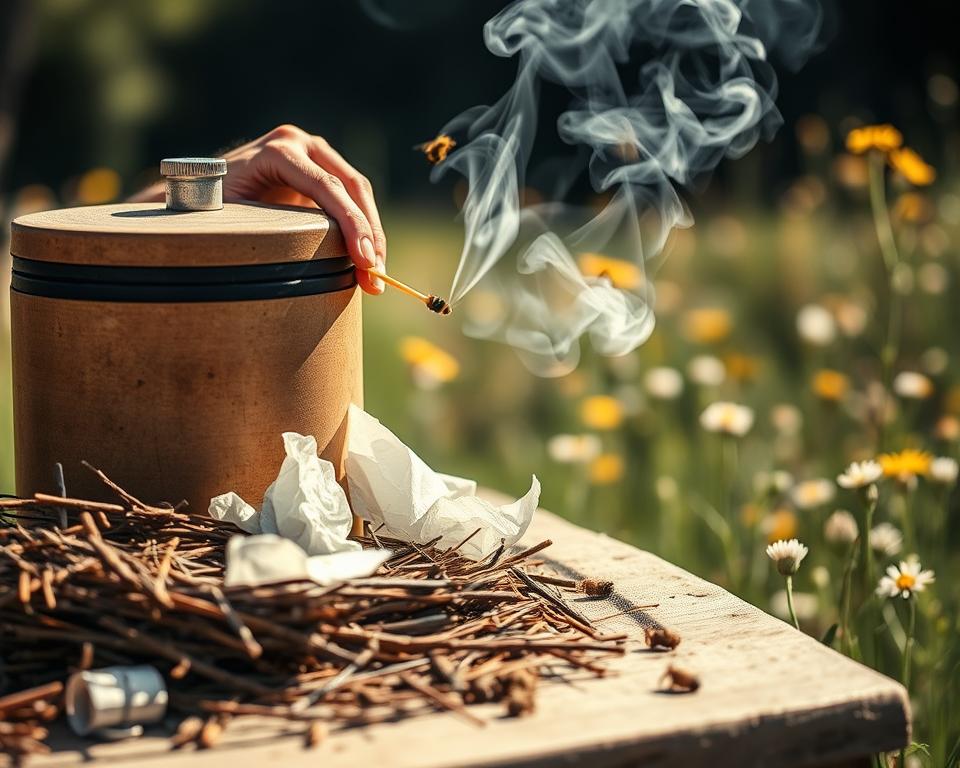
Preparing the fire base is key. You’ll need the right fuel, like newspaper, kindling, or smoker fuel. I use charcoal and wood chips for a slow fire.
To prepare the fire base:
- Place a few sheets of crumpled newspaper at the bottom of the smoker.
- Add a small amount of kindling on top of the newspaper.
- Light the newspaper with a match or lighter.
Achieving a Steady Burn
Once lit, adjust the airflow for a steady burn. Control the vents to get the right oxygen without overheating.
Here’s a simple table to help you understand airflow control:
| Vent Position | Effect on Fire |
|---|---|
| Fully Open | Maximum airflow, hotter fire |
| Partially Closed | Reduced airflow, smoldering fire |
| Fully Closed | Minimal airflow, fire will extinguish |
As Tom Smith, a seasoned beekeeper, said, “The key to a good smoker is not just the fuel, but how you manage the airflow.”
“A well-managed smoker is the backbone of successful beekeeping. It’s not just about calming the bees; it’s about creating a safe environment for both you and the bees.”
By following these steps and taking the necessary precautions, you’ll light your smoker well and keep a steady burn during your beekeeping session.
Techniques for Maintaining Smoky Output
Keeping a smoker going is key in beekeeping. A steady smoke helps calm the bees. This makes hive checks safer and easier.
Tending to the Fire
Looking after the fire is vital for optimizing smoker performance for beekeeping. The right fuel and care are needed for a steady burn. Always check the fire and add fuel when needed to keep it burning.
It’s important not to let the fire get too big. A small, smoldering fire is best. It gives a steady smoke without getting too hot.
Managing Airflow
Controlling airflow is also key. Adjusting it lets you change the fire’s size and smoke output. Most smokers have vents for this.
Find the right airflow setting by trying different vents. Proper airflow management boosts your smoker’s performance. It’s essential for good beekeeping.
Learning these techniques helps beekeepers use their smoker well. It makes beekeeping better and keeps the bees healthy.
How to Effectively Use Smoke on Bees
As a beekeeper, learning to use smoke is key. Smoke helps calm bees, making hive checks safer.
When to Use Smoke
Knowing when to use smoke is important. Use it during hive checks to keep bees calm. This is key when opening the hive to avoid aggressive bees.
Key situations for using smoke include:
- During hive inspections to calm the bees
- When harvesting honey to minimize disturbance
- When requeening or performing other invasive procedures
Techniques for Dispensing Smoke
Getting good at smoke use takes practice. You need to know how to manage the smoker and direct smoke into the hive.
Here are some techniques to improve your smoke dispensing:
- Puff a few rounds of smoke into the hive entrance before opening it
- Use short, gentle puffs to maintain a calm environment
- Direct the smoke into the hive, ensuring it reaches the areas where bees are most active
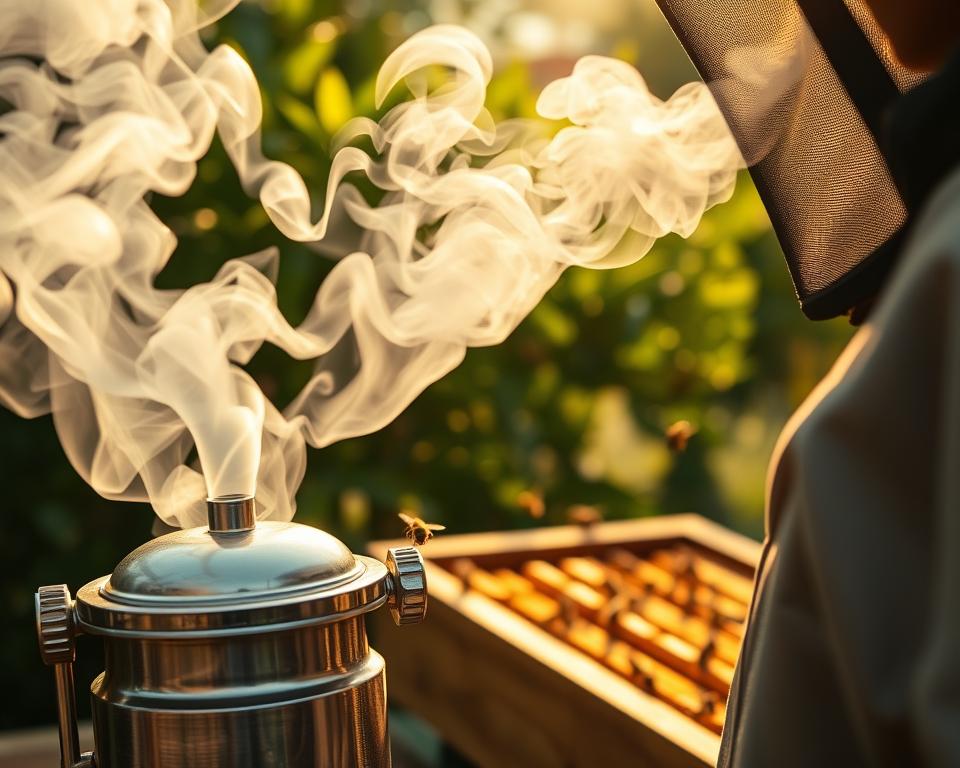
Mastering these techniques and knowing when to use smoke boosts your beekeeping skills. The aim is to keep bees calm and safe, making inspections easier for everyone.
Troubleshooting Common Smoker Issues
Smokers are key in beekeeping, but they can be tricky. Let’s look at common problems and how to fix them. Beekeepers might face issues that make it hard to calm the bees.
What to Do When Smoke is Insufficient
Not enough smoke is a big problem when working with bees. First, make sure your smoker is lit right and you’re using the best fuel. Dry, well-seasoned wood or charcoal works best for steady, cool smoke. If smoke is too little, check if the smoker is blocked and if air is flowing well.
To fix airflow, adjust the smoker’s vents for better oxygen flow. This keeps the fire healthy and smoke flowing. Also, try smoker fuel like pine needles or kindling for more smoke.
Dealing with Extinguished Flames
When the flame goes out, it’s frustrating, like when you’re checking your beehives. Always watch your smoker and make sure it’s well-ventilated. If it goes out, just light it again with a fire starter or matches.
To avoid the flame going out, follow smoker safety guidelines. Keep the smoker away from drafts and close it when not using. Regular smoker maintenance practices, like cleaning and checking for blockages, also help.
By using these tips, beekeepers can avoid problems and have a good beekeeping experience. A well-kept smoker is essential for calm, happy bees.
Cleaning and Maintaining Your Smoker
Proper care and maintenance of your smoker can greatly improve its performance. As a beekeeper, you know how vital a reliable smoker is. Regular upkeep not only extends your smoker’s life but also makes sure it works well when you need it.
Regular Maintenance Tips
To keep your smoker in great shape, follow these regular maintenance tips:
- Check your smoker often for any wear or damage signs.
- Clean the smoker after each use to avoid residue buildup.
- Replace any worn-out parts, like the fire chamber or nozzle.
- Keep your smoker in a dry spot to stop rust.
By doing these simple steps, you can optimize your smoker’s performance. This ensures it stays a valuable tool in your beekeeping work.
Proper Cleaning Techniques
Cleaning your smoker is easy with a few basic steps:
- Let the smoker cool down before you start cleaning.
- Take out any leftover fuel and ash from the fire chamber.
- Use a soft brush or cloth to clean the inside and outside of the smoker.
- If there’s tough residue, use a mild detergent and water, then dry it well.
Proper cleaning techniques keep your smoker working well and last longer. A clean smoker is more efficient and safer to use.
Storing Your Smoker Safely
Storing your smoker safely is as important as using it well. Proper storage keeps your smoker in top shape for future beekeeping. It also makes it last longer.
Best Practices for Storage
First, make sure your smoker is cool before storing it. Any leftover heat can damage it or cause a fire. Clean the smoker before putting it away to avoid corrosion from residue. For more on cleaning, check our beekeeping smoker guide.
Keep your smoker in a dry, airy spot. Moisture can rust it, so use a dehumidifier if it’s humid where you live. Also, store it in a protective case or bag to keep it dust-free and safe from damage.
Protecting Your Smoker from Damage
Keep your smoker away from extreme temperatures and places where it could get knocked or crushed. Regularly check your smoker for any wear or damage, even when it’s stored. This helps catch problems early.
By following these tips, your smoker will stay in great shape for your next beekeeping outing. Proper storage is a key part of keeping your beekeeping gear in top condition.
Conclusion: Mastering Smoker Use for Better Beekeeping
Learning to use a smoker is key for beekeepers. It makes beekeeping better. We’ve talked about how to light and use a smoker well.
Key Takeaways for Beginner Beekeepers
Using a smoker might seem hard at first, but it’s easy once you learn. Pick the right smoker, get the right fuel, and be safe when lighting it. A good smoker helps keep bees calm, making checks safer.
Tips for Successful Beekeeping
As a new beekeeper, practice using your smoker. This will make you more comfortable with it. Also, keep your smoker in good shape and store it right. Follow these tips to get better at using a smoker. This will make your beekeeping better and safer for you and your bees.