


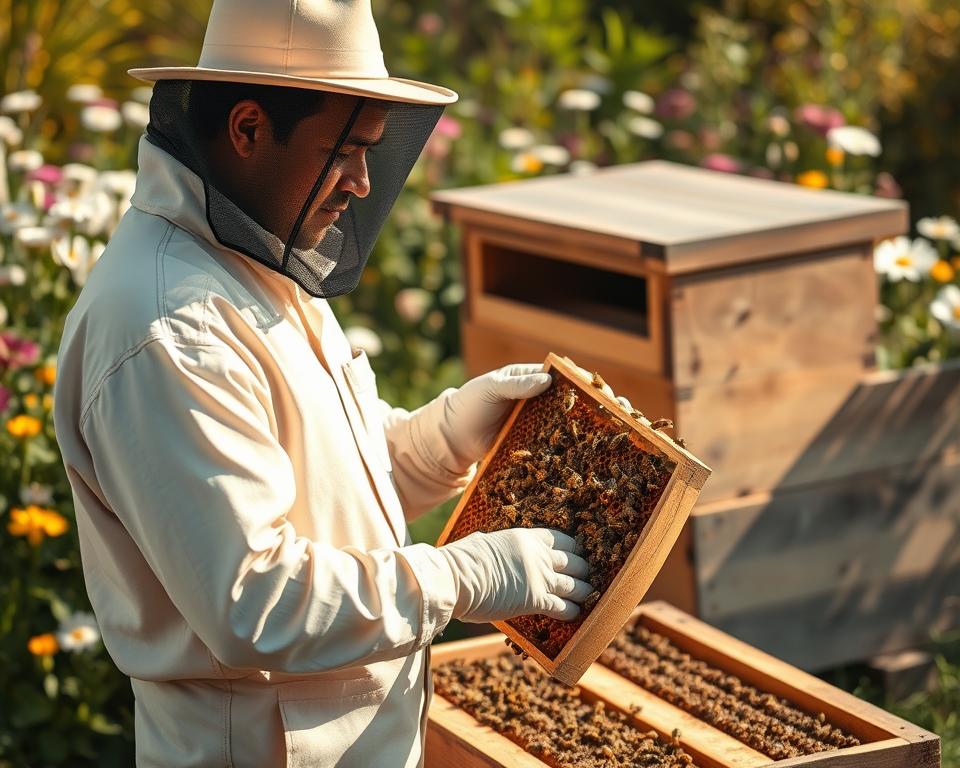
As a beekeeper, I’ve learned that treating bees with care is key for their health and my safety. Bees can get aggressive if handled roughly. This can lead to painful stings and harm the colony.
Using gentle handling techniques helps avoid stings and keeps your bees healthy. We’ll look into why gentle handling is important and share tips for beginners.
Key Takeaways
- Understand the importance of gentle bee handling for bee well-being and safety.
- Learn simple techniques for handling bees with care.
- Discover how to create a safe and healthy environment for your bees.
- Minimize the risk of stings by adopting gentle handling practices.
- Improve your beekeeping skills with beginner-friendly tips.
Understanding Bee Behavior
The secret to gentle beekeeping is knowing how bees live together. By understanding their communication and interactions, beekeepers can keep their bees happy and healthy.
The Importance of Stress-Free Handling
Keeping bees calm is key in beekeeping. It helps the bees stay well and the hive stay productive. When bees are treated gently, they are less likely to get angry. This makes beekeeping safer for everyone.
For more tips on bee behavior and managing your hive, check out Dadant’s resource page.
To reduce stress during inspections, move slowly and avoid sudden actions. Also, use the smoker right to calm the bees. These steps help create a peaceful environment for your bees.
Common Bee Signals to Watch For
Bees talk to each other in many ways, like with their bodies and smells. Knowing these signals helps you understand how the colony is doing. For example, if bees are moving calmly, the colony is likely relaxed. But if they’re acting aggressive, there might be a problem.
- Watch for bees that are fanning or standing at the entrance of the hive, as this can indicate they are preparing to swarm.
- Notice if the bees are aggressive or agitated, which could signal a problem within the hive.
- Observe the overall activity level and health of the bees, as this can provide insights into the colony’s status.
By noticing these signs, beekeepers can fix any issues. This keeps their bees healthy and productive.
Essential Tools for Gentle Handling
Effective beekeeping needs the right tools and techniques. The right equipment is key for gentle bee handling. It keeps both the beekeeper and the bees safe and healthy.
Protective Gear for Beekeepers
Protective gear is the beekeeper’s first defense. A high-quality beekeeping suit covers the body. Gloves and a veil protect the face and hands.
Choose gear that’s durable, comfortable, and offers good protection. This ensures a safe beekeeping experience.

Recommended Hive Tools
A hive tool is essential for opening the hive and for tasks inside. It should be sturdy, easy to hold, and scrape propolis well. Some tools also have features like a frame grip or nail puller.
When picking a hive tool, think about its material and build. A well-made tool will last many seasons and make beekeeping easier.
Choosing the Right Smoker
A smoker calms bees by making them think their hive is on fire. This makes them less aggressive. Choose a smoker that’s easy to light, produces steady smoke, and is durable.
- Look for smokers made from durable materials like stainless steel or copper.
- Consider the size based on your beekeeping needs; larger smokers may be more suitable for larger apiaries.
- Opt for a smoker with a comfortable grip and easy-to-use design.
Investing in the right tools makes beekeeping safe and efficient. The right equipment and gentle handling create a stress-free environment for both bees and beekeepers.
Creating a Calm Environment for Bees
A peaceful setting is key to reducing stress in bees during hive checks. As beekeepers, we must ensure our actions help our bees thrive.
Ideal Times for Hive Inspection
Choosing the right time for hive checks can greatly lessen bee stress. It’s best to inspect when it’s warm and the bees are buzzing.
- Temperature: Stay away from cold or rainy days.
- Time of Day: Late morning to early afternoon works well.
- Season: Busy seasons are best for inspections.
Reducing Noise and Vibrations
Keeping the area around the hive quiet is critical for a calm space. Loud sounds and vibrations upset bees.
- Move slowly and carefully around the hive.
- Steer clear of loud tools near the apiary.
- Use a smoker to soothe the bees before opening the hive.
| Condition | Ideal State |
|---|---|
| Temperature | Warm (above 60°F) |
| Weather | Sunny or lightly cloudy |
| Time of Day | Late morning to early afternoon |
As Beekeeping: A Practical Guide advises, “A calm and respectful approach to beekeeping leads to healthy, thriving colonies.”
By sticking to these tips and being thoughtful in our beekeeping, we can foster a peaceful environment. This supports our bees’ health and productivity. It shows our commitment to caring for bees respectfully and following beekeeping ethics.
Techniques for Hive Inspection
Gentle hive inspection techniques are key to a healthy bee colony and a good harvest. As a beekeeper, using a compassionate beekeeping approach helps your bees and makes beekeeping better for you.
Best Practices for Opening a Hive
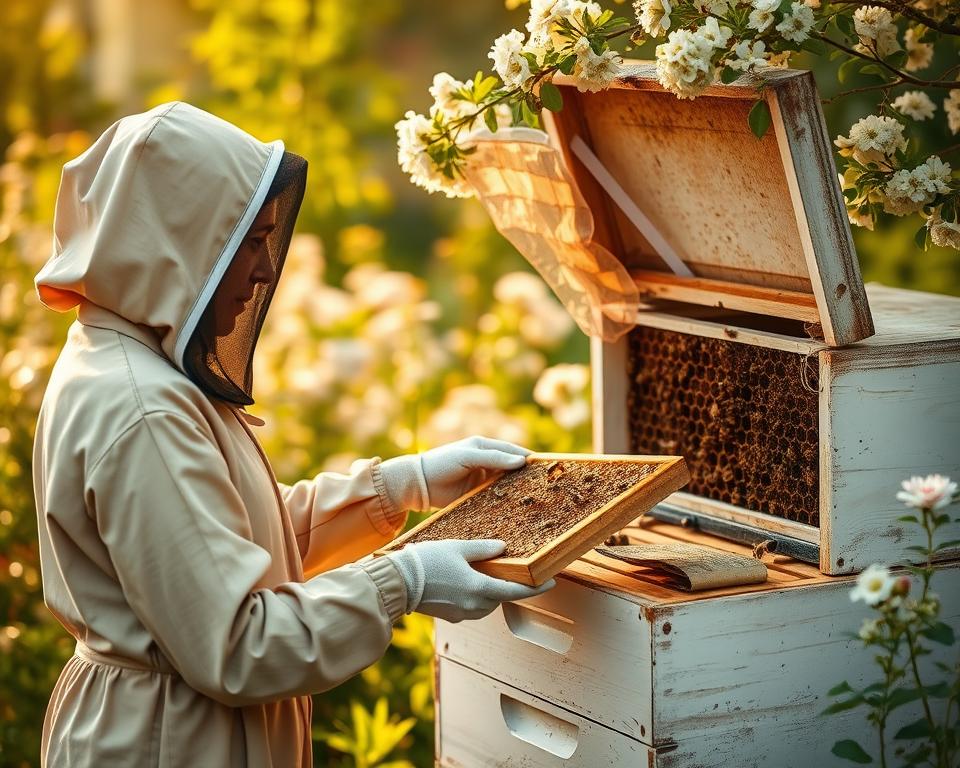
Opening a hive can seem scary, but it can be done gently and well. Make sure you have your smoker, hive tool, and protective gear ready. Open the hive slowly and calmly to avoid startling the bees.
It’s important to check the hive at the right time. Don’t open it when it’s too sunny or windy. A calm, overcast day is best for inspections.
Gentle Frame Removal and Replacement
When taking out frames, do it gently to avoid hurting bees or damaging the comb. Smoke the bees first to calm them, then use your hive tool to carefully remove the frames. Look for signs of disease or pests without disturbing the bees more.
When putting frames back, make sure they fit right and are pushed in gently. Don’t squeeze or pinch the bees, as it stresses them. By handling your bees gently, you help them thrive.
Regular inspections and gentle handling are good for the bees and make beekeeping more fun. By using these methods, you can have a positive and productive relationship with your bees.
Handling Bees During Swarming Season
Understanding bee behavior during swarming season is key for gentle beekeeping. It’s important for beekeepers to spot swarming signs early. This helps manage the colony effectively.
Identifying Swarm Signs Early
Spotting swarming signs early is vital to save the colony. Look out for:
- An increase in the number of bees in the hive
- The presence of swarm cells on the comb surface
- Bees acting more agitated or restless
Recognizing these signs lets beekeepers act early. This helps manage swarming and keeps the colony stable.
Gentle Techniques for Capturing Swarms
Capturing swarms needs a gentle touch to avoid harming bees. Using a swarm trap or bait hive is effective. It attracts the swarm and gives them a safe place to settle.
“The key to successful swarm capture is patience and a deep understanding of bee behavior.” Moving slowly and calmly helps reduce bee stress. This increases the chances of a successful capture.
Regularly check the swarm trap and be ready to act fast when a swarm is found. This might involve gently brushing bees into a new hive or using a tool to guide them.
“A good beekeeper is like a good shepherd; they guide and protect their bees with care and attention.”
Encouraging Bee-Friendly Practices
As a beekeeper, I think it’s key to follow bee-friendly practices. These practices help my bees stay healthy and support the environment. They include using natural remedies and reducing chemical use.
Utilizing Natural Remedies
Using natural remedies is a big part of bee-friendly beekeeping. These remedies are safer for bees and don’t pollute the honey. Here are some effective ones:
- Essential Oils: Oils like tea tree and lavender have antimicrobial properties. They help fight diseases in the colony.
- Powdered Sugar: Dusting bees with powdered sugar can get rid of mites. It makes them fall off.
- Probiotics: Adding probiotics to the bees’ food boosts their immune system. This makes them stronger against diseases.
Minimizing Chemical Use in Beekeeping
Reducing chemical use is also vital in bee-friendly beekeeping. Chemicals can harm bees and lower the quality of honey. To cut down on chemicals, beekeepers use integrated pest management (IPM). This method combines different techniques to manage pests and diseases.
| Method | Description | Benefits |
|---|---|---|
| Integrated Pest Management (IPM) | A holistic approach that combines different techniques to manage pests and diseases. | Reduces chemical use, promotes sustainable beekeeping. |
| Regular Hive Inspections | Frequent checks on the hive to identify issues early. | Early detection of problems, reduces need for chemicals. |
| Selective Breeding | Breeding bees for resistance to certain pests and diseases. | Creates more resilient bee colonies, less dependent on chemicals. |
By using these bee-friendly practices, beekeepers can greatly improve their bees’ health and productivity. It’s a way to make beekeeping more sustainable. It benefits both the bees and the environment. As beekeepers, we must care for our bees and ensure their well-being for the future.
The Role of Queen Bees in the Colony
In a bee colony, the queen bee is key. She’s not just the biggest bee; she’s the heart of the colony. She lays eggs and keeps the colony alive.
Recognizing the Queen’s Role
The queen’s main job is to lay eggs. This is vital for the colony’s growth. A healthy queen can lay up to 2,000 eggs daily.
Beekeepers need to know how to spot the queen. They should look for signs of a healthy queen. This includes a steady egg-laying pattern and brood at different stages.
Key Characteristics of a Healthy Queen:
- Lays eggs consistently
- Has a strong pheromone presence
- Is surrounded by a retinue of attendants
Gentle Handling of Queens
Handling queens must be gentle. They are delicate and can get hurt easily. Beekeepers must be careful when checking or moving them.
I suggest using a queen marking kit to mark the queen. This helps track her age and performance. It also saves time during inspections.
| Aspect | Best Practice |
|---|---|
| Queen Identification | Use a queen marking kit to gently mark the queen |
| Handling Queens | Be gentle and minimize handling to avoid injury |
| Colony Health | Monitor the queen’s laying pattern and brood development |
Understanding the queen bee’s role helps beekeepers manage hives better. This approach supports a healthy colony. It also follows beekeeping ethics that care for these important pollinators.
Teaching New Beekeepers Gentle Practices
As a beekeeper, I’ve learned that teaching new beekeepers gentle practices is key for bee well-being. Gentle beekeeping is more than just careful handling. It’s about showing respect and care for these amazing creatures. I’ll talk about the importance of hosting hive workshops and starting beekeeping mentorship programs to teach new beekeepers how to handle bees gently.
Hosting Hive Workshops
Hosting hive workshops is a great way to introduce new beekeepers to beekeeping. These workshops offer hands-on learning and the chance to learn from experts. It’s important to cover the basics of gentle beekeeping, like proper protective gear and smoker usage. Sharing knowledge and experiences helps build a community that values gentle beekeeping.
At these workshops, participants get to inspect hives with the help of experienced beekeepers. This hands-on experience helps new beekeepers feel comfortable with bee handling. It’s a great way to learn the subtleties of bee behavior and how to respond appropriately.
Developing Beekeeping Mentorship Programs
Creating beekeeping mentorship programs is also essential. These programs match new beekeepers with experienced ones for guidance and support. A good mentorship program can greatly reduce the learning curve and help avoid common mistakes.
Mentorship programs can take many forms, like one-on-one mentoring, group sessions, or online forums. The goal is to create a supportive environment where new beekeepers feel free to ask questions and seek advice. This way, we can ensure the next generation of beekeepers is ready to handle bees gently and effectively.
By using these strategies, we can foster a culture of gentle beekeeping. As beekeepers, it’s our duty to handle our bees gently and teach others to do the same.
Building a Gentle Beekeeping Community
As beekeepers, we have a big role in showing care and respect for bees. By using a compassionate beekeeping approach, we help build a community that values gentle bee handling. This creates a healthy environment for bees.
Joining local beekeeping groups is a great way to share knowledge and best practices. Many beekeepers have found success with gentle beekeeping techniques. Their experiences can be very helpful. For example, keepingbackyardbees.com offers insights into handling honeybees effectively.
Sharing resources and best practices within the community promotes gentle beekeeping. Together, we can better understand bee behavior and improve our techniques. This helps keep colonies healthy and thriving.
By choosing a compassionate beekeeping approach and gentle techniques, we build a community that cares for bees. This leads to a more sustainable and enjoyable beekeeping experience for all.