


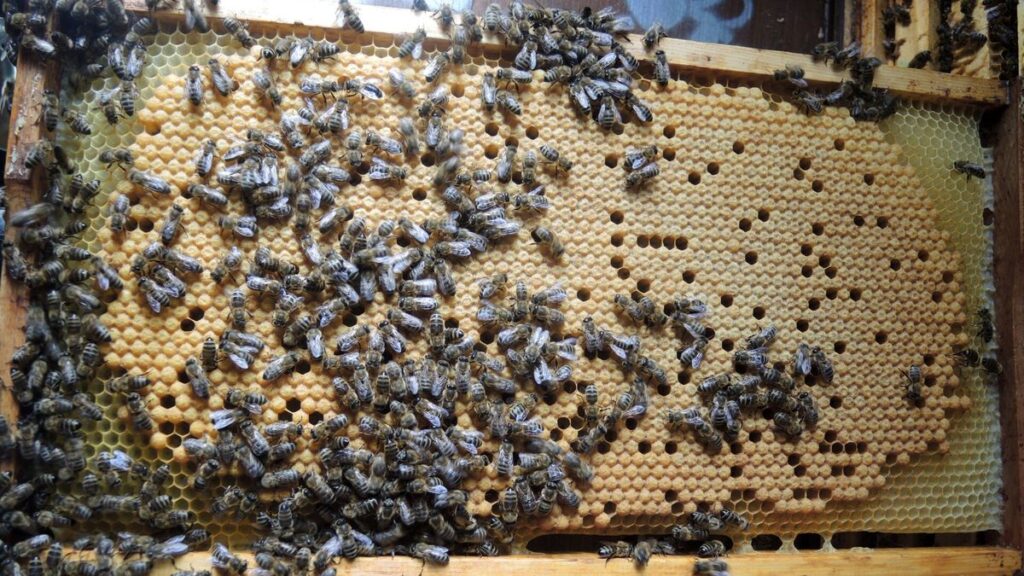
You open a brood box expecting a solid slab of capped brood and instead find a patchy frame, with larvae that look yellowish, twisted or slumped in their cells. One of the possible causes is European foulbrood, often shortened to EFB. It is a bacterial disease of honey bee larvae, and while it is usually less destructive than American foulbrood, it can weaken a colony badly and spread to other hives if ignored.
This article explains what European foulbrood is, which signs to look for during an inspection, how it differs from other brood problems, what usually triggers outbreaks and what a beekeeper should do after spotting suspicious brood. Rules on reporting and treatment vary from country to country, so the practical steps here always end with the same advice: confirm the diagnosis and follow the guidance of your local apiary inspector or a veterinarian who works with bees.
What European foulbrood is
European foulbrood is caused by the bacterium Melissococcus plutonius. Larvae become infected when nurse bees feed them contaminated brood food. The bacteria multiply in the larva’s gut and compete with it for nutrients, so the larva effectively starves. Most infected larvae die before their cells are capped, which is one of the key differences from American foulbrood.
Unlike the bacterium that causes American foulbrood, M. plutonius does not form long-lasting spores. That makes EFB somewhat easier to manage, but it remains highly contagious. The bacteria travel in honey, pollen, comb, contaminated equipment, and on adult bees that drift or rob between colonies. The Government of Ontario’s beekeeping page on European foulbrood gives a clear description of the disease, its signs and its spread.
Signs to look for during an inspection
Healthy young larvae are pearly white, glistening and curled in a neat “C” at the bottom of the cell. EFB changes that picture. Common signs include:
- Discolored larvae: infected larvae turn from white to creamy yellow and then brown as they die.
- Twisted or displaced larvae: instead of lying in a tidy curl, larvae appear twisted around the cell walls or stretched out along them.
- Visible breathing tubes: as larvae deteriorate, the white tracheal network can become unusually noticeable against the darker body.
- Soft, then rubbery remains: dead larvae may look melted or watery at first and later dry into a rubbery or brittle scale that usually comes out of the cell easily.
- Spotty brood pattern: healthy, sick and empty cells mixed together across the frame.
- A sour smell: some beekeepers notice a sour or fermented odor in heavily affected colonies, although not everyone can detect it and smell alone is not reliable.
- Sunken or perforated cappings: when larvae die after capping, which happens less often with EFB, the cappings can look darker, sunken or holed.
The outer brood combs are often the first to show signs, so do not stop at the center frames when inspecting a colony you are worried about.
How EFB differs from other brood problems
A spotty brood pattern has many possible causes, and several diseases produce discolored or dead larvae. Mistaking one for another can lead to the wrong response.
American foulbrood
American foulbrood mainly kills larvae after the cells are capped, so you see sunken, greasy-looking or perforated cappings over dead brood. The remains form a scale that sticks tightly to the cell wall and is hard to remove. A classic field check is the “rope test”: a matchstick pushed into a dead larva and slowly withdrawn pulls out a stringy thread. EFB remains are usually less elastic, and its scales lift out more easily. AFB is generally treated as far more serious because its spores survive for many years.
Sacbrood
Sacbrood is a viral disease. Affected larvae die stretched out on their backs, with the head raised toward the cell opening, and the body fills with fluid so it looks like a small sac.
Chalkbrood
Chalkbrood is a fungal disease. Dead larvae turn into hard, chalky white or gray mummies that rattle in the cell and are often found on the bottom board or at the entrance.
Queen and nutrition problems
A failing or poorly mated queen, chilled brood after a cold snap, or a shortage of pollen can all produce a patchy brood pattern without any infection. Looking closely at the larvae themselves, not just the pattern, helps narrow down the cause.
Because the signs overlap, field observations are only the first step. Many inspection services and laboratories accept samples of suspect comb or use quick field test kits to confirm whether EFB is present.
What makes outbreaks more likely
The bacteria can be present in a colony without causing obvious disease. Outbreaks are strongly linked to stress, especially anything that makes it harder for nurse bees to feed larvae properly. Common triggers include:
- Poor forage or a shortage of pollen, particularly in early spring
- Long spells of cool, wet weather that keep foragers inside
- Moving colonies, for example for pollination contracts
- A sudden increase in brood compared with the number of nurse bees
- Weak colonies stressed by other problems such as high varroa levels
This is why EFB is often reported in spring, when colonies are expanding quickly, and why some colonies seem to recover on their own once a strong nectar and pollen flow begins. Recovery without help is not guaranteed, however, and the bacteria can remain in the comb and reappear the following season.
What to do if you suspect European foulbrood
1. Stop and protect other colonies
Close the hive and avoid moving frames, honey or equipment from it to other hives. Clean your hive tool and gloves, or switch to a fresh pair, before inspecting another colony. Reduce the entrance to make robbing harder.
2. Contact the right authority
In many countries and regions, European foulbrood is a notifiable or reportable disease, which means the beekeeper must inform the official bee inspection service. Check the rules where you keep bees. Even where reporting is not mandatory, your regional apiarist, agricultural extension office or a veterinarian with experience in bees can help confirm the diagnosis and explain the options.
3. Follow the recommended treatment plan
The response depends on the severity of the outbreak and on local regulations. Options used by inspection services include:
- Shook swarm: shaking the adult bees onto clean foundation in clean equipment and removing all the old brood comb, which takes much of the bacterial load away from the colony.
- Comb replacement: rotating out old, dark brood comb so contaminated wax is not reused.
- Antibiotics: in some countries, specific antibiotics can be used against EFB, but they are usually restricted and require a veterinarian’s prescription or authorization. They suppress symptoms rather than removing the bacteria from the comb, and residues in honey are a concern, so never use them without professional guidance.
- Destruction of the colony: severe or repeated cases may require destroying the colony and its comb, as decided by the inspector.
4. Address the underlying stress
Treatment alone rarely solves the problem if the colony stays stressed. Check for a strong, laying queen, keep varroa under control, make sure the colony has enough pollen and stores, and avoid unnecessary moves while it recovers.
Prevention: habits that lower the risk
Good apiary hygiene does more against EFB than any single product. Useful habits include:
- Replace a portion of old brood comb every year so contamination does not build up.
- Do not feed honey from unknown sources to your bees, and avoid buying used comb or equipment without knowing its history.
- Keep colonies strong and well fed, with access to varied pollen sources.
- Space hives and use different entrance colors or orientations to reduce drifting between colonies.
- Learn what healthy brood looks like, so changes stand out quickly during routine inspections.
- Keep records of each colony’s brood quality so you can spot a decline early.
Summary
European foulbrood is a bacterial disease that kills young, uncapped larvae, leaving them yellow to brown, twisted in their cells and eventually dried into an easily removed scale. It is closely tied to colony stress, especially poor nutrition and bad weather during brood expansion. Because its signs overlap with American foulbrood, sacbrood, chalkbrood and queen problems, the first step is always confirmation. Protect your other colonies, contact your local bee inspector or a veterinarian, follow their treatment plan, and work on the hygiene and nutrition habits that make outbreaks less likely in the future. Regulations and approved treatments change and differ by region, so check the current rules where you keep bees.
Photo: Apis mellifera Bee brood, by Monika Fischer, license CC BY 2.0, via Wikimedia Commons. Cropped.