


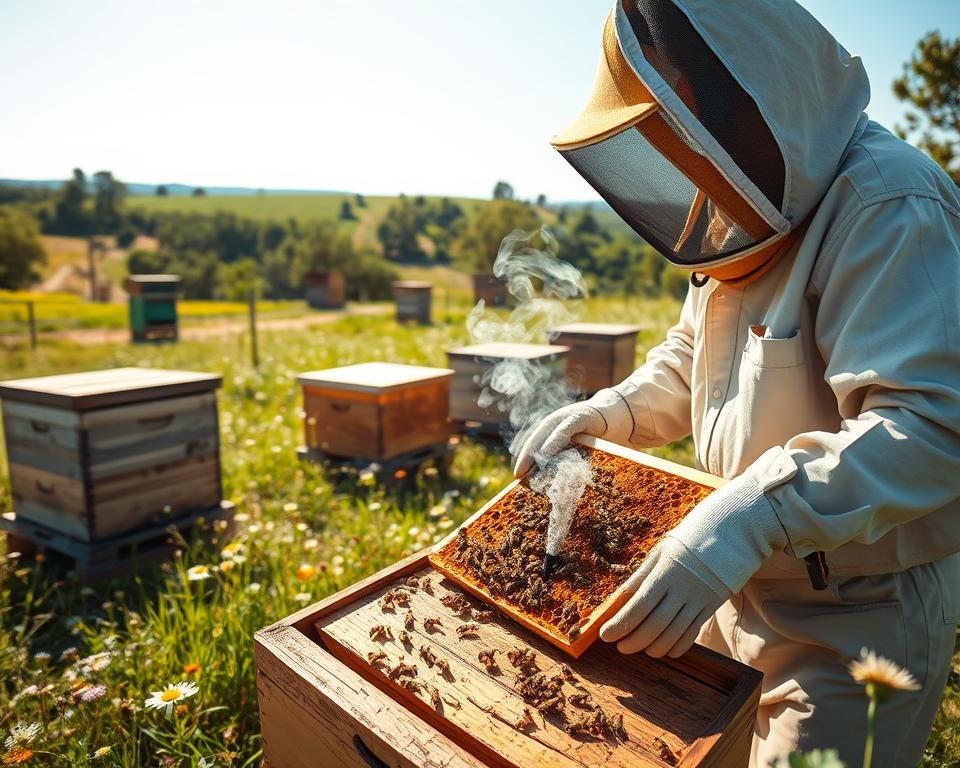
As a beekeeper, I’ve seen my share of bee colonies that are a bit feisty. Did you know that aggression in bees can come from their genes or the environment? For example, when there’s no nectar or a storm is coming, even calm bees can get upset. It’s important to use effective beekeeping techniques to manage these situations.
Knowing why bees get aggressive and using the right strategies can keep you safe and the bees happy. In this article, I’ll share my knowledge on dealing with aggressive bee behavior. We’ll cover signs of aggression, how to prepare, and management tips.
Key Takeaways
- Understand the genetic and environmental factors influencing bee aggression
- Learn signs of aggression and how to identify them during inspections
- Discover preparation and management techniques for handling aggressive colonies
- Improve your beekeeping skills to reduce defensiveness in bees
- Know when to requeen or unite a colony with a stronger one
Understanding Aggressive Bee Behavior
It’s key for beekeepers to know why bees act aggressively. This knowledge helps keep beekeeping safe and healthy. Several things can make bees act out, so beekeepers need to be aware of these.
Factors Contributing to Aggression
Many things can make bees aggressive. These include:
- Environmental Stress: Bees get stressed by pesticides, bad weather, or not enough food.
- Genetics: Some bees are naturally more aggressive because of their genes.
- Diseases and Pests: Bees defend their home when they have diseases or pests.
Knowing these factors helps beekeepers prevent aggression. For example, keeping the environment healthy and managing diseases can help.
Types of Bees That May Be Aggressive
Not all bees are aggressive. But some are more defensive or aggressive. These include:
- Africanized Honey Bees: These bees are very defensive and can be more aggressive than European honey bees.
- European Honey Bees: While less aggressive than Africanized bees, some can be aggressive under certain conditions.
Knowing what kind of bees you have is important. It helps you understand their aggression level and how to manage it.
Signs of an Aggressive Bee Colony
Beekeepers need to watch for signs of aggressive bee colonies. This helps prevent stings and keeps the apiary healthy. Spotting these signs early means the beekeeper and the bees stay safe.
Visual Indicators to Watch For
Visual signs are often the first clue to an aggressive bee colony. Look for an increased number of guard bees at the hive entrance. These bees are more aggressive because they defend the hive.
Also, check for dead bees or debris around the hive entrance. This could mean there’s conflict or disease inside the colony.
| Visual Indicator | Description | Possible Cause |
|---|---|---|
| Increased Guard Bees | More bees than usual at the hive entrance | Colony feeling threatened or protective |
| Dead Bees or Debris | Presence of dead bees or debris around the hive | Internal conflict, disease, or pest infestation |
Behavioral Cues That Signal Aggression
Changes in bee behavior can also show aggression. Aggressive flying patterns, like diving or chasing, mean the bees are threatened or defensive. If bees are buzzing loudly or showing alarm pheromones, it’s a sign of stress or defense.
Knowing these behavioral signs is key to preventing bee stings and managing the colony well. By spotting these signs, beekeepers can take steps like using smoke to calm the bees. They can also adjust their bee hive management to reduce stress in the colony.
Preparing for Bee Management
To manage aggressive bees safely, beekeepers need the right gear and protective clothes. Being prepared not only keeps you safe but also makes the job easier and more effective.
Necessary Equipment for Safety
Having the right tools is key for safe beekeeping. A smoker is very important. It calms the bees by making smoke, which confuses them and lets you check the hive safely.
A hive tool is also essential. It helps open the hive and removes wax and propolis. It’s great for checking the frames and making sure the hive is okay.
Protective Gear for Beekeepers
Wearing the right protective gear is vital to avoid stings and stay safe. A beekeeping suit or veil protects your face and neck from stings. These suits are made of a light, breathable material that keeps bees away from your skin.
Gloves are also very important. They should be tough to withstand stings and long enough to cover your wrists and forearms.
With the right equipment and protective gear, beekeepers can greatly reduce risks. This preparation helps you feel more confident and safe while managing aggressive bee colonies.
Techniques for Managing Aggressive Bees
As a beekeeper, I’ve learned a lot about managing aggressive bees. It’s all about understanding their behavior and using the right techniques. Over time, I’ve found a few strategies that really work. They help calm aggressive bees and lower the chance of attacks.
Using Smoke as a Calming Tool
One top technique is using smoke to calm bees. Smoke confuses them by hiding the alarm pheromones they release when they feel danger. This makes them less aggressive. I always carry a reliable smoker with me when I check or manage my beehives.
How to Use Smoke Effectively:
- Use a smoker to make cool smoke that won’t hurt the bees.
- Puff smoke into the hive entrance before opening it.
- Keep smoking the bees during the inspection to keep them calm.

Timing Your Visits to Reduce Aggression
Timing is key when dealing with aggressive bees. Bees are more aggressive when their hive is stressed or when they’re getting ready to swarm. I’ve found that visiting the hive during calm weather and avoiding stressful times can really help.
Best Practices for Timing Visits:
- Inspect hives on warm, sunny days when bees are out foraging.
- Avoid visiting during cold or rainy weather.
- Keep an eye on the hive’s lifecycle and avoid defensive times.
By using smoke and timing visits right, I’ve gotten better at managing aggressive bee colonies. It’s all about understanding the bees and responding in a way that reduces their stress and aggression.
Relocating an Aggressive Bee Colony
When dealing with an aggressive bee colony, relocation is sometimes the best choice. As a beekeeper, I’ve seen cases where moving a hive is necessary. It keeps both the bees and the community safe.
Relocation is a big decision. It needs careful planning and execution. Before moving, check if the colony’s aggression can be fixed with other methods.
When to Consider Relocation
Consider relocation if the colony is too aggressive to manage safely. Look at factors like genetics, environmental stress, or disease. If these can’t be fixed, moving might be the best choice.
Also, if the hive is in a busy area or poses a risk, moving it is wise. Think about it if other management techniques, like smoking or requeening, don’t work.
Steps to Safely Relocate a Hive
Relocating a hive requires careful steps for safety. First, prepare the needed equipment, like a new hive box, protective clothes, and a smoker.
- Smoke the bees to calm them before starting the relocation process.
- Carefully remove the hive from its current location, ensuring not to disturb the bees excessively.
- Transport the hive to its new location, ideally during a time when the bees are less active, such as early morning or late evening.
- Install the hive in its new location, ensuring it’s secure and the bees have access to the entrance.
After moving, watch the bees to see if they’re adjusting well. Look for signs of stress or disease and act if needed.
By planning and executing relocation carefully, beekeepers can manage aggressive bee colonies safely. This ensures the well-being of both the bees and the community.
Maintenance Practices for Healthier Colonies
To keep aggressive bee colonies at bay, maintaining a healthy colony is key. This involves adopting beekeeping best practices that promote the overall well-being of the bees.
Regular hive inspections are a critical component of maintaining a healthy bee colony. By inspecting the hive regularly, beekeepers can identify early signs of disease or pests. They can then take corrective action. For guidance on managing bee colonies, I recommend visiting the Ohio Department of Agriculture’s Apiary Program page.
Regular Hive Inspections
During hive inspections, beekeepers should look for signs of disease, pests, or nutritional issues. It’s essential to be thorough and meticulous during these inspections. This ensures that any problems are caught early.
- Check for signs of disease or pests.
- Verify that the queen is healthy and present.
- Ensure there is adequate food and water.
Ensuring Proper Nutrition and Hydration
Bees require a balanced diet that includes nectar, pollen, and water to stay healthy. Ensuring that the colony has access to these resources is vital.
| Nutritional Element | Importance | How to Provide |
|---|---|---|
| Nectar | Energy source | Plant nectar-rich flowers nearby |
| Pollen | Protein source | Ensure diverse pollen sources |
| Water | Hydration | Provide a clean water source |
By following these maintenance practices, beekeepers can help ensure their colonies remain healthy and less prone to aggression. Understanding bee colony behavior and responding appropriately is key to successful beekeeping.
Educating Others About Bee Safety
Talking to the community about bee safety is key to living peacefully with bees. As beekeepers, we must share our knowledge. This helps everyone know how to safely interact with bees.
Learning about bee behavior and how to act around them can lower sting risks. This keeps people safe and makes our environment friendlier to bees.
Teaching the Community to Avoid Confrontations
Understanding bee behavior is vital to avoid trouble. Bees get defensive near their hives. So, it’s important to:
- Keep a safe distance from beehives
- Avoid wearing perfumes or bright colors that may attract bees
- Not disturb or provoke bees
Community education programs are key in spreading this info. Workshops and materials help the community learn to live safely with bees.
Creating Awareness About Bee Conservation
Bee conservation and safety go hand in hand. Supporting bee health is good for our ecosystem. Some ways to help include:
- Planting bee-friendly flora in gardens and public spaces
- Reducing pesticide use to protect bees from harmful chemicals
- Supporting local beekeepers by purchasing their products
Creating awareness about the importance of bee conservation motivates people to act. This protects bees and boosts biodiversity and ecosystem health.
By teaching about bee safety and conservation, we make our world safer and more sustainable for both humans and bees.
Seeking Professional Help
Dealing with aggressive bees can be daunting. Seeking professional help ensures safety and effective management. It’s important to assess your ability to manage an aggressive bee colony safely.
Expert Assistance
If you’re unsure about handling an aggressive colony, hiring a beekeeping expert is safest. These professionals have the knowledge and equipment to manage aggressive bees safely.
Here are some scenarios where seeking professional help is advisable:
- The colony is large or in a sensitive location.
- You lack experience in beekeeping or managing aggressive bees.
- The bees have shown aggressive behavior towards you or others.
A seasoned beekeeper notes, “Professional beekeepers can make a big difference. They ensure the bees are handled humanely and effectively.”
“The key to managing aggressive bees is not to confront them alone but to seek help when needed. Professional beekeepers have the right equipment and knowledge to handle such situations.”
Finding a Reliable Local Beekeeper
To find a reliable local beekeeper, start by asking for referrals. You can also search online for beekeepers in your area.
| Criteria | Description | Importance Level |
|---|---|---|
| Experience | Years of experience in beekeeping, with aggressive bees. | High |
| Equipment | Availability of proper protective gear and equipment. | High |
| Reviews | Feedback from previous clients. | Medium |
When you’ve identified beekeepers, ask about their experience with aggressive bees. Also, ask about their approach and protective gear. This helps you make a good choice.

By seeking professional help, you ensure the safe and effective management of aggressive bee colonies. Remember, dealing with aggressive bees requires caution and the right expertise.
Legal Considerations in Bee Management
Beekeeping is a complex world with many rules. Beekeepers must know these laws to care for their bees well and safely.
Regulations on Beekeeping in the U.S.
In the U.S., beekeeping laws differ by state and even by area. These rules might include registering hives, where to keep them, and how to handle aggressive bees. For example, some states ask beekeepers to register their hives with the state’s agriculture department. Others have rules about where to place apiaries.
Here’s a quick look at some key rules in different states:
| State | Hive Registration | Apiary Location Restrictions |
|---|---|---|
| California | Required | Within 3 miles of other apiaries with permission |
| Florida | Required | No apiary within 100 feet of a public road |
| New York | Required | Apiaries must be at least 10 feet away from property lines |
Understanding Liability Issues with Aggressive Bees
Beekeepers face risks if their bees are aggressive. If your bees bother others or cause harm, you could be sued. It’s important to check your bees often and keep them healthy and calm.
Key Liability Considerations:
- Follow local rules for bee care.
- Check your bees often to stop them from becoming aggressive.
- Act fast if your bees are seen as a problem or danger.
By following these laws, beekeepers can lower risks and help keep their bees and the community safe.
Conclusion: Embracing a Safe Beekeeping Experience
Managing aggressive bee colonies needs careful planning and the right techniques. You also need to understand bee behavior well. By following best practices, you can reduce risks and have a safe, rewarding experience.
Good beekeeping is more than just handling bees. It’s about making a safe space for bees and the people around them. Knowing what makes bees aggressive and how to prevent it helps. This way, you can enjoy beekeeping’s benefits while staying safe.
As you keep beekeeping, always keep learning and preparing. Staying informed and using best practices is essential. This way, you can look forward to a safe and fruitful beekeeping journey.