


As a beekeeper, I’ve seen the worrying decline of honey bee health. Almost 40% of honey bee colonies in the U.S. disappear each year. This loss threatens our food supply. The reasons for this decline are many and complex.
The health of honey bees is vital to our ecosystem. Knowing the beekeeping stressors that harm them is key. Bees face many challenges, from environmental stress to diseases and pests.
Key Takeaways
- Nearly 40% of honey bee colonies are lost annually in the United States.
- Understanding beekeeping stressors is essential for better honey bee health.
- Environmental stressors, diseases, and pests all affect honey bee well-being.
- Practical tips and strategies can help beekeepers support honey bee health.
- Knowledge and awareness are vital to help these important pollinators.
Understanding Honey Bee Health
It’s key to know what affects honey bee health to keep our ecosystem balanced. Honey bees are vital to our environment and farming. Their health greatly impacts both.
Importance of Honey Bees in Ecosystems
Honey bees are essential for pollinating plants. This helps many plants reproduce. Without them, many plants can’t reproduce, harming biodiversity.
For more on honey bees’ role, check out the USDA’s Colony Collapse Disorder page.
Without honey bees, food chains could break down. We must understand what harms them to prevent this.
The Role of Honey Bees in Agriculture
In farming, honey bees are key for pollinating crops like fruits, veggies, and nuts. Their pollination is very valuable. Losing them would hurt the economy a lot. The health of honey bees is closely tied to the health of the agricultural industry.
To help honey bees, we must know what stresses them, like the impact of pesticides on bees. By reducing these stressors, we can help honey bees survive better.
Major Stress Factors for Honey Bees
Honey bees face many stressors that harm their health and productivity. These stressors make it hard for them to survive in different environments.
Overview of Environmental Stressors
Environmental stressors greatly affect honey bee health. Climate change, habitat loss, and weather extremes are major concerns. Climate change messes up when plants and bees meet. Habitat loss cuts down on food and homes for bees. Weather extremes, like droughts or heavy rain, mess with bees’ foraging and colony stability.
Impact of Pesticides on Bee Populations
Neonicotinoids are a big problem for honey bees. These pesticides mess with bees’ navigation, weaken their disease resistance, and hurt their ability to reproduce. The use of pesticides in farming makes it tough for beekeepers to keep colonies healthy.
To fight pesticide harm, beekeepers and farmers are looking at new ways to manage pests. They’re using integrated pest management (IPM) techniques that cut down on chemicals. This approach supports more eco-friendly farming methods.
Weather Conditions and Bees
Weather greatly affects honey bees’ lives and health. Different weather factors shape their behavior, health, and work. This is key for these important pollinators.
Extreme Temperatures and Their Effects
Extreme temperatures deeply impact honey bees. High temperatures can cause heat stress, leading to dehydration and death. Low temperatures slow bees down, affecting their foraging and hive work.
Beekeepers can help by improving hive ventilation and insulation. For example, during heatwaves, they can provide shade and water for bees. In cold weather, insulation keeps the hive warm.
Rainfall and Humidity’s Impact on Foraging
Rainfall and humidity also affect honey bees. Excessive rainfall makes flying hard for bees. High humidity can cause mold and fungi in the hive, harming bees.
Drought conditions limit nectar and pollen, vital for bees. Beekeepers can ensure bees have access to diverse plants that withstand different weather.
By understanding and addressing these weather challenges, beekeepers can protect their bees. They monitor weather and adjust hive care as needed.
Diseases and Pests
Diseases and pests are big stressors for honey bees. They can really hurt a colony’s health. As a beekeeper, knowing about these threats is key to keeping bees healthy.
Common Diseases Affecting Honey Bees
Honey bees face many diseases, like American Foulbrood, Nosema, and Deformed Wing Virus. American Foulbrood is a deadly bacterial disease. Nosema is a fungal infection that weakens bees.
“The impact of diseases on honey bee colonies cannot be overstated. It’s a major challenge for beekeepers worldwide.”
Studies show that diverse, healthy bee populations help prevent disease outbreaks. Bees need a varied diet and a clean, safe place to live.
Threats from Varroa Mites
Varroa mites are a big problem for honey bees. They suck the life out of bees and spread diseases like Deformed Wing Virus. To fight this, beekeepers focus on controlling Varroa mite numbers.

Beekeepers use many methods to fight Varroa mites. This includes checking mite levels, using medicines, and keeping things clean. Scientists are also working on breeding bees that resist mites.
By tackling diseases and pests, beekeepers can protect their bees. This helps keep colonies healthy for the long term.
Habitat Loss and Urbanization
Urban development is moving fast, leaving honey bees with less natural space. As cities grow, natural areas turn into urban zones. This leads to habitat loss for honey bees, reducing their food and nesting spots.
Urbanization harms honey bees in many ways. With fewer flowers, bees struggle to find food, leading to nutritional stress. This stress affects their health and survival.
How Urban Development Affects Bee Habitats
Urban growth changes bee habitats by replacing natural spaces with concrete. This loss of biodiversity harms the ecosystem bees rely on. For example, paving over land for roads and buildings takes away bee nesting sites.
The Importance of Green Spaces for Bees
Green areas in cities are key for healthy bees. Parks, gardens, and green roofs give bees what they need to survive. These spaces can be filled with plants that help bees, improving their health.
Creating bee-friendly green spaces helps fight urbanization’s impact on bees. By planting nectar-rich flowers like lavender and sunflowers, city dwellers can help bees. This simple action supports local bee health.
In summary, habitat loss and urban growth are big challenges for honey bees. But, green spaces in cities can help. By understanding urban impact and supporting green areas, we can better manage bee stress.
Nutritional Stressors
Nutritional stressors are key to honey bees’ health. A diet without essential nutrients weakens their immune systems. This makes them more likely to get sick and attract pests.
The health of honey bees depends on their foraging options. Bees that visit many flowers gather a wide range of nutrients. This is vital for their health.
The Role of Diverse Foraging
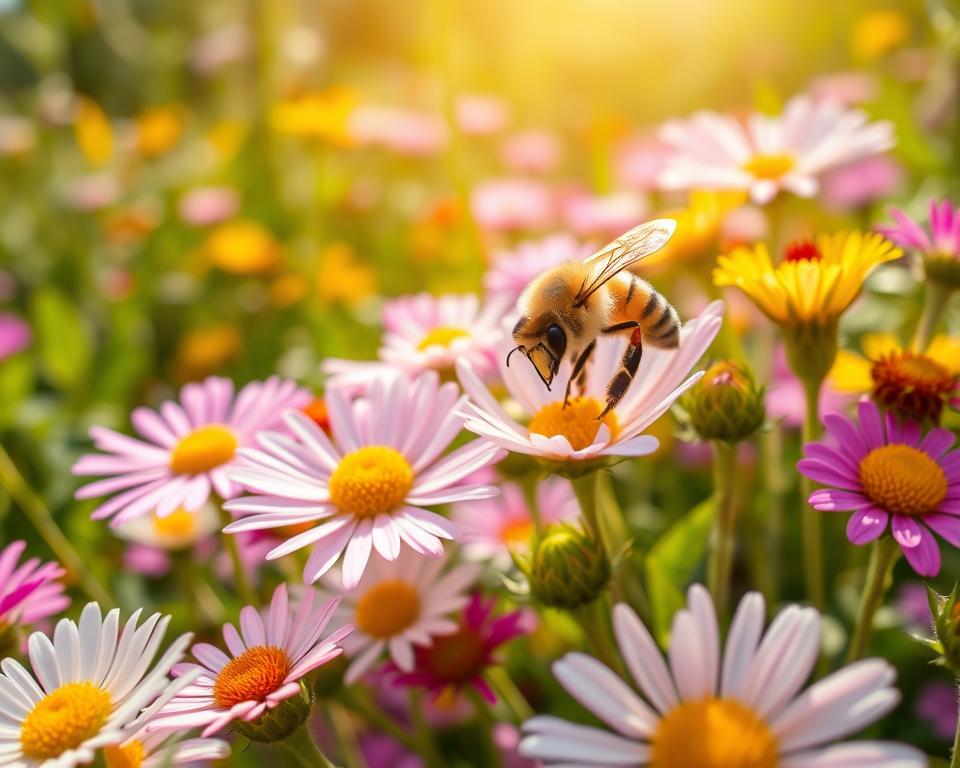
Diverse foraging is essential for honey bees’ nutrition. Bees that visit different plants get a mix of nectar and pollen. This mix provides them with proteins, vitamins, and minerals.
A diverse diet helps bees fight off environmental stressors. It’s important for beekeepers to make sure bees have access to many foraging spots all season.
Impacts of Monoculture on Bee Nutrition
Monoculture farming harms bee nutrition. Large areas of single crops limit bees’ foraging. This often leads to a diet lacking in some nutrients.
Monoculture can cause nutritional stress. Bees may not get the balanced diet they need. This weakens colonies and makes them more vulnerable to pests and diseases.
To fight these issues, we need to encourage diverse foraging. Planting various flowers that offer nectar and pollen is key.
Chemical Exposure
Honey bees face many challenges, and chemical exposure is a big one. They are exposed to many chemicals in their environment. These can harm their health and how well they work.
Understanding Pesticides and Insecticides
Pesticides and insecticides are used to protect crops from pests. But, they can also harm honey bees. Bees pick up these chemicals when they gather nectar and pollen. This can hurt the whole hive.
A study on the National Center for Biotechnology Information website shows how pesticides harm bees. It stresses the importance of using safe practices to protect them.
The Consequences of Chemical Residue
Chemical residue in the environment is a big threat to honey bees. Pesticides and insecticides can make nectar and pollen toxic. This can cause bees to lose their way, have trouble reproducing, and die.
To help bees, we need to use fewer chemicals in farming. We should also create places that are safe for them. Knowing how chemicals affect bees helps us make their world safer.
Beekeeping Practices
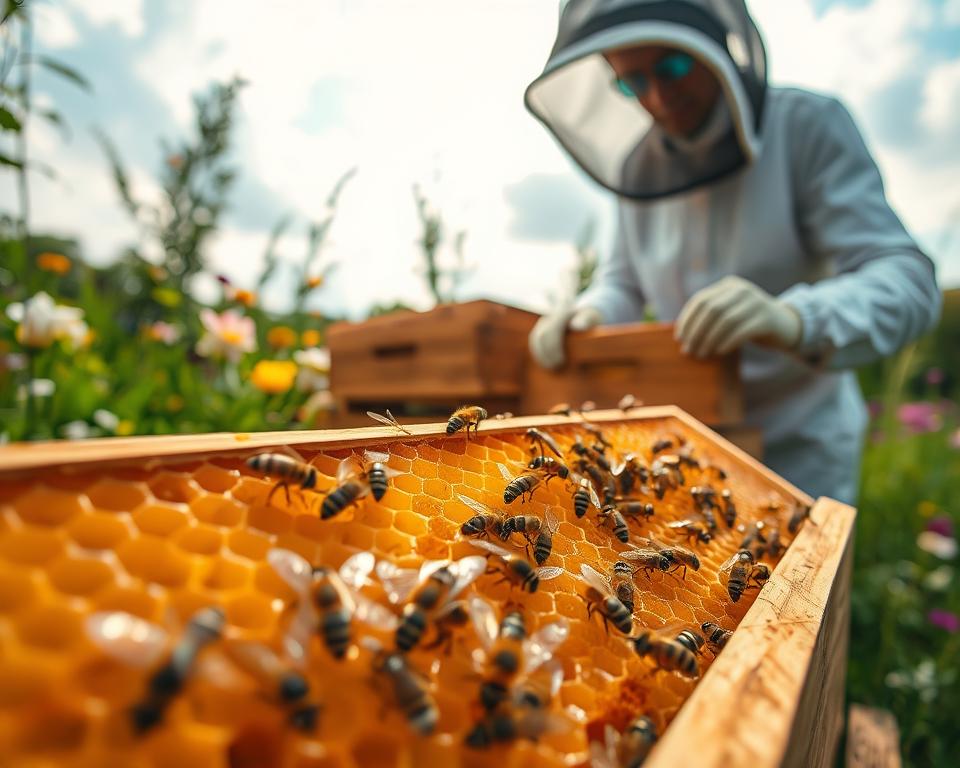
Healthy honey bee colonies come from careful beekeeping. Beekeepers are key in keeping bees healthy and productive. They manage their hives well.
Influence on Bee Health
How we manage our hives affects bee health. Regular checks, proper care, and effective pest management are vital. They help reduce stress and disease.
By following best practices, beekeepers can lower colony loss. This helps bees stay healthy and thrive.
Ethical Beekeeping and Its Benefits
Ethical beekeeping helps bees and the environment. It focuses on bee health and well-being. This supports biodiversity and local ecosystems.
Research shows ethical beekeeping improves honey quality and bee health. It also reduces environmental harm.
Key aspects of ethical beekeeping include:
- Using natural and organic pest control
- Offering diverse forage for bees
- Keeping hives clean and well-ventilated
Embracing these practices helps beekeepers and the environment. It ensures bee health and sustainability.
Climate Change Impacts
Honey bees face big challenges as the world gets warmer. The changing climate hurts not just the bees but also our ecosystem and food supply.
Effects on Bee Behavior
Climate change messes with the timing of when bees forage and plants bloom. This mismatch can cut down on food for bees when they need it most. It harms their nutrition and health.
Changes in Temperature and Precipitation Patterns also mess with bee behavior. Bees have to change how they forage, which can stress their colonies.
Migration Patterns and Climate Resilience
Some bees might move to better places as climates change. But, they can’t always find new homes because of lost habitats. Enhancing climate resilience in bees is key. We can do this through conservation and beekeeping that helps colonies thrive.
| Climate Factor | Impact on Honey Bees | Potential Mitigation Strategies |
|---|---|---|
| Rising Temperatures | Disrupts foraging behavior and colony thermoregulation | Provide shade for bee hives, plant heat-tolerant forage |
| Altered Precipitation Patterns | Affects nectar and pollen availability, potentially leading to malnutrition | Promote diverse forage plants, support irrigation in agricultural areas |
| Increased Frequency of Extreme Weather Events | Can destroy bee hives and forage, leading to colony loss | Implement robust beekeeping practices, provide shelter for bees |
It’s vital to understand and tackle climate change’s effects on honey bees. This is key to keeping bee populations healthy and our ecosystems thriving.
Solutions and Best Practices
Managing stress in honey bees requires a detailed approach. We need to understand how environmental stressors, diseases, and beekeeping practices interact. This knowledge is key to helping these important pollinators.
Urban Beekeeping and Habitat Enhancement
Improving bee habitats in cities is vital for local bee populations. By planting bee-friendly plants and cutting down on pesticides, city folks can help. Community projects like beekeeping workshops and pollinator gardens also boost bee health.
Community-Led Conservation Initiatives
Community efforts are critical for protecting honey bees and stopping bee diseases. Together, we can build bee-friendly spaces and support local beekeepers. This teamwork helps lessen stress on bees and creates a better world for them.