

Did you know a single beehive can make up to 60 pounds of honey in a year? Extracting honey is a rewarding task for beekeepers. With the right steps, you can enjoy top-quality honey. Let’s explore the simple honey extraction method to get the most from your beehive.
Extracting honey involves several key steps. These include removing honey frames from hives and filtering the final product. For a detailed guide, check out Instructables. It offers a complete overview of the honey extraction process.
Key Takeaways
- Remove honey frames from hives carefully to avoid disturbing the bees.
- Use the right equipment, such as a honey extractor and heated knife.
- Uncap the frames on both sides to extract honey effectively.
- Spin the frames in the extractor to extract honey.
- Filter the honey before bottling to ensure quality.
Understanding the Importance of Honey Extraction
For any beekeeper, knowing how to extract honey is key. It’s not just about getting honey out of the hive. It’s also about keeping the bees healthy and productive.
What is Honey Extraction?
Honey extraction means taking honey from the honeycomb in the beehive. This involves a few key steps:
- Removing the honeycomb frames from the hive
- Uncapping the honeycomb cells
- Extracting the honey using centrifugal force or crushing and straining
This process needs care to avoid harming the bees or damaging the comb.
Why Timing Matters in Honey Harvesting
When to harvest honey is very important. Harvesting too soon can give you unripe honey. Harvesting too late can spoil the honey. Timing is everything for the quality and amount of honey.
Consider these factors for the best honey harvest:
- The nectar flow and availability
- The strength and health of the bee colony
- Weather conditions that may affect the bees’ activity
By thinking about these, beekeepers can get the best honey from their bees.
Essential Tools for Honey Extraction
Having the right tools is key for a good honey extraction. As a beginner, knowing what equipment you need is important. It can greatly improve the quality of your honey.
Beekeeping Equipment You’ll Need
You’ll need a beekeeping suit, smoker, and honey extractor for honey extraction. The beekeeping suit keeps you safe from bee stings. The smoker helps calm the bees, making work easier. A honey extractor gets honey from honeycombs without harming them.
Here’s a quick look at what you need and why:
| Equipment | Purpose |
|---|---|
| Beekeeping Suit | Protects from bee stings |
| Smoker | Calms the bees |
| Honey Extractor | Extracts honey from honeycombs |
Optional Tools for Efficiency
While basic tools work, some optional tools can make things easier. A honeycomb crusher helps crush honeycombs for extraction. A filter removes impurities from the honey.
Good-quality tools, whether essential or optional, make honey extraction smoother. As you get more experience, you can add more tools. This will help you improve your beekeeping and honey extraction skills.
Preparing for Honey Extraction
Getting ready for honey extraction is key to a smooth process. As a beekeeper, you must plan and prepare well. Extracting honey from beehives needs careful steps.
Assessing Honey Readiness
Before you start, check if the honey is ready. Look for the right moisture in the honeycombs. Also, make sure the bees have capped the cells. Capped honey cells mean the honey is ripe and ready.
To check if the honey is ready, do the following:
- Inspect the honeycombs for capped cells.
- Check the moisture content using a refractometer.
- Ensure that the honey is ripe and ready for extraction.
Setting Up Your Extraction Area
Creating a clean and organized extraction area is important. A clean area keeps the honey quality high. Here’s how to set it up:
First, make sure the area is clean and free from contaminants. Next, organize your tools, like the honey extractor and uncapping knife. Lastly, have containers ready for the honey.
By following these steps, you can have a successful honey extraction. Remember, preparation is key to getting high-quality honey.
The Honeycomb Removal Process
To get honey, you must first take out the honeycombs from the beehive. This needs to be done carefully and gently. It’s a key part of the basic honey extraction process. It affects the honey’s quality and the bees’ health.
How to Safely Remove Honeycombs
Start by calming the bees with a smoker. Smoke helps lower the bees’ anger, making it safer to work. Always wear protective beekeeping clothes, like a veil and gloves, to avoid getting stung.
When the bees are calm, you can take out the honeycombs. Use a hive tool to carefully pry them loose. Be careful not to hurt the comb or disturb the bees too much.
Handling the Honeycombs with Care
After taking out the honeycombs, handle them carefully. Avoid touching the honeycomb too much. Your skin oils can damage the wax and harm the bees when the comb goes back to the hive.
| Best Practices | Benefits |
|---|---|
| Use a smoker to calm bees | Reduces bee aggression, making it safer to remove honeycombs |
| Wear protective beekeeping clothing | Prevents stings and ensures a safe extraction process |
| Handle honeycombs gently | Preserves the comb and honey quality, ensuring healthy bees |
By following these steps and being careful with the honeycombs, you can have a successful honey extraction. It’s good for you and your bees.
The Basic Extraction Methods
Beekeepers use two main methods to extract honey. These methods help get high-quality honey and keep the honeycombs ready for future use.
The choice of method depends on the equipment, operation size, and personal preference. Knowing the basics of each method is key for efficient honey extraction.
Crushing and Straining Technique
The crushing and straining technique is a traditional method. It involves crushing the honeycombs to release the honey. Then, it’s strained to separate it from wax and debris. This method is simple and needs little equipment.
To do this, beekeepers crush the honeycombs with a device. The honey is collected in a container. Next, the mixture is strained through filters to remove wax and impurities.
Using a Honey Extractor
A honey extractor uses centrifugal force to extract honey without harming the combs. This method is more efficient and keeps the combs ready for future honey production.
Honey extractors vary in size, from small manual to large electric machines. The process involves spinning the honeycombs in the extractor. This spins out the honey from the combs.
Using a honey extractor makes the extraction process smoother. It also helps keep the honey quality high and the bee colony healthy.
Both methods have their benefits, and the choice depends on the beekeeper’s needs and resources. By understanding and using these basic methods, beekeepers can have a successful honey harvest.
Filtering and Straining Honey
Filtering and straining are key steps to make honey pure and look good. These processes are vital in the honey harvesting process.
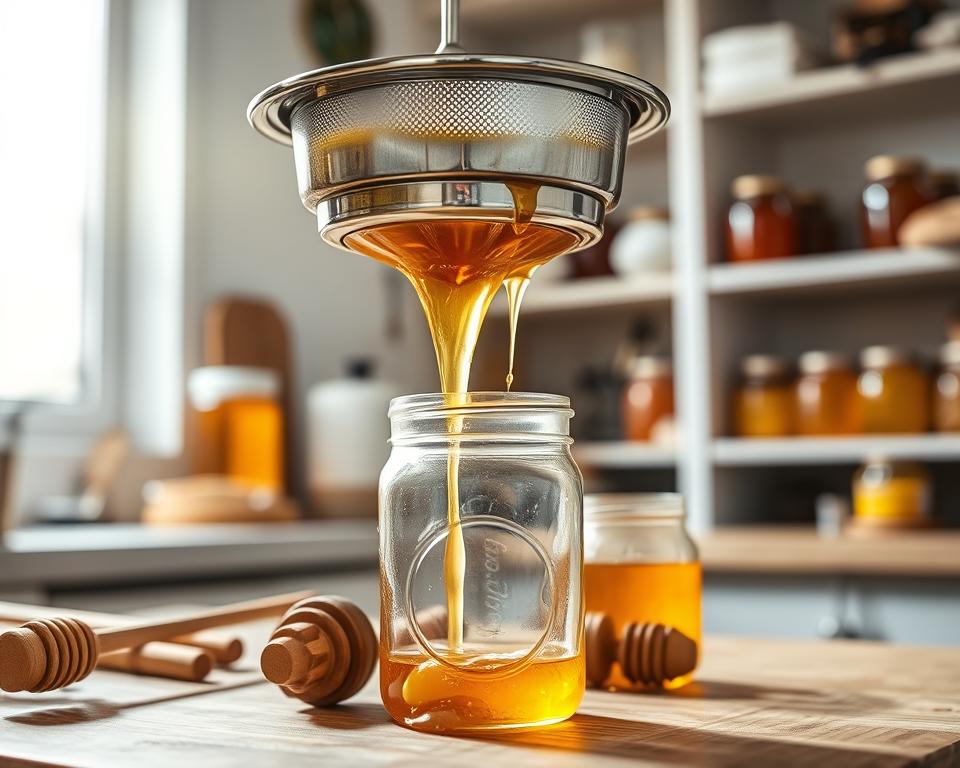
Filtering is important for refining honey. It gets rid of impurities and makes the honey look better. A beekeeper said, “Filtering is not just about removing impurities; it’s about presenting the honey in its best form.“
The Importance of Filtering
Filtering boosts honey quality. It makes the honey safe and looks better. Experts say proper filtering is key to high-quality honey, making it a vital part of the simple honey extraction method.
There are many ways to filter honey, from simple strainers to complex systems. The choice depends on the operation’s size and desired purity.
Best Practices for Straining
Straining is essential to separate honey from wax and debris. Use a clean strainer or cheesecloth. Handle the honey gently to avoid air bubbles or contaminants.
Some tips for straining include:
- Start with a coarse strainer to catch big particles
- Then use a finer strainer or cheesecloth for better filtering
- Strain in a cool, dry place to keep the honey quality
By following these tips, beekeepers can make sure their honey is top-notch. Quality and appearance matter a lot in honey production.
Bottling Your Honey
The moment of truth arrives when it’s time to bottle the extracted honey. As a beginner in the honey extraction guide, it’s essential to understand that the quality of the honey can be preserved or compromised at this stage.
To ensure that your honey remains in its best state, you need to focus on two critical aspects: choosing the right containers and proper honey storage tips.
Choosing the Right Containers
When it comes to bottling honey, the containers you choose play a significant role. I recommend using clean, dry containers that are airtight. This prevents moisture from entering and spoiling the honey.
Proper Honey Storage Tips
After filling the containers with honey, it’s important to store them correctly. Keep the honey away from direct sunlight and heat sources. These can cause the honey to degrade or crystallize prematurely.
A cool, dry place is ideal for storing honey. This ensures it retains its quality and flavor. By following these simple steps, you can enjoy your homemade honey for a long time. Understanding the importance of proper bottling and storage is key to savoring the fruits of your labor.
Cleaning Up After Extraction
After extracting your honey, it’s time to clean up. Cleaning properly is key to keeping your honey quality high and your equipment working well.
Maintaining Tools and Equipment
Keeping your honey extraction equipment in top shape is essential. Wash all tools with warm water and a mild detergent to get rid of honey residue.
| Equipment | Cleaning Method | Frequency |
|---|---|---|
| Honey Extractor | Warm water and mild detergent | After each use |
| Strainers and Filters | Warm water and mild detergent | After each use |
| Containers | Dry storage | After drying |
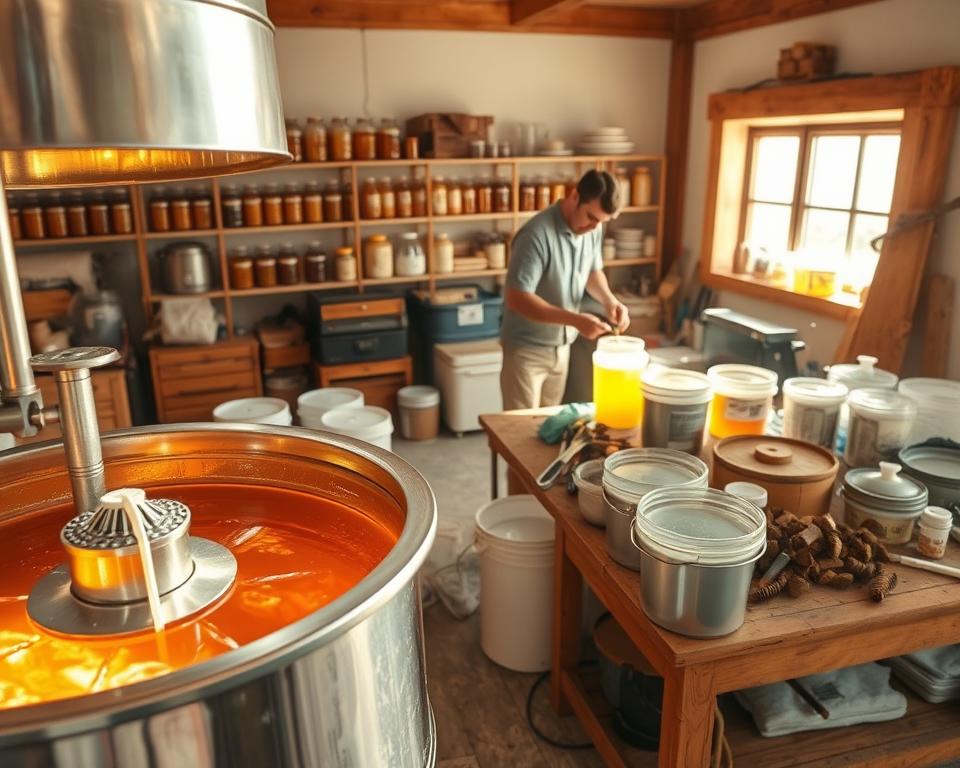
Cleaning the Extraction Area
Cleaning the area where you extracted honey is also vital. This prevents honey residue and wax buildup. It keeps your workspace clean and safe for future honey extractions.
By following these steps, your honey extraction equipment will stay in great condition. This ensures your honey production process remains efficient.
Common Challenges in Honey Extraction
Exploring honey extraction, I find many hurdles, mainly for newbies. Getting honey from beehives needs the right tools and knowing how to tackle common problems during the honey extraction steps.
Dealing with crystallized honey is a big worry. It happens when honey is not stored or extracted right. I warm the honey gently to melt the crystals, making sure its natural goodness stays intact.
Dealing with Crystallized Honey
Crystallized honey can be fixed with a bit of heat. I soak the honey jar in warm water, letting the crystals melt slowly. This keeps the honey’s quality and taste.
It’s key not to overheat the honey. Doing so can ruin its texture and health benefits. With patience and the right method, I can turn the honey back to its liquid form.
Handling Sticky Situations
Sticky situations are another problem beekeepers face. Spills and messes can be lessened with the right cleaning tools. I make sure my extraction area is ready with cleaning supplies to quickly clean up spills.
Being ready and having a plan helps me manage the extraction better. This way, I avoid sticky problems and make the process smoother.
Conclusion: Enjoying Your Homemade Honey
Now you’ve learned the Basic Honey Extraction Process. You can enjoy the sweet fruits of your labor. As a beginner, you’ve started enjoying homemade honey. This guide has helped you on your way to becoming a skilled beekeeper.
Sharing the Sweetness
Think about sharing your honey with friends and family. Or, you could sell it at local markets. You can also use it to make tasty treats like honey-based baked goods or honey-glazed meats.
Honey in Daily Life
Be creative with your honey. Use it as a natural sweetener in your tea. Or, top yogurt or oatmeal with it. You can also make homemade honey butter or honey-based skincare products.