

Did you know a thriving beehive needs a healthy brood pattern? As a beekeeper, knowing about brood health is key. A strong brood pattern means a healthy hive.
In this article, we’ll explore what makes a brood pattern healthy. You’ll learn about beekeeping best practices. By the end, you’ll know how to keep your hive thriving.
Key Takeaways
- Understanding the importance of a healthy brood pattern for beehive success
- Identifying signs of a healthy brood pattern
- Factors that influence brood health
- Best practices for maintaining a healthy brood
- Tips for assessing and improving your beehive’s health
Understanding Brood Patterns in Bees
As a beekeeper, knowing about brood patterns is key to keeping your bees healthy. Brood patterns show how the brood is laid out in the hive. This is a big clue to the colony’s health.
What is Brood?
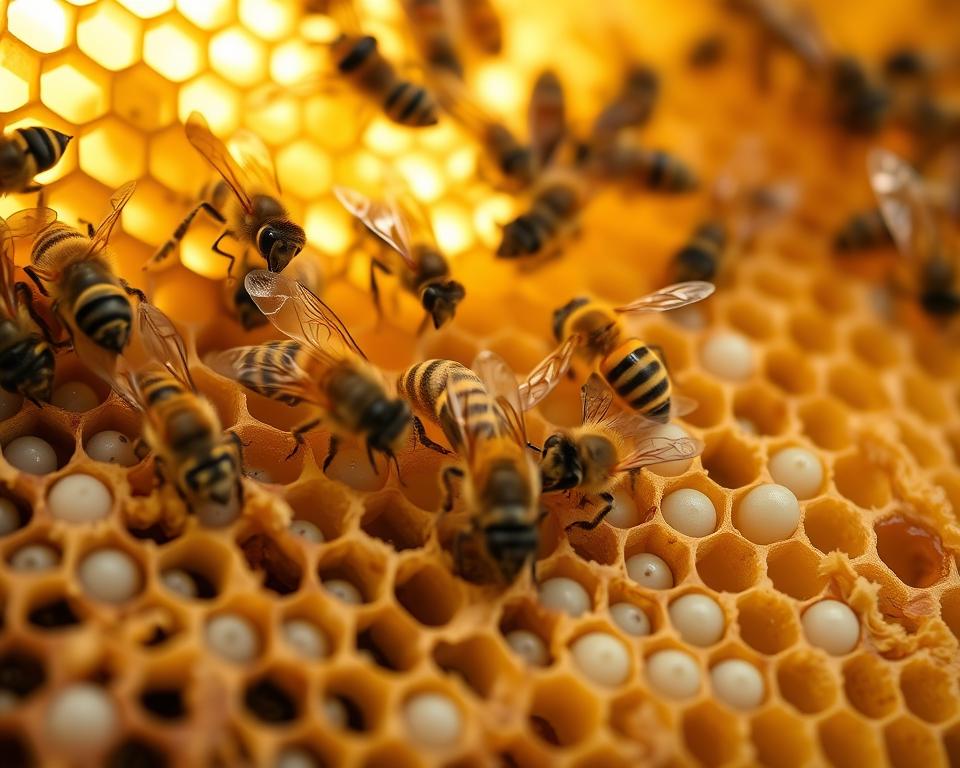
Brood includes the eggs and larvae in the hive, which are the future bees. The queen lays eggs in honeycomb cells. These eggs hatch into larvae and grow into adult bees. Knowing about brood stages helps check the colony’s health.
Importance of Brood Patterns
Brood patterns are important because they tell us about the queen’s work, the colony’s growth, and any problems like disease or pests. A good brood pattern means a strong, healthy colony. Important parts of brood patterns are:
- Uniform brood cell layout
- The queen laying eggs well
- Seeing all brood stages (eggs, larvae, pupae)
By looking at these signs, beekeepers can spot problems early. This helps keep the colony healthy.
Types of Brood Patterns
Bees show different brood patterns based on the queen’s laying and the colony’s needs. Some common patterns are:
- Solid Brood Pattern: A tight, solid area of brood cells shows a healthy, busy queen.
- Patchy Brood Pattern: Scattered or irregular brood points to problems like disease, pests, or a failing queen.
Knowing these patterns and what they mean is vital for good beekeeping.
Signs of a Healthy Brood Pattern
Knowing the signs of a healthy brood pattern is vital for beekeeping success. A strong and healthy queen is key to a colony’s health.
Uniformity in Brood Cells
A uniform brood pattern is a key sign of health. A good colony has a tight and even brood pattern. This shows the queen is laying eggs well.
Active Egg-Laying Behavior
A healthy queen lays eggs actively and consistently. She lays eggs in the brood nest’s center and does so often. This is vital for the colony’s growth.
Key characteristics of active egg-laying behavior include:
- A consistent pattern of egg-laying
- A high rate of egg-laying
- Eggs laid in the center of the brood nest
Presence of All Life Stages
A healthy colony has all life stages present. This means eggs, larvae, and pupae are all there. It shows the colony is thriving and balanced.
By spotting these signs, beekeepers can check their colony’s health. Regular checks and assessments help identify queen health and keep the colony well.
Common Brood Patterns Among Bee Species
Knowing the brood patterns of different bee species is key for good beekeeping. Each species has its own traits that beekeepers need to spot to manage their colonies well.
Honey Bees
Honey bees (Apis mellifera) are kept for honey and pollination. Their brood nest is neat and organized in the hive.
- The queen lays eggs in a pattern, usually in the center of the brood nest.
- Worker bees take care of the brood, helping larvae grow into adult bees.
- The brood pattern shows the colony’s health and productivity.
Bumblebees
Bumblebees (Bombus spp.) pollinate many crops. Their brood pattern is different from honey bees.
- Bumblebee colonies are smaller and have a less organized brood pattern.
- The queen starts the colony by laying eggs in a nest she makes.
- As the colony grows, worker bees take over foraging and caring for the brood.
Carpenter Bees
Carpenter bees (Xylocopa spp.) are solitary and nest in wood. Their brood pattern is unique compared to social bees.
- Female carpenter bees make individual cells in their nests for their eggs.
- Each cell is filled with pollen and nectar before the egg is laid.
- The larvae grow on their own, without worker bee care.
It’s important for beekeepers to know these brood patterns. This knowledge helps them follow beekeeping best practices and do detailed brood pattern analysis.
| Bee Species | Brood Pattern Characteristics | Colony Structure |
|---|---|---|
| Honey Bees | Compact, organized | Large, social colony |
| Bumblebees | Disorganized, smaller | Smaller, social colony |
| Carpenter Bees | Solitary, individual cells | Solitary, no social colony |
Factors Influencing Brood Health
Knowing what affects brood health is key for beekeepers. The brood’s health shows how well the colony is doing. Many things can help or hurt the brood’s growth. Keeping these factors in check is essential for a healthy colony.
Environmental Conditions
Environmental factors greatly impact brood health. Temperature and humidity are very important. Bees work together to keep the hive warm, but outside weather can be a problem.
Too hot can make the brood too warm, and too cold can slow it down or even kill it.
- Keeping the temperature right (around 92°F – 95°F) for brood growth
- Having enough air flow to avoid overheating and keep humidity right
- Keeping the hive safe from harsh weather
Nutrition and Feeding
Nutrition is also very important for brood health. The food the colony gets affects the brood’s growth and health. Good nutrition means the brood gets all the proteins, vitamins, and minerals it needs.
- Giving the colony enough nectar and pollen
- Adding sugar or protein when food is scarce
- Making sure there’s clean water available
Hive Hygiene
Keeping the hive clean is vital to stop diseases and pests. Regular checks and removing sick or dead brood help prevent disease. Good hive management practices, like rotating combs and keeping the hive clean, help the brood stay healthy.
- Checking the hive often to catch problems early
- Removing sick or dead brood to stop disease
- Keeping the hive clean and well-ventilated
By understanding and managing these factors, beekeepers can improve their colony’s health and productivity. Keeping a close eye on things and taking action when needed is important. This helps the brood and the whole colony stay healthy.
Recognizing Problems in Brood Patterns
It’s key for beekeepers to spot brood pattern problems. A healthy brood pattern shows a colony’s health. Any changes can mean trouble.
Signs of Queen Issues
The queen bee is the colony’s heart. Problems with her can hurt brood health. Signs of queen issues include a patchy brood pattern. This can mean the queen is not laying eggs well or is missing.
To spot queen problems, look for:
- Patchy brood patterns
- Less egg-laying
- Supersedure cells
Recognizing Disease Symptoms
Diseases can destroy a bee colony. Spotting disease symptoms early is key. Look for discolored or deformed brood, odd smells, and strange bee behavior.
Watch for these disease signs:
- Discolored or deformed brood
- Odd smells from the hive
- Strange adult bee behavior
Pests Impacting Brood
Pests can harm brood health. Spotting them early is important. Varroa mites, small hive beetles, and wax moths are common pests. They damage brood, spread diseases, and weaken colonies.
To fight pests, beekeepers should:
- Check for pests often
- Use a mix of pest control methods
- Keep colonies strong and healthy
How to Encourage Healthy Brood Development
The key to a thriving bee colony is understanding how to promote healthy brood development. As a beekeeper, my role is to maintain the colony and create a growth-friendly environment.
Proper Hive Management
Effective hive management is essential for healthy brood development. Regular inspections help me assess the colony’s health and spot issues early. I use specific methods to check for diseases, pests, and nutritional needs.
Keeping the hive clean and organized is also key. It ensures the bees have enough space and a clean environment. Managing pests and diseases is also vital for brood health.
Feeding Strategies
Nutrition is critical for brood development. Bees need a balanced diet of nectar, pollen, and water. I make sure they have access to various plants for foraging. When food is scarce, I provide sugar syrup or pollen substitutes carefully.
Monitoring food quality is also important. Pollen quality, for example, greatly affects brood health. Understanding my bees’ nutritional needs helps me improve their diet and promote healthy brood development.
Providing Optimal Conditions
Bees thrive in specific conditions. Temperature, humidity, and ventilation are key factors for brood health. I ensure my hives are well-ventilated and maintain a stable temperature.
By providing the right conditions and following best practices, I create a healthy environment for my bees. This benefits both the bees and my beekeeping practice.
Monitoring Brood Patterns Throughout the Seasons
To keep a bee colony thriving, it’s vital to monitor and understand the changes in brood patterns as the seasons change. This knowledge enables beekeepers to make informed decisions about hive management. It ensures the colony remains healthy and productive.
Spring Growth Patterns
In the spring, bee colonies experience a significant surge in brood production. The queen increases her egg-laying rate. This period is critical for colony growth.
Beekeepers should be prepared to:
- Ensure adequate nutrition by providing high-quality pollen and nectar substitutes if necessary.
- Monitor for signs of disease or pests that could weaken the colony.
- Perform regular hive inspections to assess brood health and queen performance.
Key indicators of healthy spring growth include a uniform brood pattern, active egg-laying, and the presence of all life stages within the brood.
Summer Maintenance
During the summer, the colony is in full production mode. The workforce gathers nectar and pollen. To maintain healthy brood patterns, beekeepers should:
- Maintain proper hive ventilation to prevent overheating.
- Monitor for swarming tendencies and take preventive measures if necessary.
- Continue to provide a balanced diet and ensure access to clean water.
Summer is also a critical time for identifying queen health issues. A decline in the queen’s performance can significantly impact the colony’s productivity.
Fall Preparations
As fall approaches, beekeepers should prepare the colony for the coming winter. They should:
- Reduce the hive size to match the reduced population.
- Ensure the colony has sufficient stores of honey and pollen for the winter.
- Taking steps to control varroa mite populations, which can weaken the colony.
By monitoring brood patterns throughout the seasons and adjusting beekeeping practices, beekeepers can help ensure the long-term health and productivity of their colonies.
Tools and Techniques for Brood Observation
Watching the brood is vital for spotting problems in a bee colony. Beekeepers use specific tools and methods to understand their bees’ health and work. This helps them keep their bees thriving.
Hive Inspections
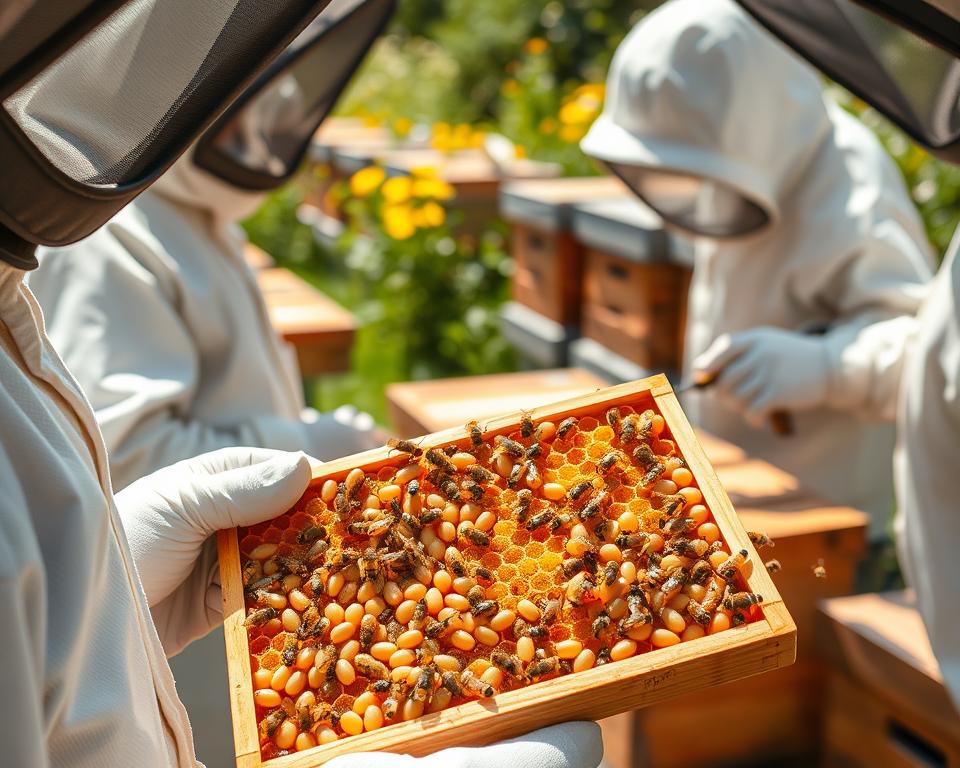
Regular checks of the hive are essential for observing the brood. Beekeepers look for uniformity in brood cells and active egg-laying behavior. It’s important to handle the frames carefully to not upset the bees.
- Check for any signs of disease or pests.
- Verify that the queen is present and laying eggs.
- Assess the overall condition of the brood and the hive.
Photography and Recording
Photography and recording can make observing the brood better. By taking regular photos or videos of the brood, beekeepers can see changes and spot issues early. This visual record is great for checking if treatments or strategies are working.
Utilizing Technology for Monitoring
Technology provides many tools for keeping an eye on brood health. From electronic hive scales to temperature sensors, beekeepers can get detailed data on their colonies. This data helps them make better decisions for their bees’ health.
- Consider using electronic hive scales to monitor nectar flow and hive weight.
- Install temperature sensors to track hive temperature.
- Explore other digital tools designed for beekeepers.
Educational Resources for Beekeepers
As a beekeeper, I know how key it is to keep learning. It’s vital to stay up-to-date with beekeeping best practices. This helps keep my bees healthy and my hive productive.
There are many ways to learn more about beekeeping. You can find books, online courses, and join local beekeeping groups. These resources help us grow our knowledge and skills.
Books and Publications
Books have always been a great help for beekeepers. They dive deep into bee biology, how to manage a hive, and how to fight pests. Guides on bee health and hive management are highly recommended. They come in both print and digital formats, making it easy to get the info I need.
Online Courses
Online courses are now a favorite among beekeepers. They let us learn at our own speed and cover many topics. Many courses focus on beekeeping best practices. You can learn about bee behavior, honey making, and pest control.
Local Beekeeping Associations
Local beekeeping groups are also a great resource. They offer a chance to meet other beekeepers, share knowledge, and learn from experts. Joining a local group helps us learn about regional practices and stay updated on local events.
In summary, there are many ways for beekeepers to learn and grow. By using beekeeping best practices from books, online courses, and local groups, we can keep improving. This helps us take better care of our bees.
Conclusion: The Importance of Healthy Brood Patterns
A healthy brood pattern is key for a strong beehive. Research shows many factors affect brood health, not just the queen. We looked into why a healthy brood pattern matters and what affects it.
Key Takeaways
Knowing about brood patterns helps beekeepers spot problems early. A healthy pattern shows uniform brood cells, active egg-laying, and all life stages present.
Encouragement for Beekeepers
Watching brood patterns and keeping the hive healthy boosts colony growth and honey production. I urge beekeepers to keep learning and adjusting their methods for their bees’ well-being.
Brood Health Matters
Spotting a healthy brood pattern is critical for beekeepers to manage their hives wisely. By understanding brood patterns and using good hive management, beekeepers can help their bees flourish.