

Did you know a single hive can make up to 100 pounds of honey each year? Keeping your bees healthy is key for your apiary’s success. A healthy hive not only makes honey but also helps with pollination.
In this article, I’ll share my beekeeping knowledge. I’ll give you practical tips to keep your hive thriving. By using simple seasonal checklists, you can spot problems early. This ensures your bees stay healthy and productive.
Key Takeaways
- Understand the importance of maintaining a healthy hive
- Learn how to identify problems with your bees
- Discover simple beekeeping tips to keep your hive thriving
- Implement seasonal checklists to ensure bee wellness
- Take corrective action to address common bee health issues
Importance of Seasonal Bee Health Checks
Regular health checks on my bees are vital for a thriving hive. When I inspect my hive, I look for disease signs and pests. I also check on my colony’s overall health.
First, we need to understand the bee lifecycle and its impact on hive health.
Understanding Bee Lifecycle
The bee lifecycle changes with the seasons. In spring and summer, the colony is busy. The queen lays eggs, and worker bees gather nectar and pollen. As seasons change, so do the colony’s needs and activities. Knowing these cycles helps spot issues early.
| Season | Colony Activity | Health Check Focus |
|---|---|---|
| Spring | Colony expansion, brood rearing | Inspecting for disease, ensuring adequate food stores |
| Summer | Peak foraging activity, swarm preparation | Monitoring for pests, checking for swarm cells |
| Fall | Preparing for winter, reducing brood | Assessing food stores, checking for signs of disease |
| Winter | Cluster formation, reduced activity | Monitoring hive temperature, checking for signs of distress |
Benefits of Regular Checkups
Regular checkups help me keep an eye on my bees’ health. I can spot pests and diseases early. This lets me make smart decisions for my hive. Regular checkups mean early problem detection, better hive health, and more honey.
Understanding my bees’ lifecycle and the value of regular checkups helps me manage my hive well. This ensures my hive thrives all year.
Spring Preparations for Your Hive
Spring is here, and it’s time to check and get your beehives ready. This season is key for beekeepers. It affects the health and work of the hive all year.
I start by cleaning and maintaining the hive, checking the equipment, and looking at food stores. These steps are important for a great start to the season.
Cleaning and Maintenance
Cleaning and upkeep are essential in spring. I remove debris and dead bees to keep the hive clean. I also check for and fix any damage to the hive.
Key cleaning tasks include:
- Removing dead bees and debris
- Cleaning the hive stand and area around it
- Replacing old or damaged hive parts
Inspecting Hive Equipment
Checking the hive equipment is also important. I look for wear or damage and fix or replace as needed. This includes frames, supers, and other parts.
A good inspection helps find problems early. This keeps my bees healthy.
| Equipment | Condition | Action |
|---|---|---|
| Frames | Damaged | Replace |
| Supers | Good | None |
| Hive Stand | Needs Repair | Repair |
Evaluating Food Stores
Checking food stores is key to keeping my bees fed. I look at the honey and pollen levels. If needed, I add more to their diet.
“A well-nourished colony is better equipped to withstand disease and pests, and to thrive throughout the season.”
By focusing on these areas, I make sure my beehives are ready for spring. This sets the stage for a healthy and productive year.
Summer Health Monitoring Techniques
As summer starts, beekeepers must watch closely to keep their bees healthy. They face challenges from pests and diseases. It’s important to monitor health to keep colonies strong.
Pest and Disease Assessment
Summer months need regular checks. I look for pests like Varroa mites and diseases like American Foulbrood. Finding problems early helps prevent disease spread and keeps colonies safe.
I examine the hive carefully. I check for odd brood patterns, color changes, or other signs. If I find issues, I act fast. This might mean treatments or changes in how I manage the hive.
Drone Population Management
Controlling drone numbers is key in summer. Drones are important, but too many can be a problem. I keep an eye on drone numbers to keep the colony healthy and productive.
- Monitor drone brood for signs of disease or parasites.
- Adjust the hive configuration as needed to control drone numbers.
- Ensure sufficient resources are available to support the colony.
Foraging Patterns to Observe
Watching how bees forage tells me a lot about their health. I look for changes in their foraging behavior. This can show if they’re facing issues like pesticide exposure or lack of food.
By checking for pests, managing drones, and watching foraging, I help my bees stay healthy. This way, they can thrive all summer long.
Fall Readiness for Winter
Fall is a key time for beekeepers to get their hives ready for winter. As the weather gets colder, it’s vital to keep your bees healthy. Also, make sure your hive can handle the cold.
Honey Harvesting Best Practices
Before winter, beekeepers should harvest honey carefully. This helps avoid harming the hive or disturbing the bees. Here’s how to do it right:
- Look for the best time to harvest, when the honey is ready and the bees have sealed the cells.
- Use the right tools, like smokers to calm the bees and honey extractors to get the honey without harming the comb.
- Make sure to leave enough honey for the bees to eat during winter. They need it to survive.
Harvesting honey the right way means you get a good amount. It also keeps your bees healthy and strong.
Winterization Tips
To get your hive ready for winter, follow these steps:
- Insulate the hive to keep it warm and protect it from strong winds.
- Make sure the hive is dry and has good airflow to avoid moisture problems.
- Shrink the entrance to keep cold air and pests out.
By taking these steps, you can help your bees make it through the cold months.
Final Hive Inspections
Do a final check on your hive before winter. Look for:
- Any signs of disease or pests, and treat them if needed.
- The queen’s health and if she’s there.
- Enough food for the bees.
A detailed inspection and any needed changes will help your bees be healthy come spring.
Winter Care for Beehives
Keeping your bees safe during winter is key for their survival and the hive’s health in spring. As a beekeeper, it’s important to watch your hive closely. You need to protect your bees from cold weather challenges.
Observing Hive Activity
It’s important to check on your bees often in winter. Look for bees flying in and out or debris at the hive entrance. Regular checks help spot problems early.
- Look for signs of bees clustering at the hive entrance.
- Check for any unusual odors or debris that might indicate disease or pest issues.
- Monitor the hive’s overall condition, ensuring it’s well-insulated and protected from harsh weather.
Alcohol Wash for Varroa Mites
Varroa mites can harm bee colonies, even in winter. An alcohol wash is a good way to check for these pests. This method uses alcohol to make mites visible for counting.
- Sample bees from the brood nest area.
- Use a jar with alcohol to wash the bees and dislodge the mites.
- Count the mites and assess the level of infestation.
Emergency Feeding Strategies
If bees struggle to find food in winter, emergency feeding might be needed. You can give sugar syrup or fondant to help. It’s important to feed them in a way that doesn’t disturb the bees too much.
- Use a candy board or fondant as a food supplement.
- Ensure the feeding method is safe and doesn’t provoke excessive bee activity.
- Monitor the bees’ response to the feeding and adjust as necessary.
By following these winter care tips, beekeepers can keep their bees healthy until spring. Adding these steps to your Seasonal Bee Health Checklists helps with bee health monitoring all year.
Key Indicators of Bee Health
As a beekeeper, it’s key to know the signs of a healthy colony. A good hive has a strong, active population and enough food.
Understanding bee health indicators is vital. It helps beekeepers spot problems early and fix them.
Signs of a Healthy Colony
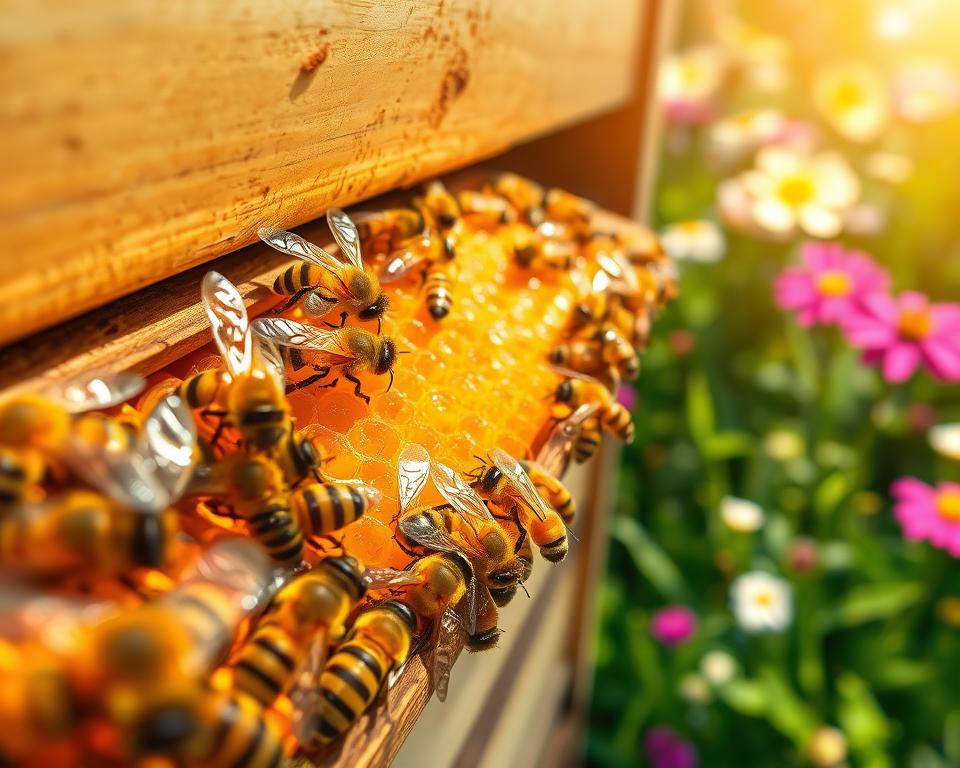
A healthy bee colony shows several key signs. These include:
- A strong, active population with a high queen-to-worker ratio
- Adequate food stores, including honey and pollen
- A clean, well-maintained hive with minimal signs of disease or pests
- Active foraging behavior and a robust brood pattern
Symptoms of Stress or Disease
Bee colonies can face stress or diseases. This can harm their health and work. Common signs include:
| Symptom | Possible Cause |
|---|---|
| Discolored or deformed brood | American Foulbrood or other brood diseases |
| Reduced foraging activity | Pesticide exposure or nutritional deficiencies |
| Visible mites or pests | Varroa mite infestation or other pest issues |
By spotting these signs, beekeepers can act fast. This helps keep the colony healthy and strong.
Common Bee Pests and Their Management
Effective beekeeping means knowing and handling common pests that harm bees. As a beekeeper, it’s key to spot threats early and act fast to stop them.
Varroa Mites
Varroa mites are a big problem for bees everywhere. They suck the life out of bees, making them sick. To fight Varroa mites, beekeepers use integrated pest management (IPM) strategies. This includes checking for mites, using treatments like Apivar, and keeping hives clean.
Wax Moths
Wax moths can really hurt bee hives. Their babies eat beeswax, which can destroy the hive. To stop wax moths, beekeepers should regularly check their hives and keep them clean. Using wax moth-resistant hive materials helps too.
American Foulbrood
American Foulbrood (AFB) is a deadly disease for bees. It’s caused by Paenibacillus larvae spores that are tough to kill. To fight AFB, beekeepers must quickly find and remove sick bees. Sometimes, they have to destroy the hive to stop the disease. Keeping things clean and safe is very important.
Knowing about these pests and how to handle them is vital for beekeepers. They must watch their hives closely, keep them clean, and use smart pest control. These steps help keep bees healthy and strong.
Utilizing Technology in Beekeeping
In modern beekeeping, technology is key for watching over and caring for bees. It helps beekeepers make smart choices and act fast to keep their bees healthy.
Exploring beekeeping technology, I see many new tools that make seasonal beekeeping tasks easier and hive maintenance better. One big step forward is the creation of hive monitoring systems.
Hive Monitoring Systems
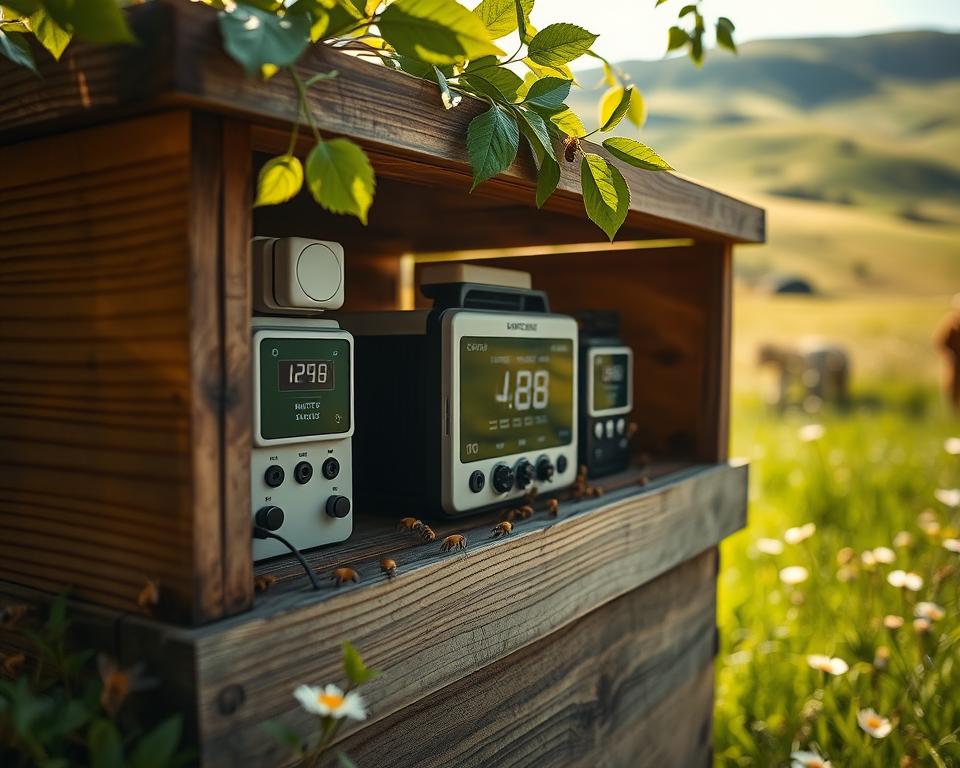
Hive monitoring systems track things like temperature, humidity, and weight in the hive. They give real-time data that beekeepers can check from anywhere. This lets them keep an eye on their hives without bothering the bees.
Some popular systems include devices that go inside or near the hive. For example, temperature sensors show when the bees are busy, and weight sensors tell when there’s a lot of nectar. This info is key for keeping the hive healthy and planning for hive maintenance.
Apps for Bee Health Management
There are also many apps for managing bee health. These apps help beekeepers keep track of their work, from checking the hive to fighting pests.
Some apps let beekeepers write notes, report problems, and get alerts for issues. For instance, an app might warn about pests or diseases and suggest how to fix them. This digital way of beekeeping makes keeping records easier and helps beekeepers act fast to solve problems. This keeps the bees healthy and productive all year round.
By using these tech tools, beekeepers can improve their beekeeping. This ensures their bees stay healthy and do well through all the seasons.
Resources for Beekeepers
Being a beekeeper means staying connected and having the right tools. Regular checks of your apiary are key. They help spot problems early and fix them fast.
Organizations to Join
Joining local beekeeping groups is a smart move. It lets you meet others, share tips, and learn new things. These groups offer training, workshops, and advice from experts.
Recommended Reading and Tools
There’s a wealth of books, articles, and online resources out there. Perfect Bee is a great site for learning about beekeeping and how to check your apiary.
Local Beekeeping Workshops
Workshops are a great way to learn by doing. They cover important topics like bee health and managing pests. They help you improve your beekeeping skills and find more resources.